Pokémon is hosting a special Astronomical Observatory in Japan throughout 2025-2026, and today, I’m visiting their first location at Sagamihara City Museum near Tokyo.
Designed for both kids and adults, the exhibit takes you on a journey to explore the wonders and mysteries of the universe – all while accompanied by many creatures from the Pokémon world.
So, what can you discover at this exhibit? What are some of the featured Pokémon? And is it worth the visit? Let’s get to it. How Good is the Pokémon Astronomical Observatory Actually?
–Reservations–
–Entrance & Starry Sky Pikachu–
–Exhibit Interior–
–The Solar System–
–Scale of the Universe–
–Life of a Star–
–Exoplanets–
–Meteors–
–The Natural Beauty of Earth–
–Alien Life?–
–Beginnings of the Universe–
–Quiz Sheet–
–Pokémon GO–
–Pokémon HOME–
–Gift Shop–
–Verdict–
–Getting There–
__________
__________
📋 Note on Reservations 📋
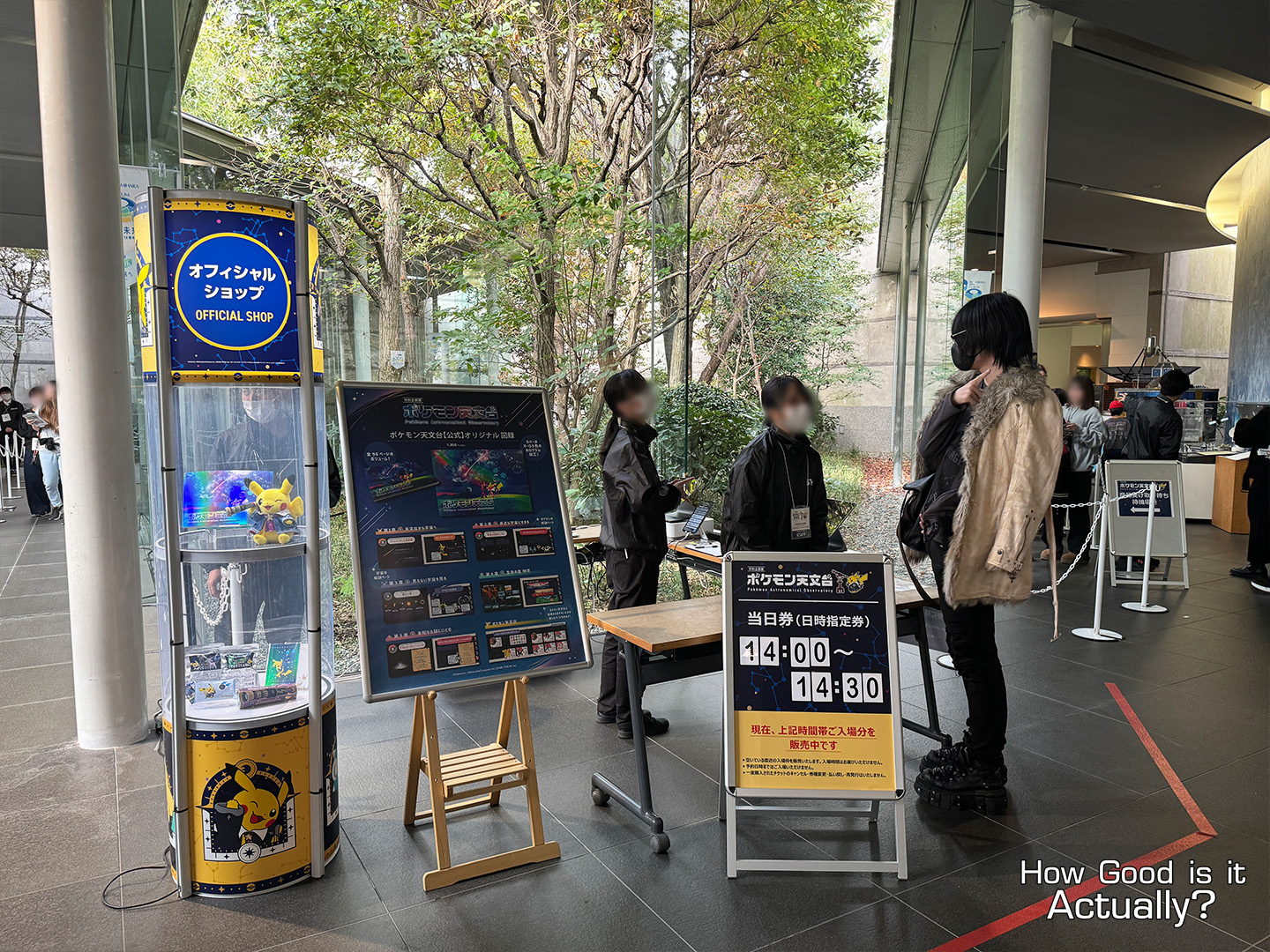
To visit the exhibition, you’ll need to purchase admission tickets in advance. Visit date and entry times are fixed, but there’s no limit to how long you can stay once you enter.
You can find where to buy tickets at the observatory’s official website: https://observatory.pokemon.jp/
__________
🟡 Entrance & Starry Sky Pikachu 🟡
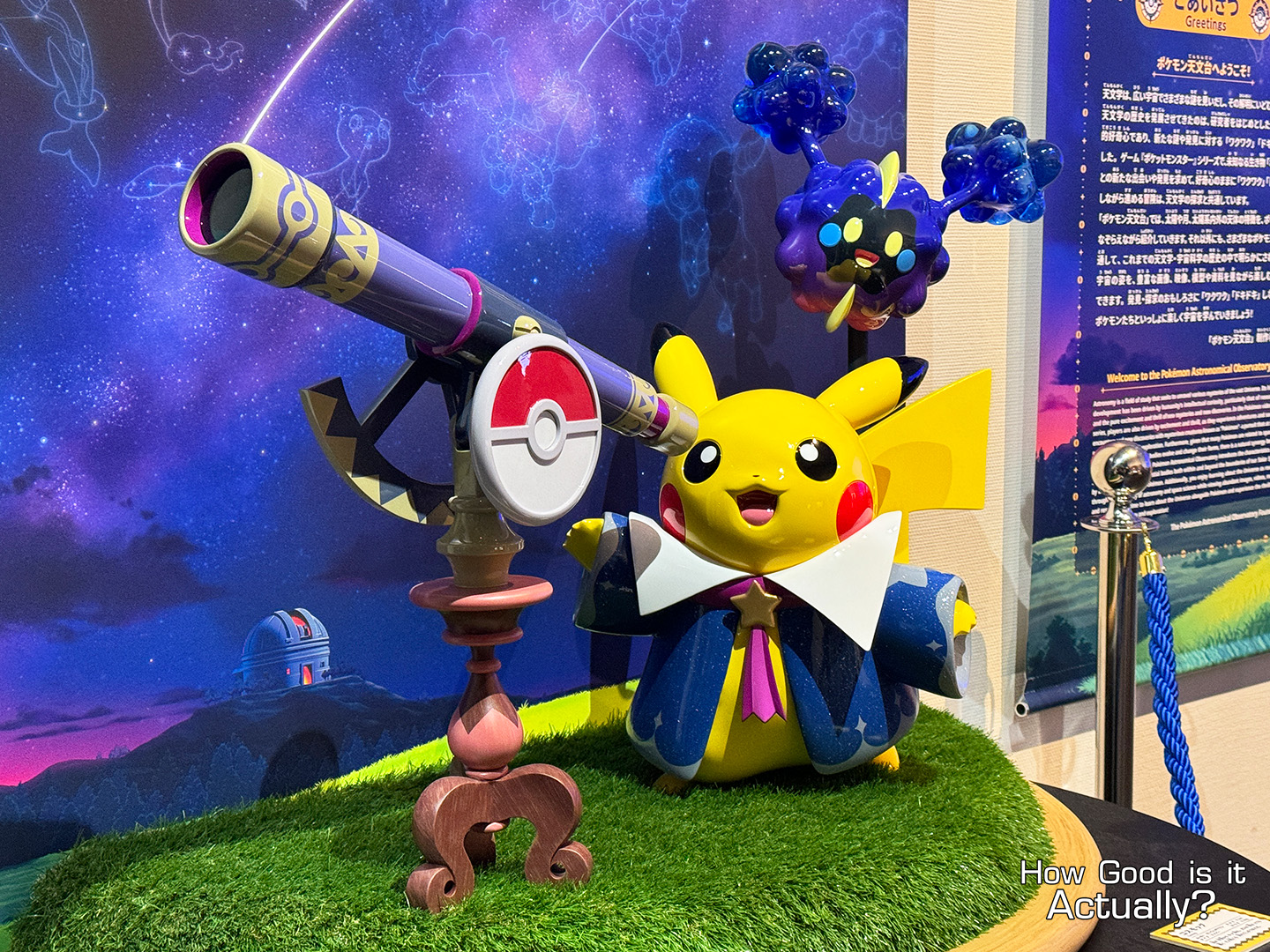
Upon entry, you’ll be immediately greeted by the observatory’s mascot – Starry Sky Pikachu, and Cosmog – the Nebula Pokémon.
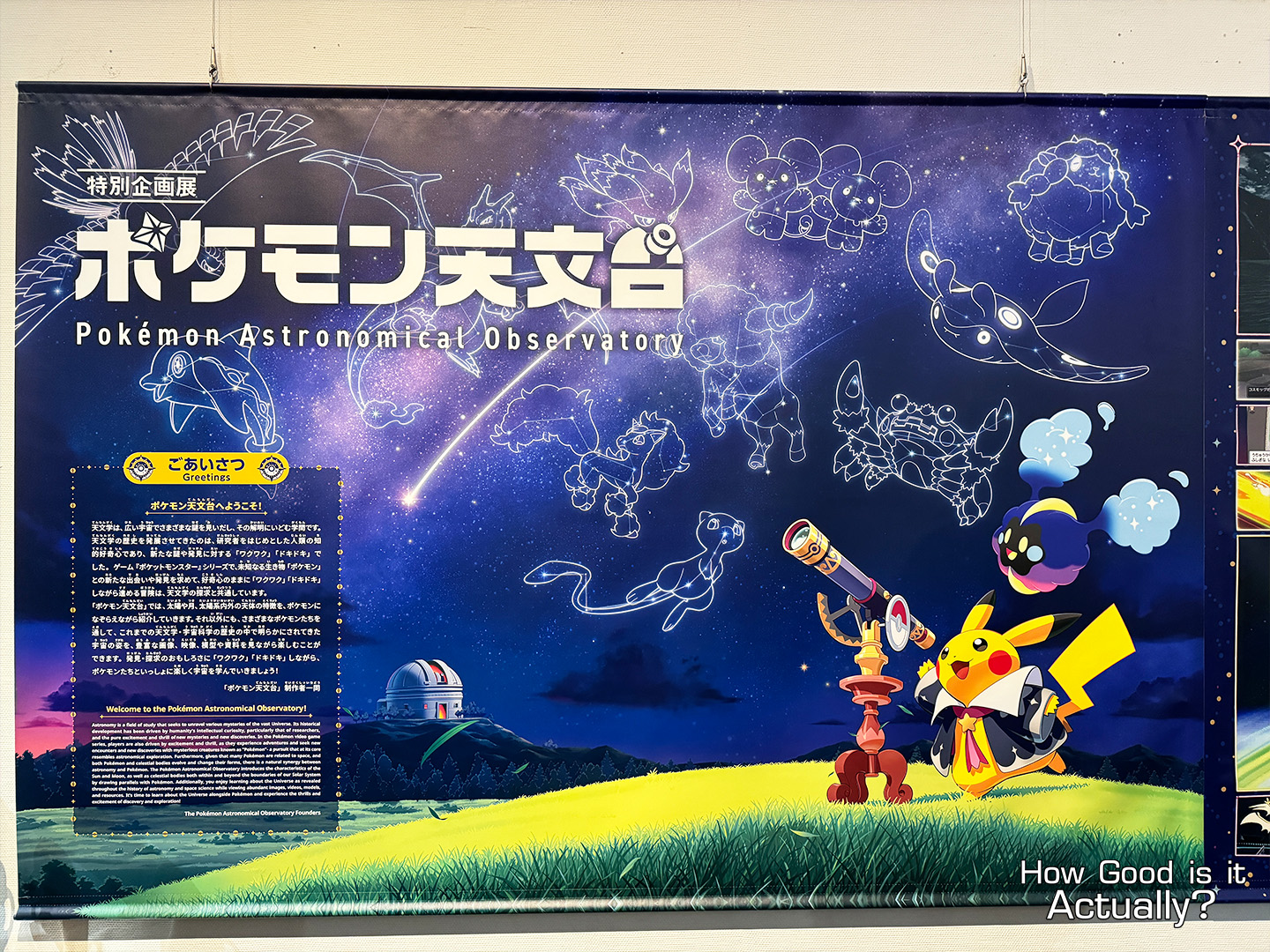
The display is quite stunning, so make sure to admire & grab as many photos as you can here – since this will be your only chance of encountering it!
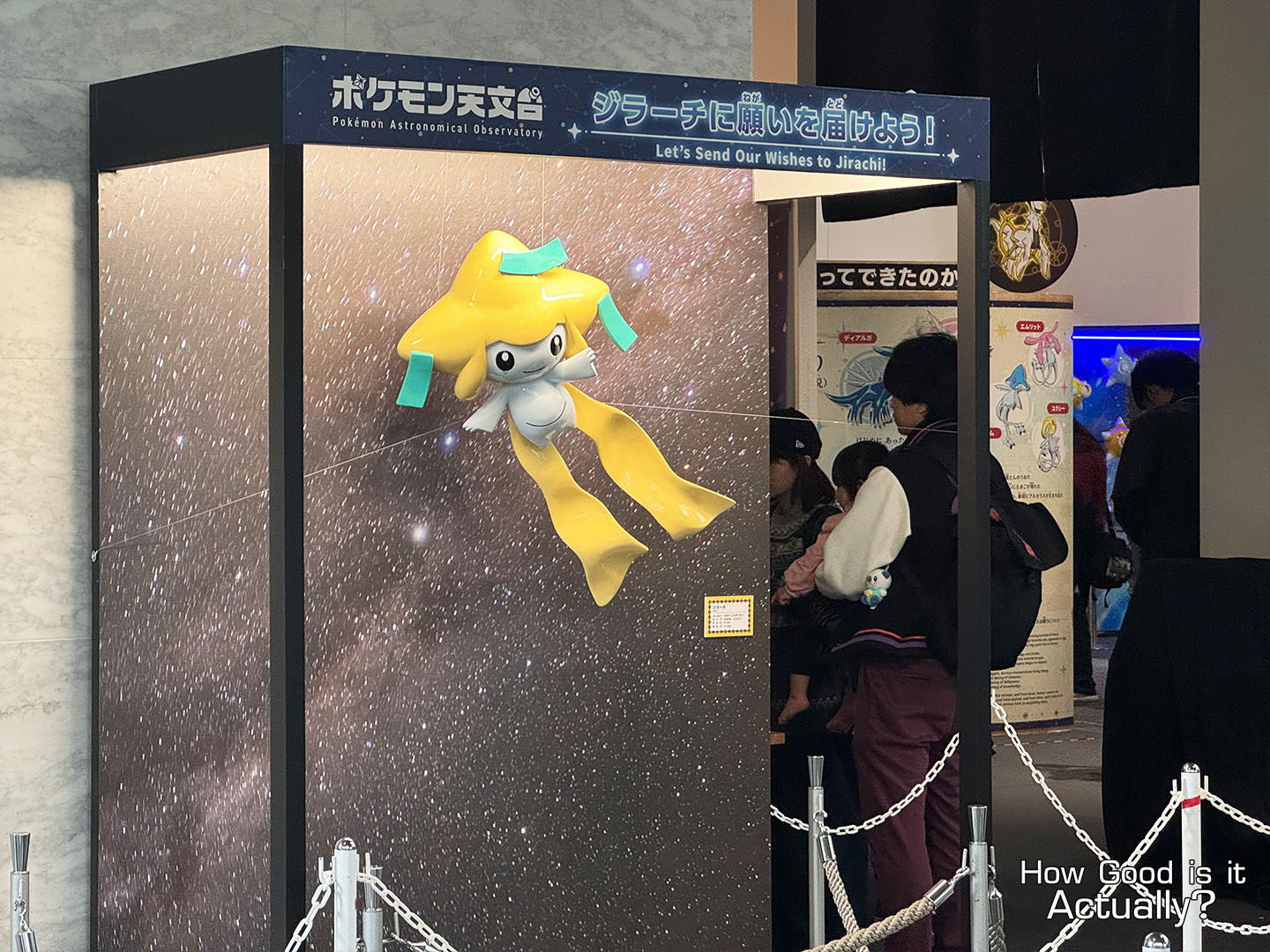
Side Note: Also don’t miss out on the Jirachi statue right by the exhibit’s entrance! I somehow missed it as I walked in, and only saw it once while I was at the gift shop…
__________
🏢 Exhibit Interior 🏢
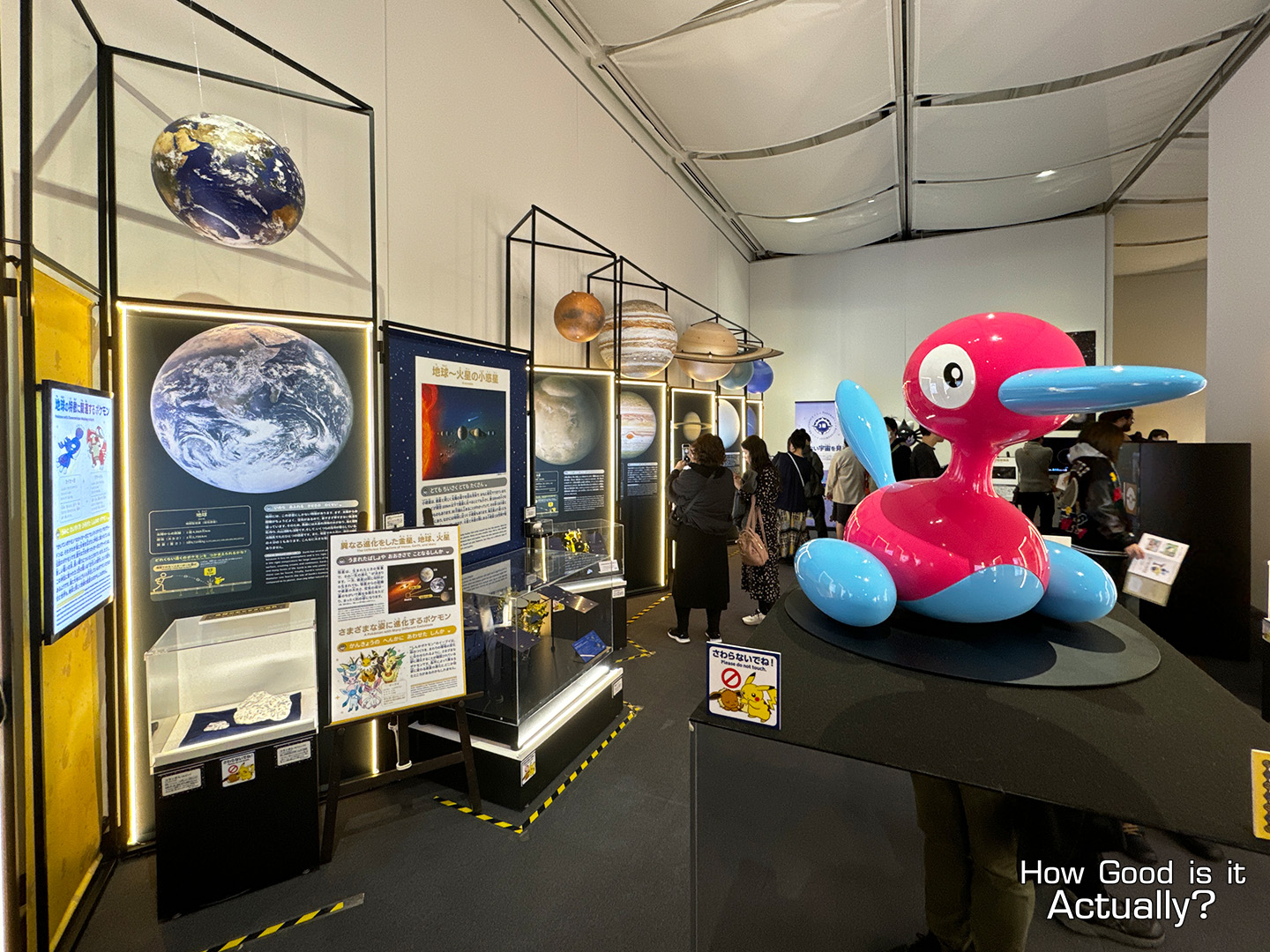
Inside the museum, you’ll find all sorts of information about our universe: from stars and planets within our Solar Systems, to planetary bodies well beyond our galaxy.
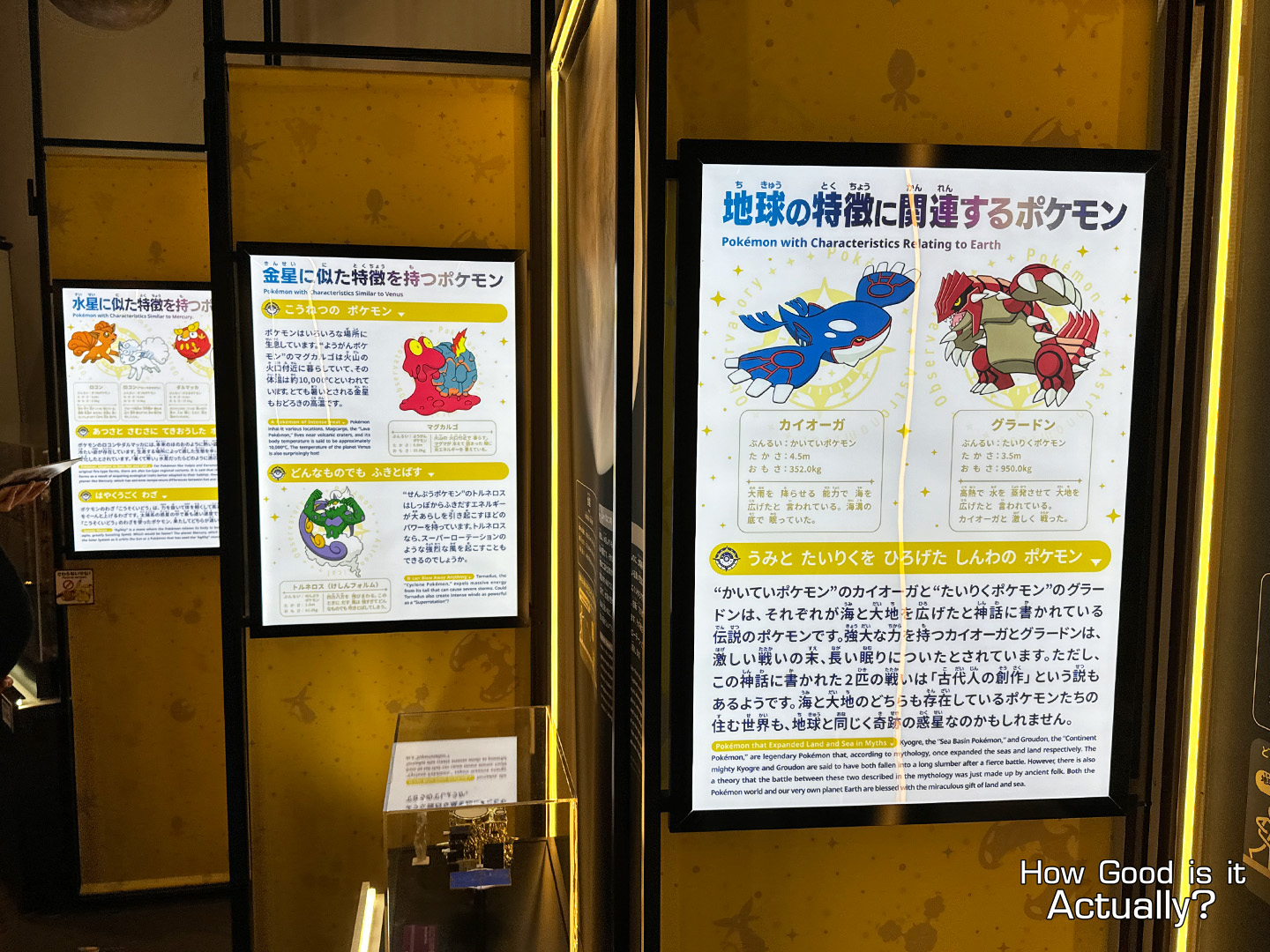
And as a Pokémon-themed exhibit, you’ll find Pokémon all throughout the museum, from statues and artworks, to panels comparing Pokémon with planets and stars.
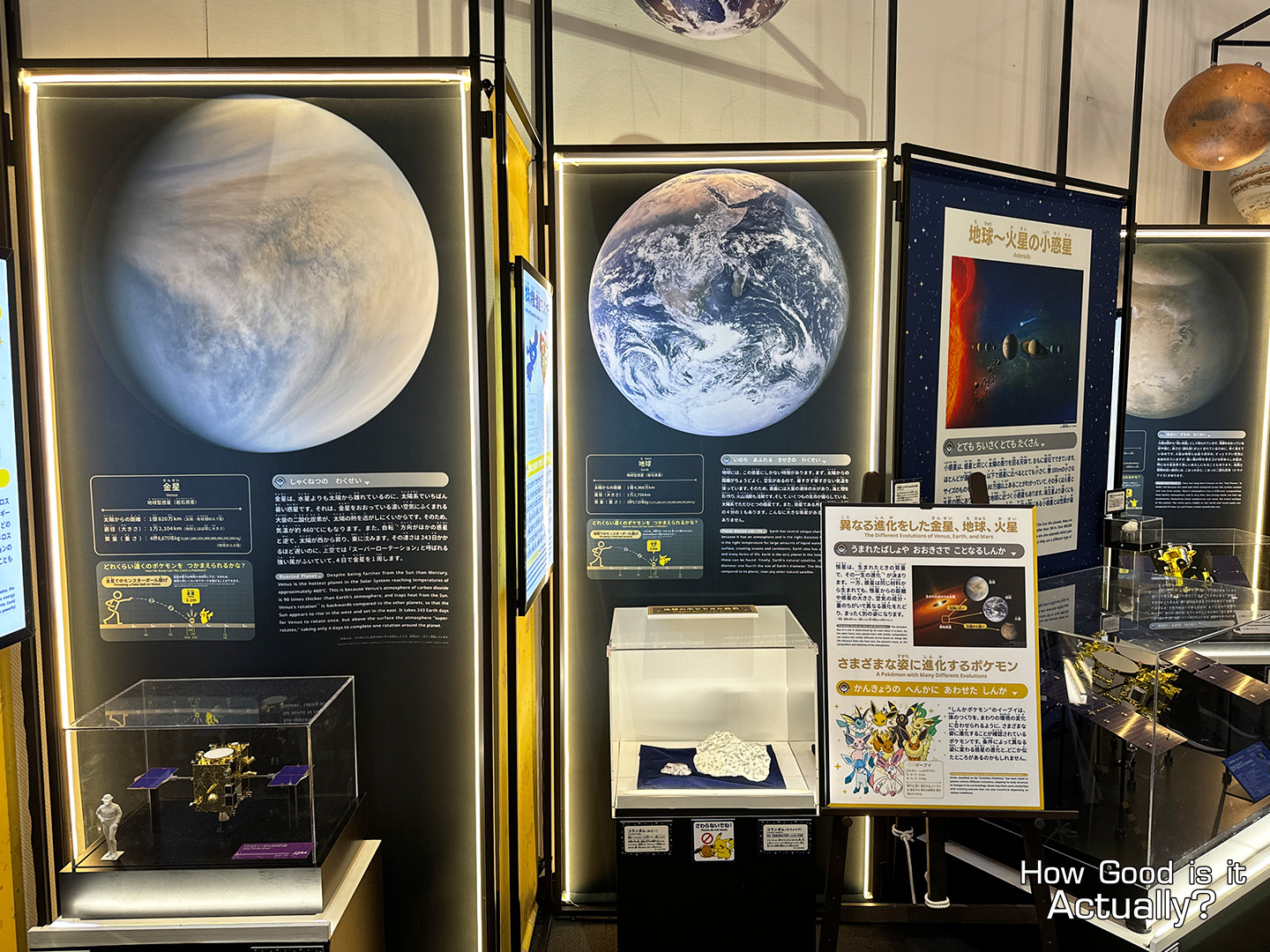
__________
__________
🪐 The Solar System 🪐
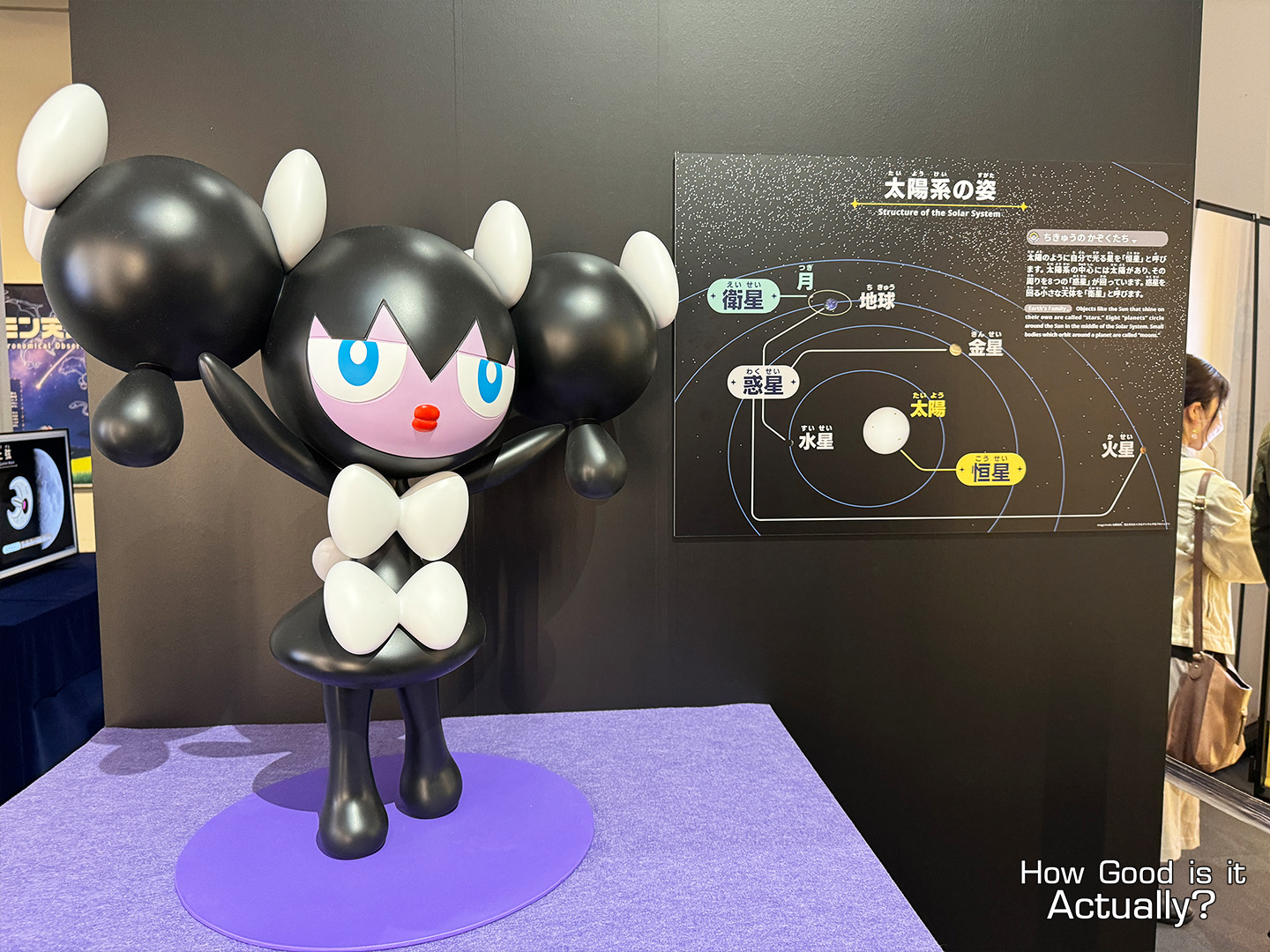
For the first main section of the exhibit, it’s a tour around the solar system: from the Sun all the way to Neptune (Plus a couple extras like the Moon and Asteroid Belt) accompanied by a statue of Gothorita, a Pokémon with psychic powers originating and strengthened by starlight.
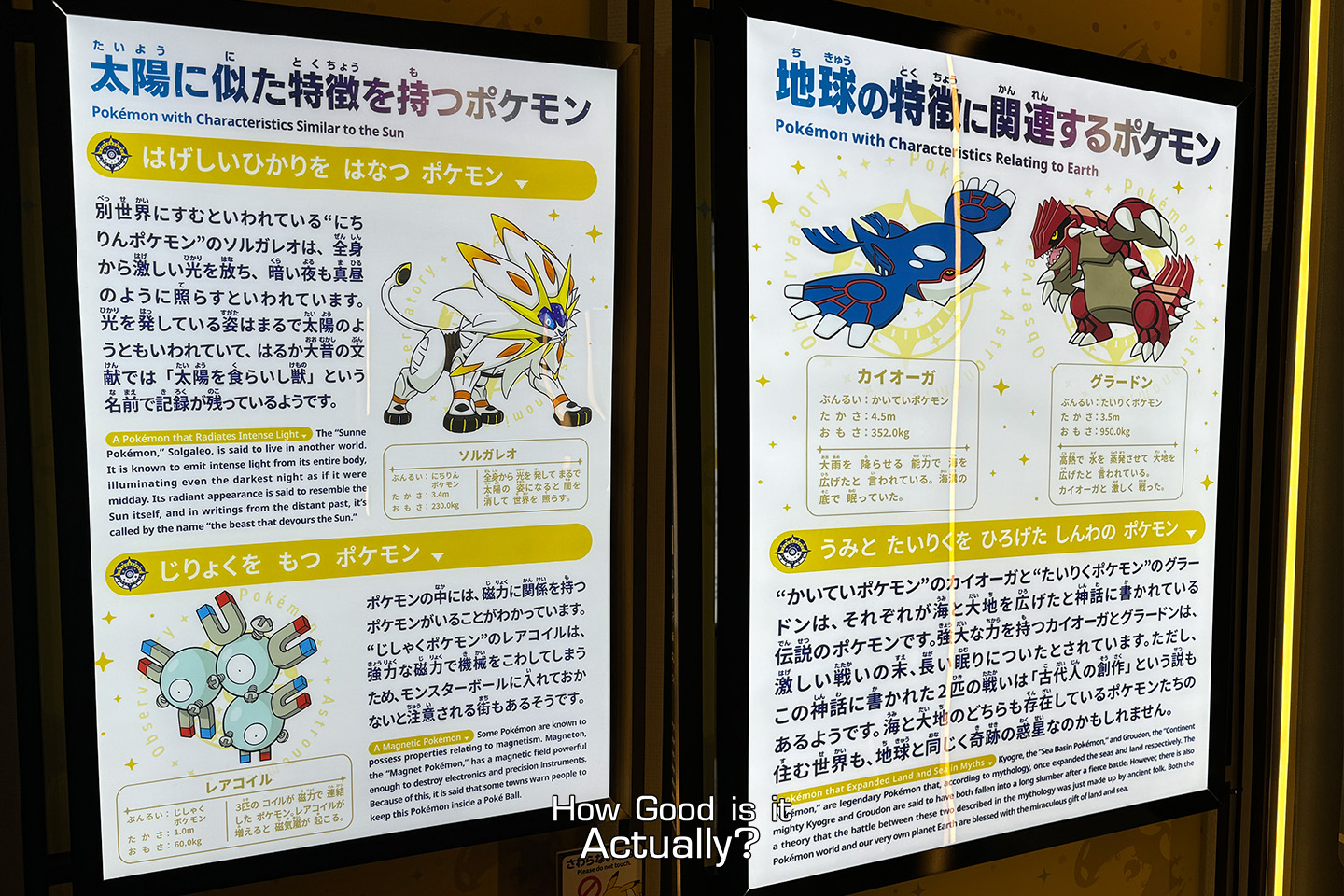
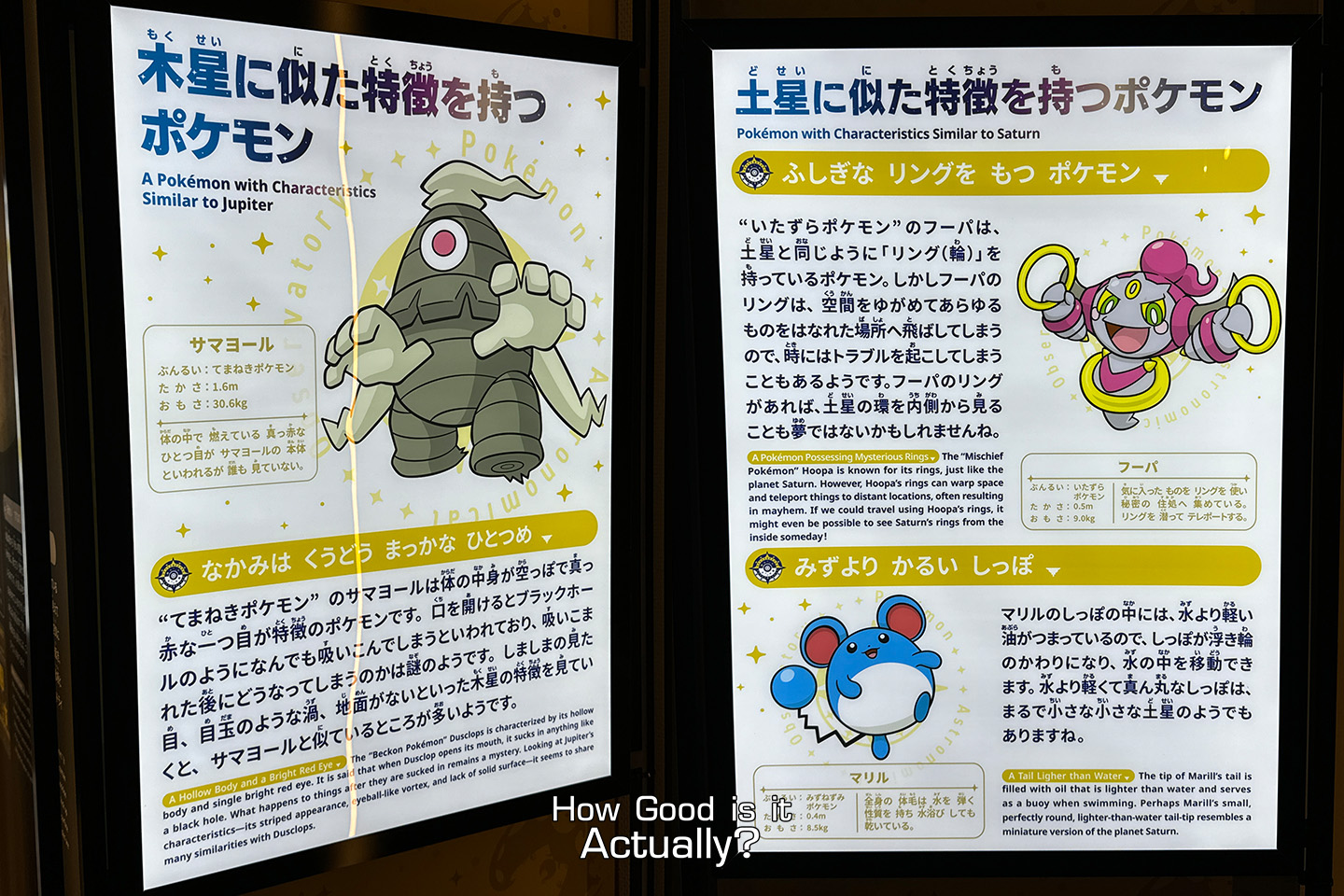
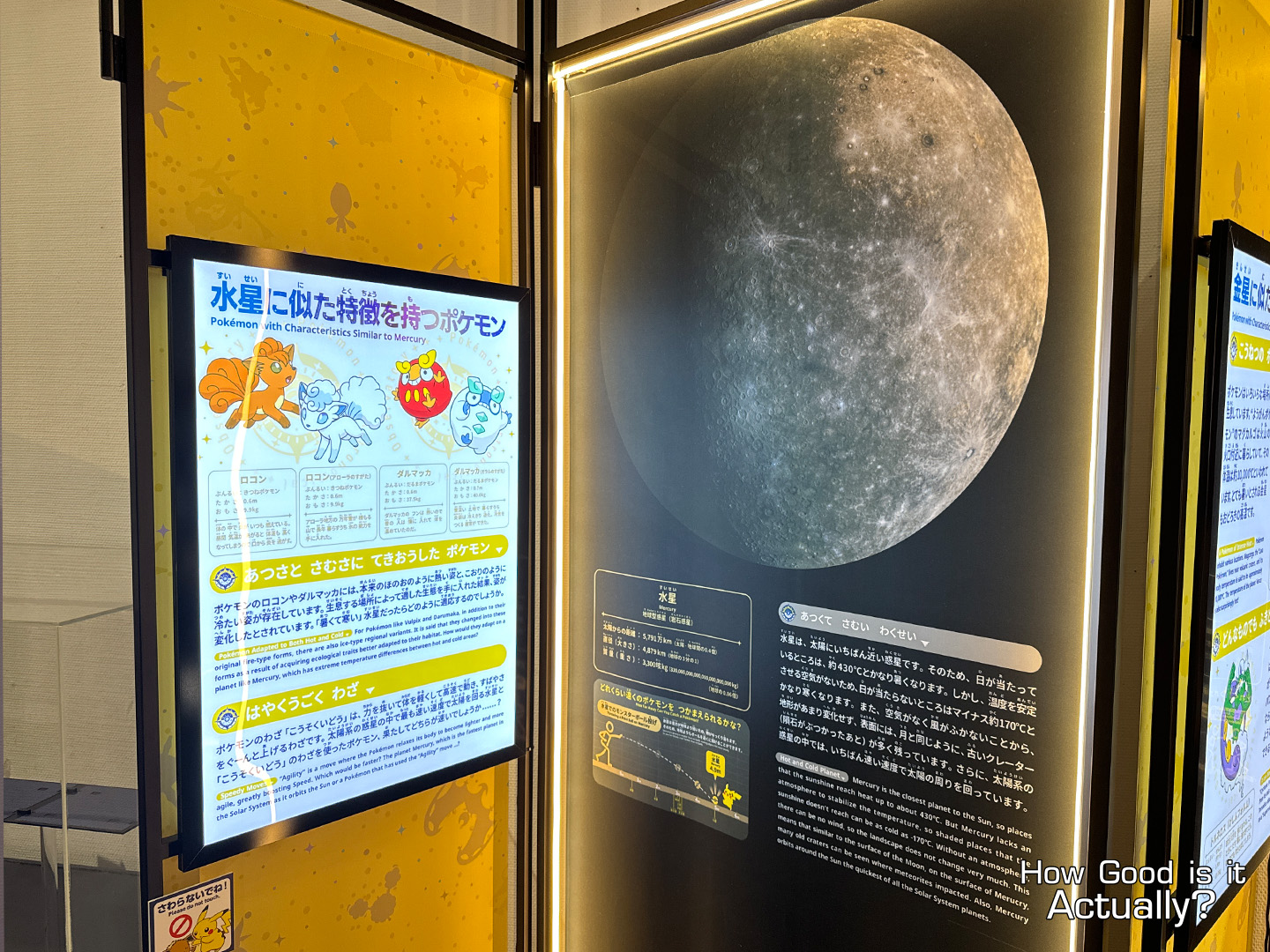
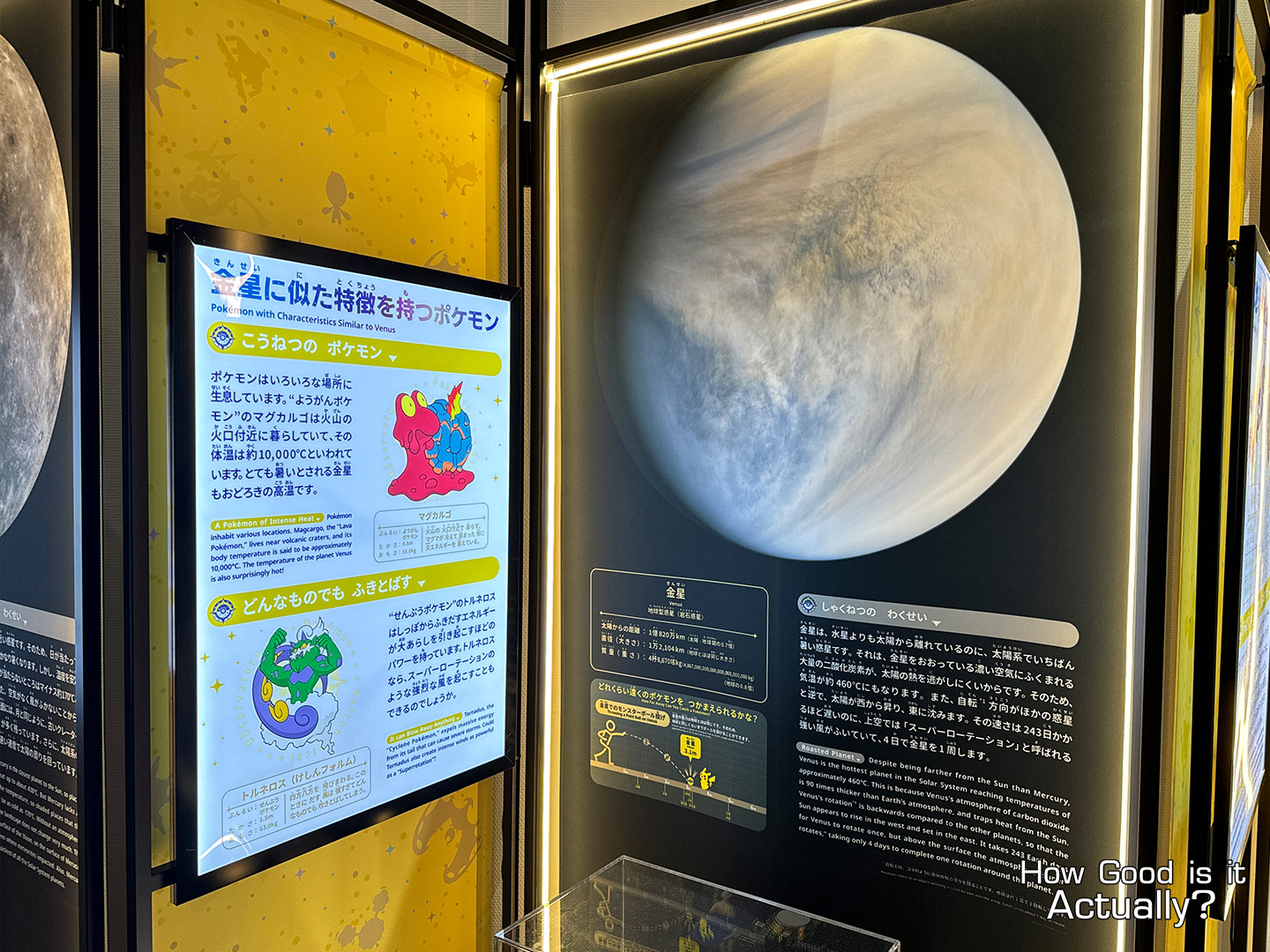
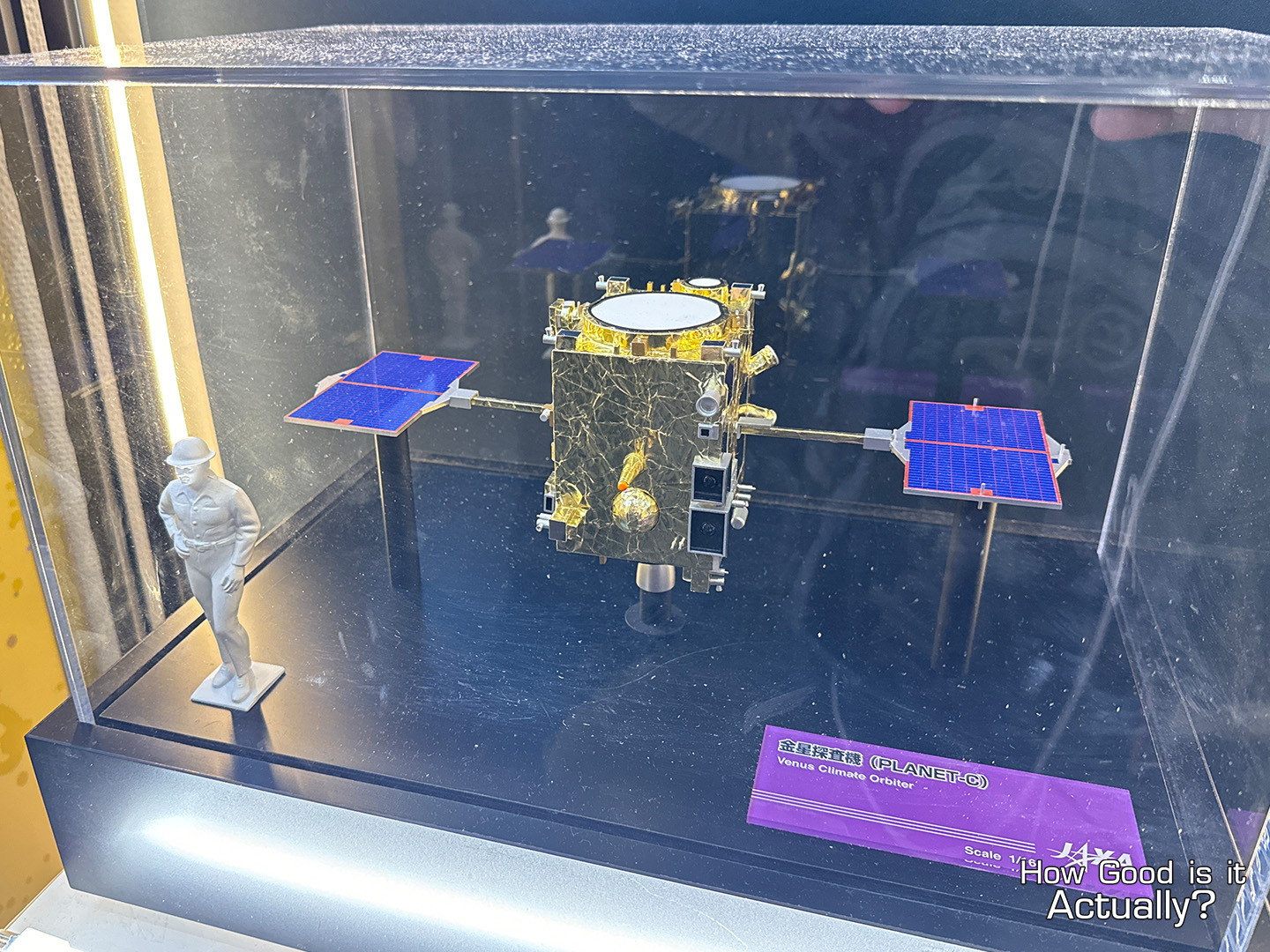
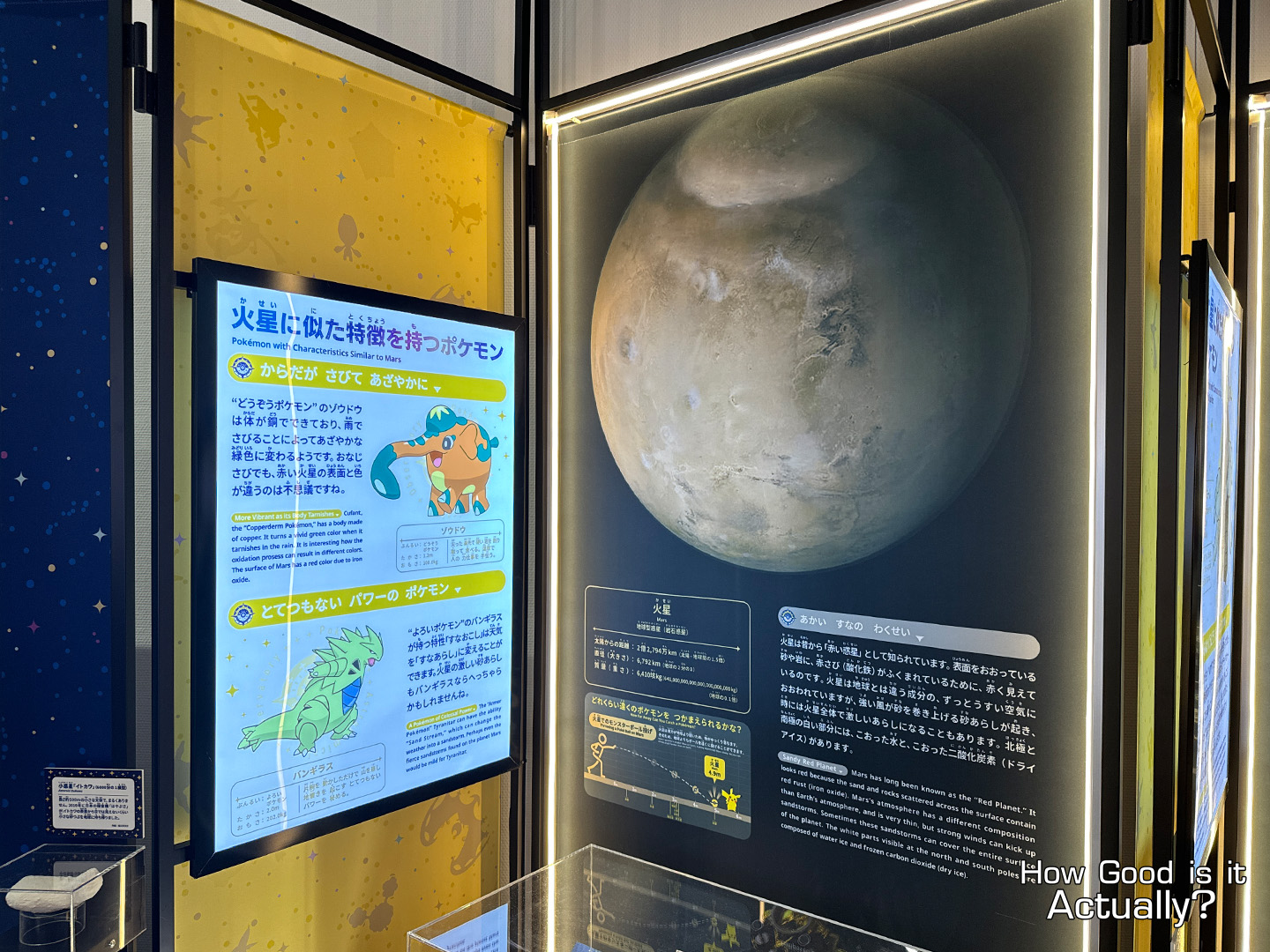
I won’t spoil too much of the exhibit, but within each section, you’ll find an image of the planet, a short overview, an artefact or scale model, and a special panel comparing a planet’s unique feature with a Pokémon’s ecology or ability. Such as:
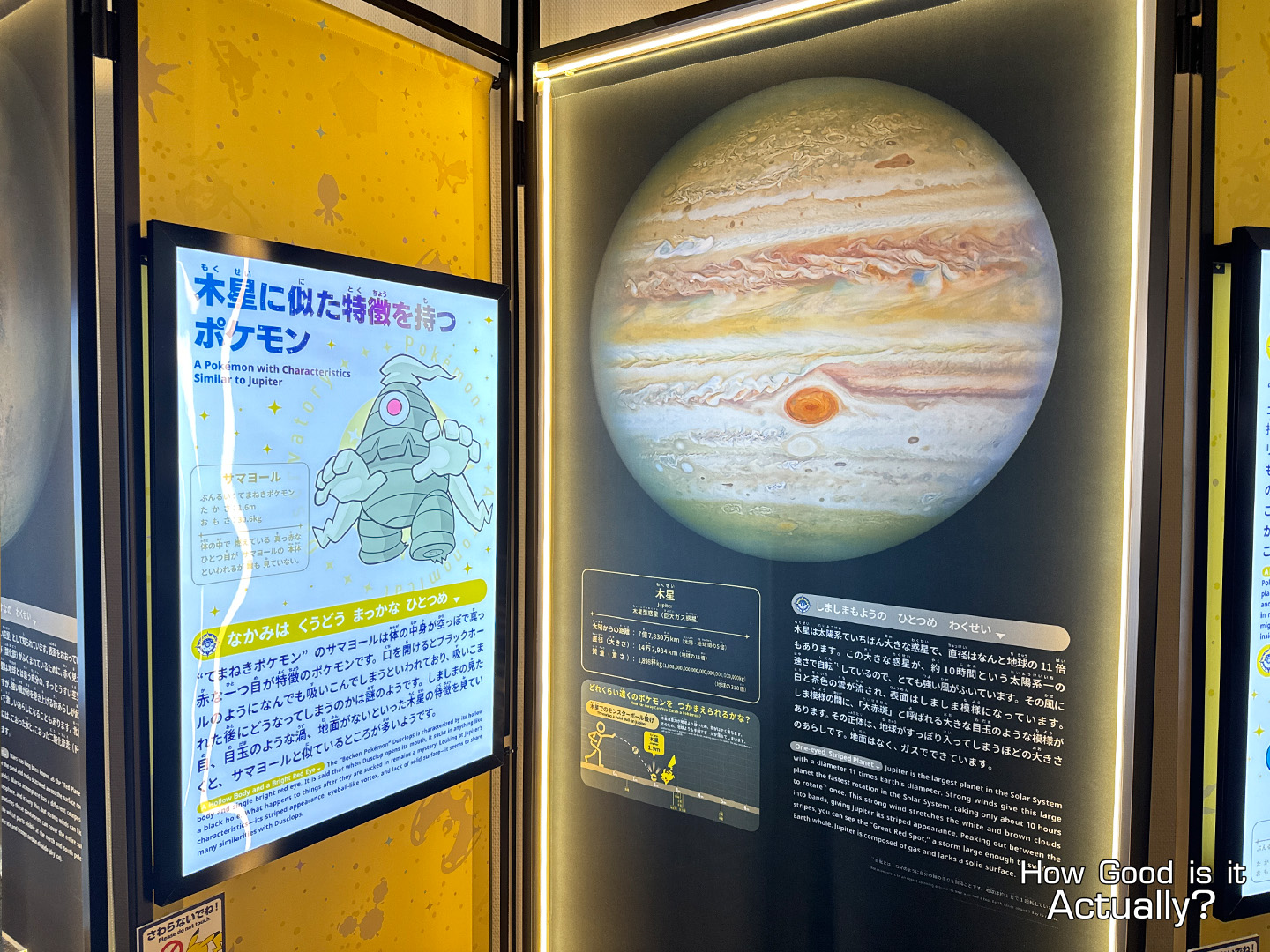
‘Like Jupiter, Dusclops features a hollow body and a bright, mysterious red ‘eye’’
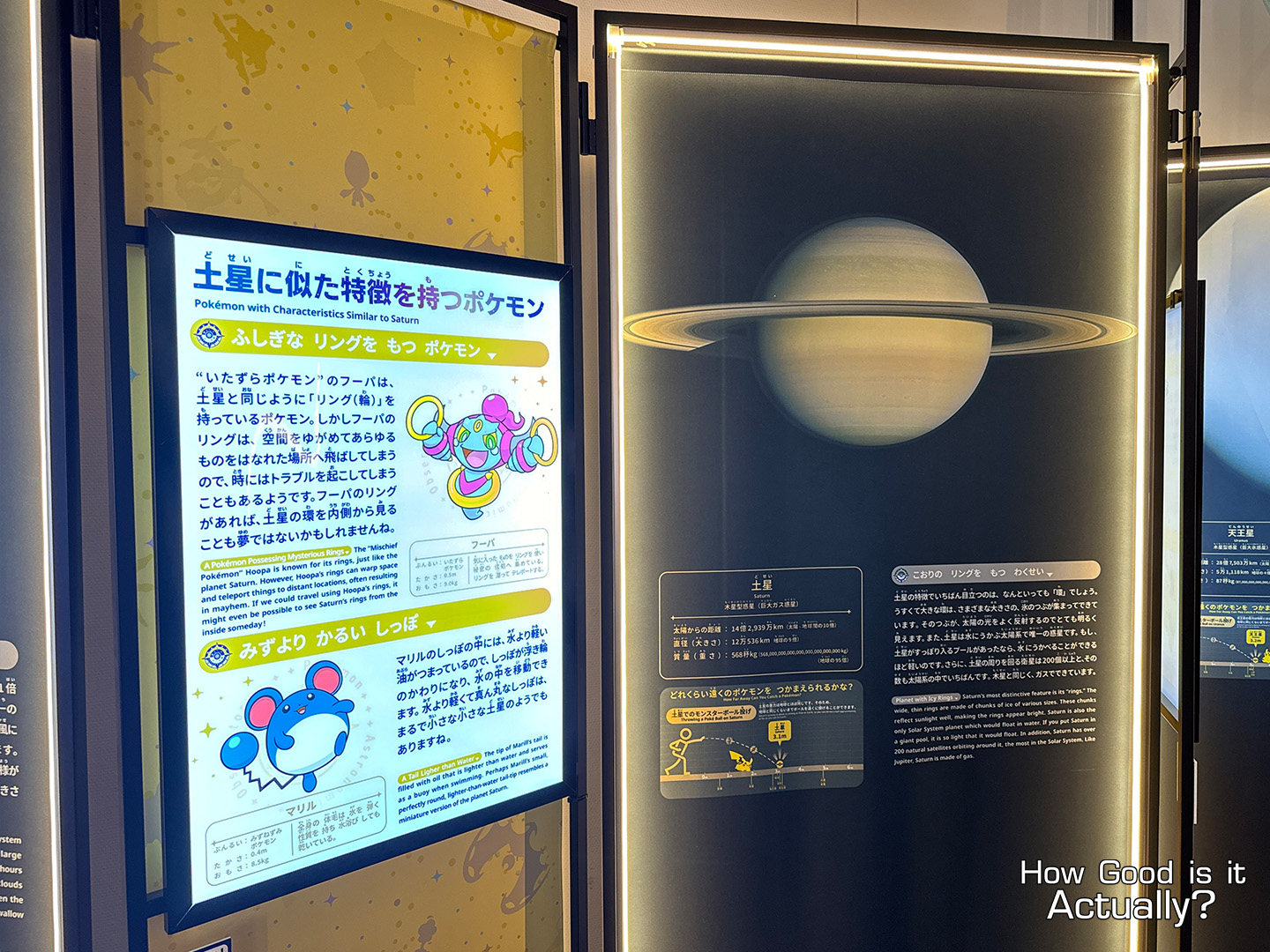
‘Marill’s oil-filled tail acts as a buoy when swimming, similar to Saturn – the only planet that can float on water’
__________
☀️ Sun ☀️
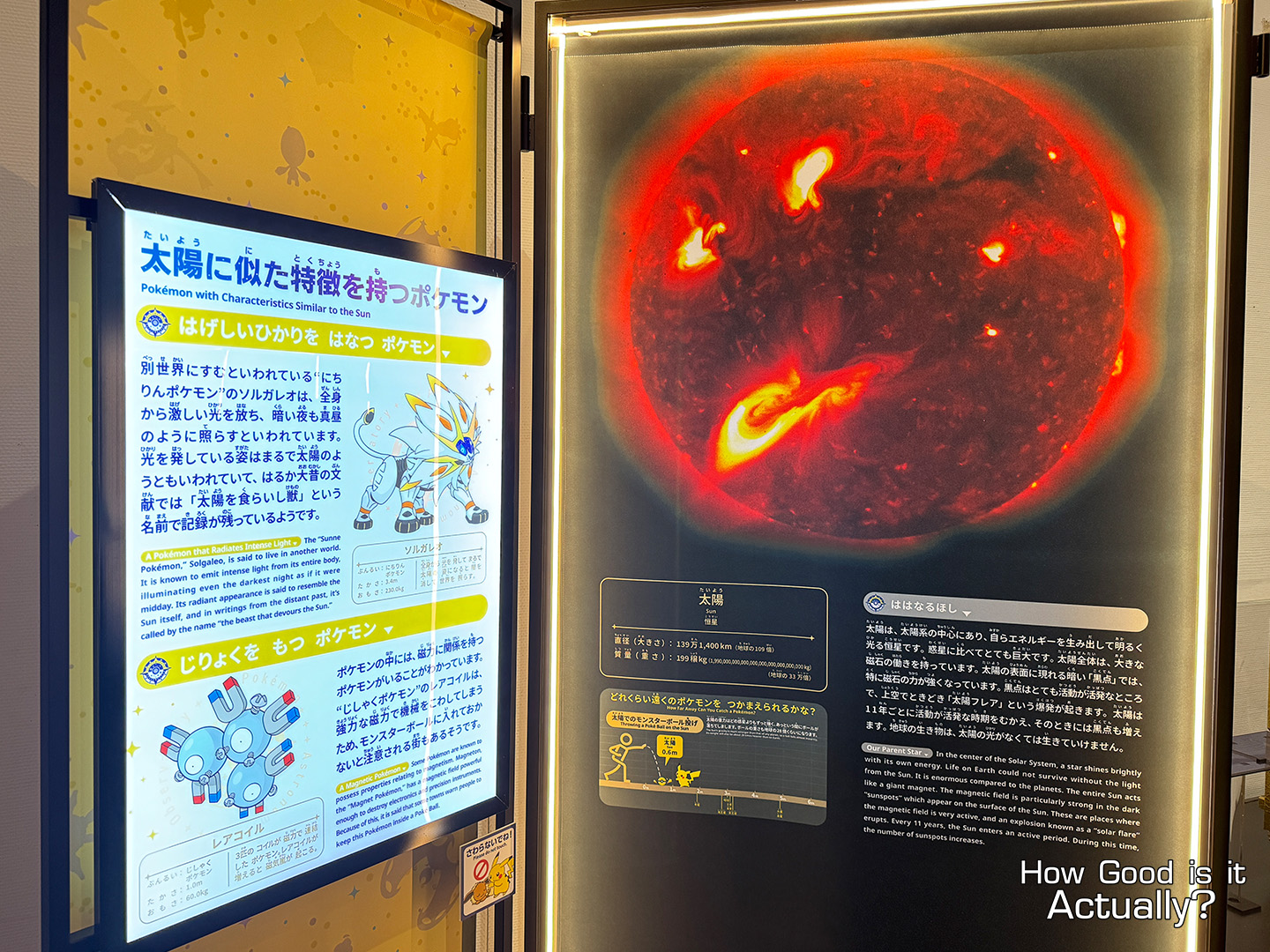
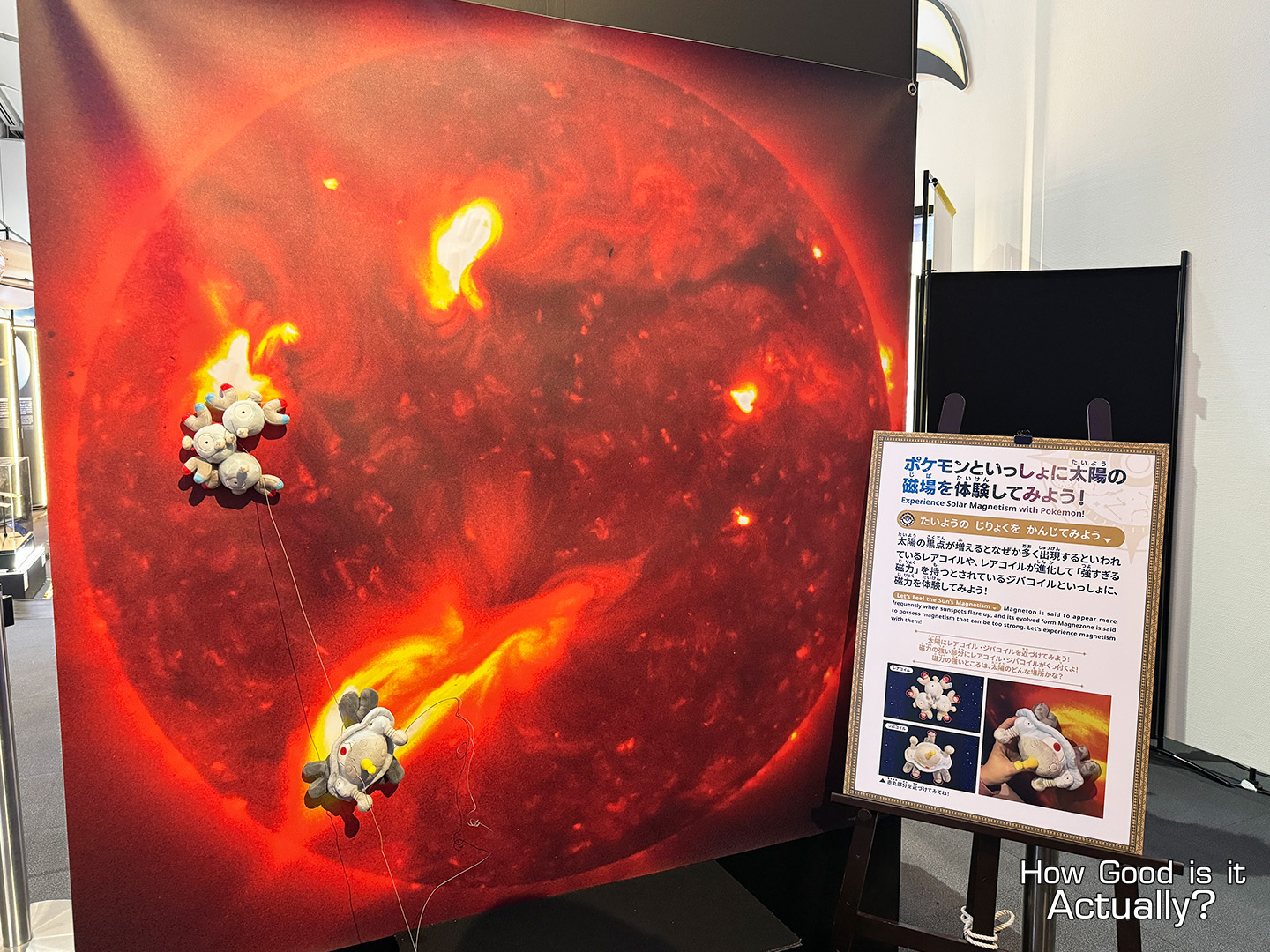
In addition to the standard displays, the Sun also features an interactive panel, allowing you to experience the Sun’s magnetic field with Pokémon Fit plushies of Magneton and Magnezone.
__________
🟠 Mercury 🟠
🟡 Venus 🟡
🌏 Earth 🌏
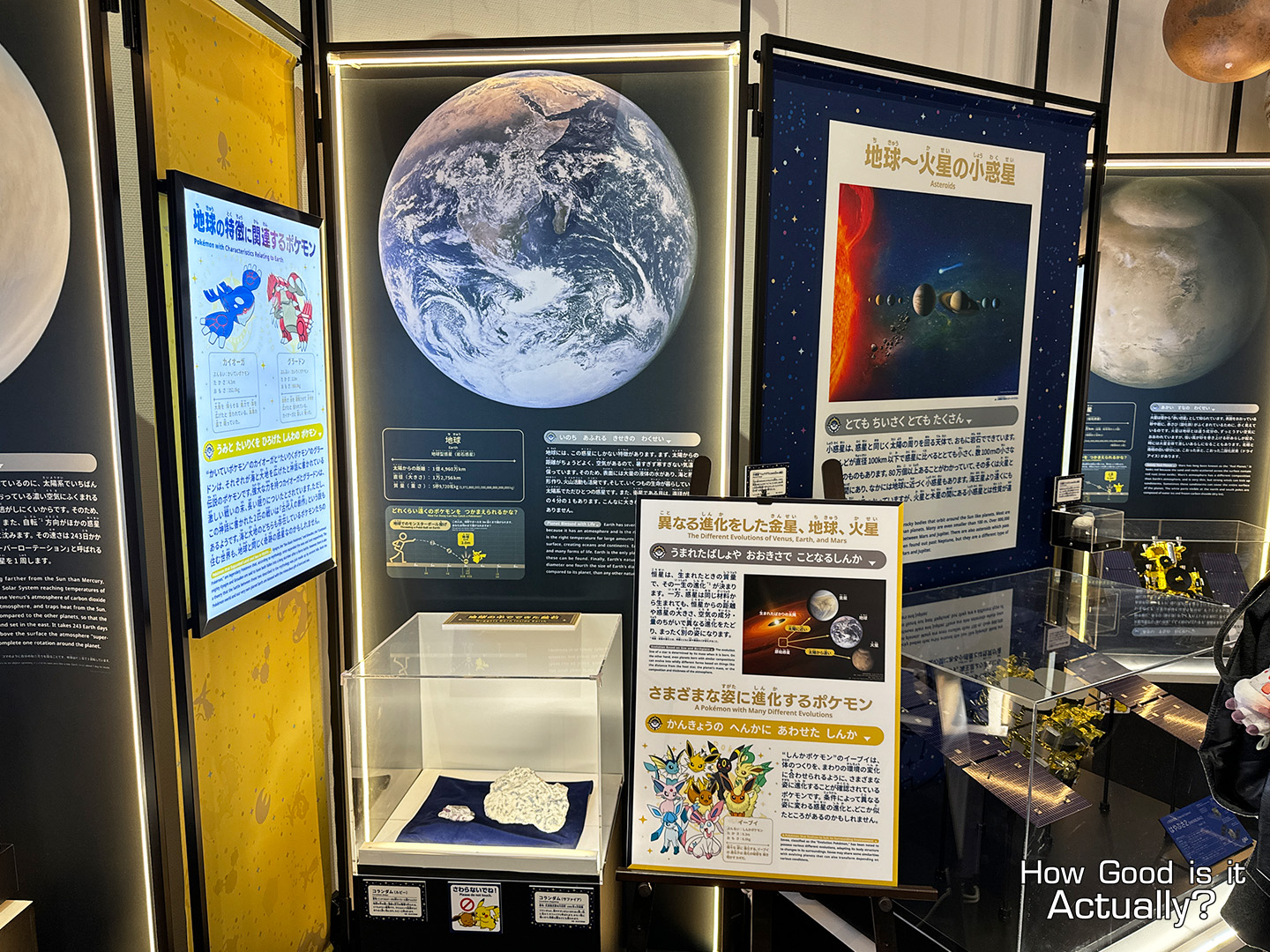
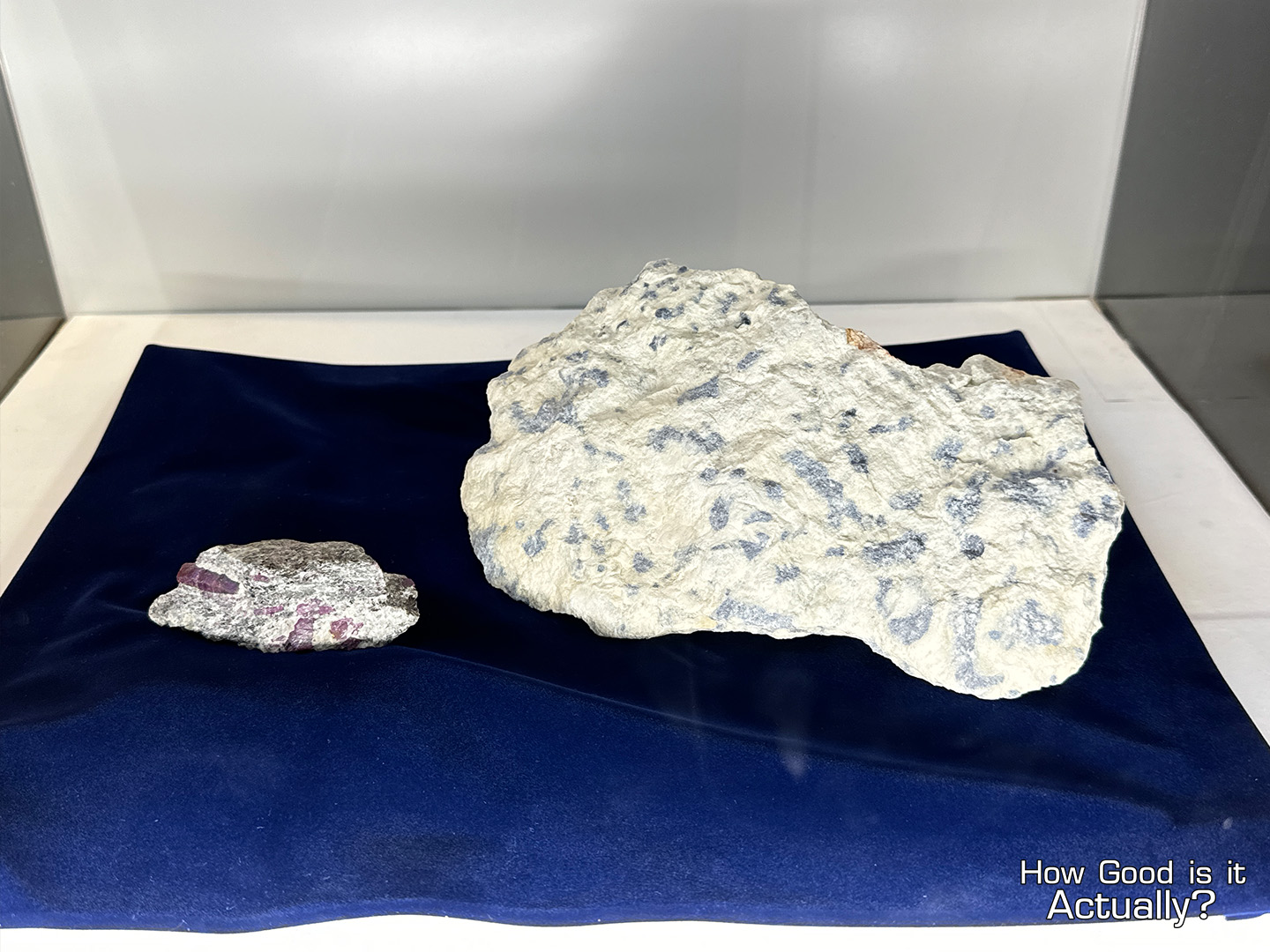
Our own planet features two mineral samples: Ruby and Sapphire, representing the Continent and Sea Basin Pokémon: Groudon and Kyogre.
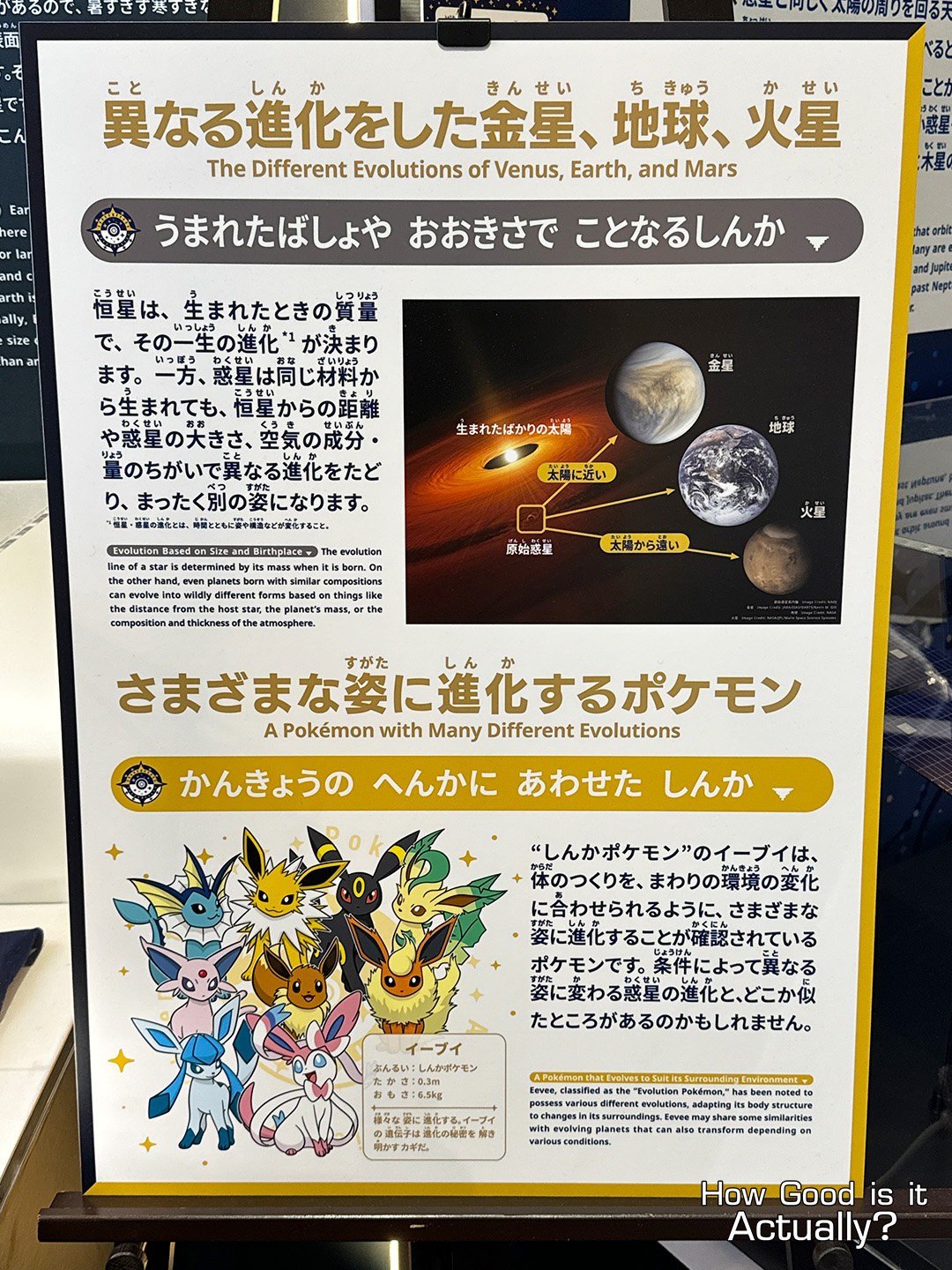
You’ll also find a panel comparing the solar system’s rocky planets to Eevee and its evolutions: bodies made of similar compositions that ‘evolve’ into their own unique forms as a result of their environments.
__________
__________
🌕 Moon 🌕
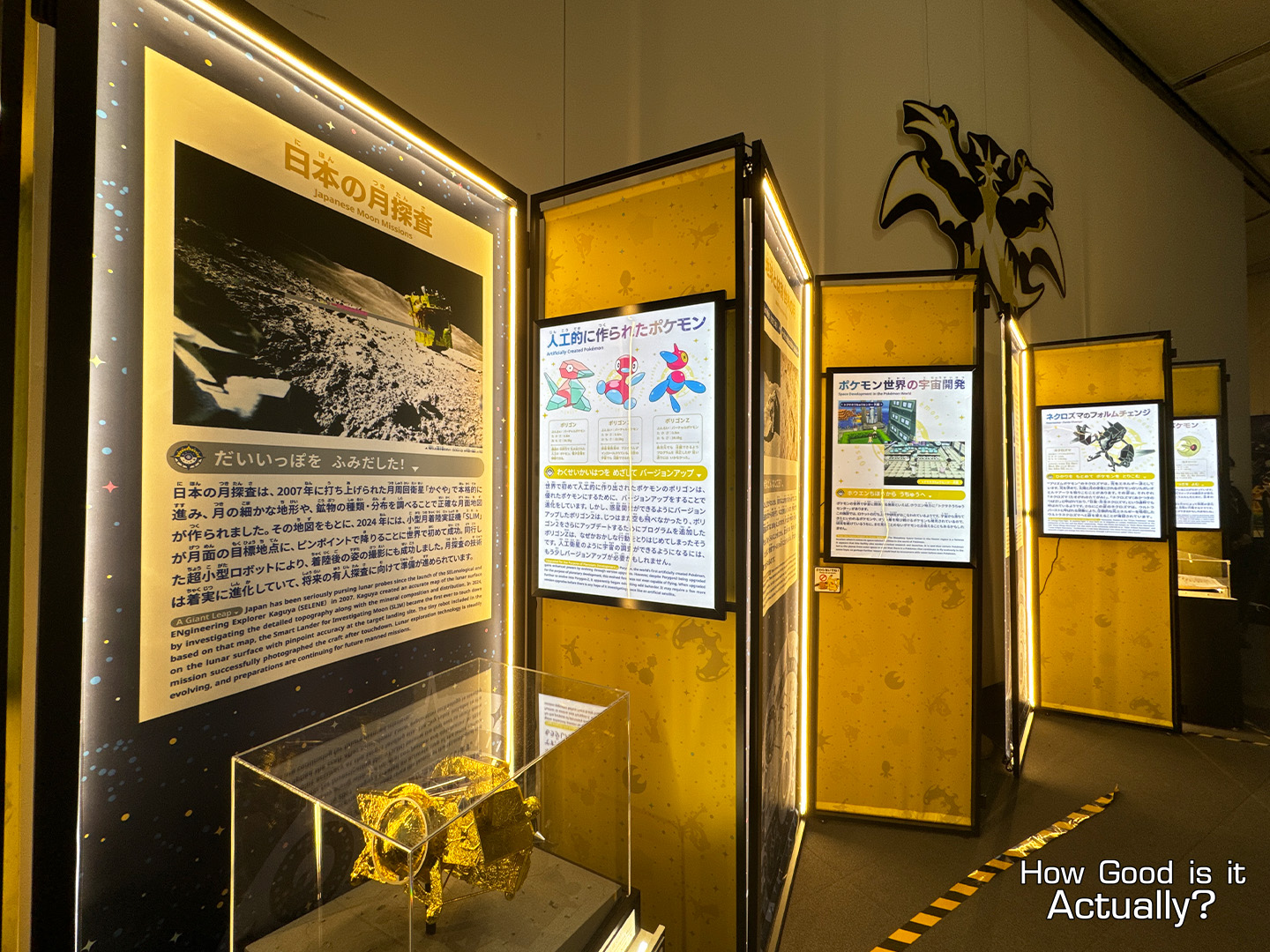
The Moon gets its special segment at the exhibit, and by far the largest one too.
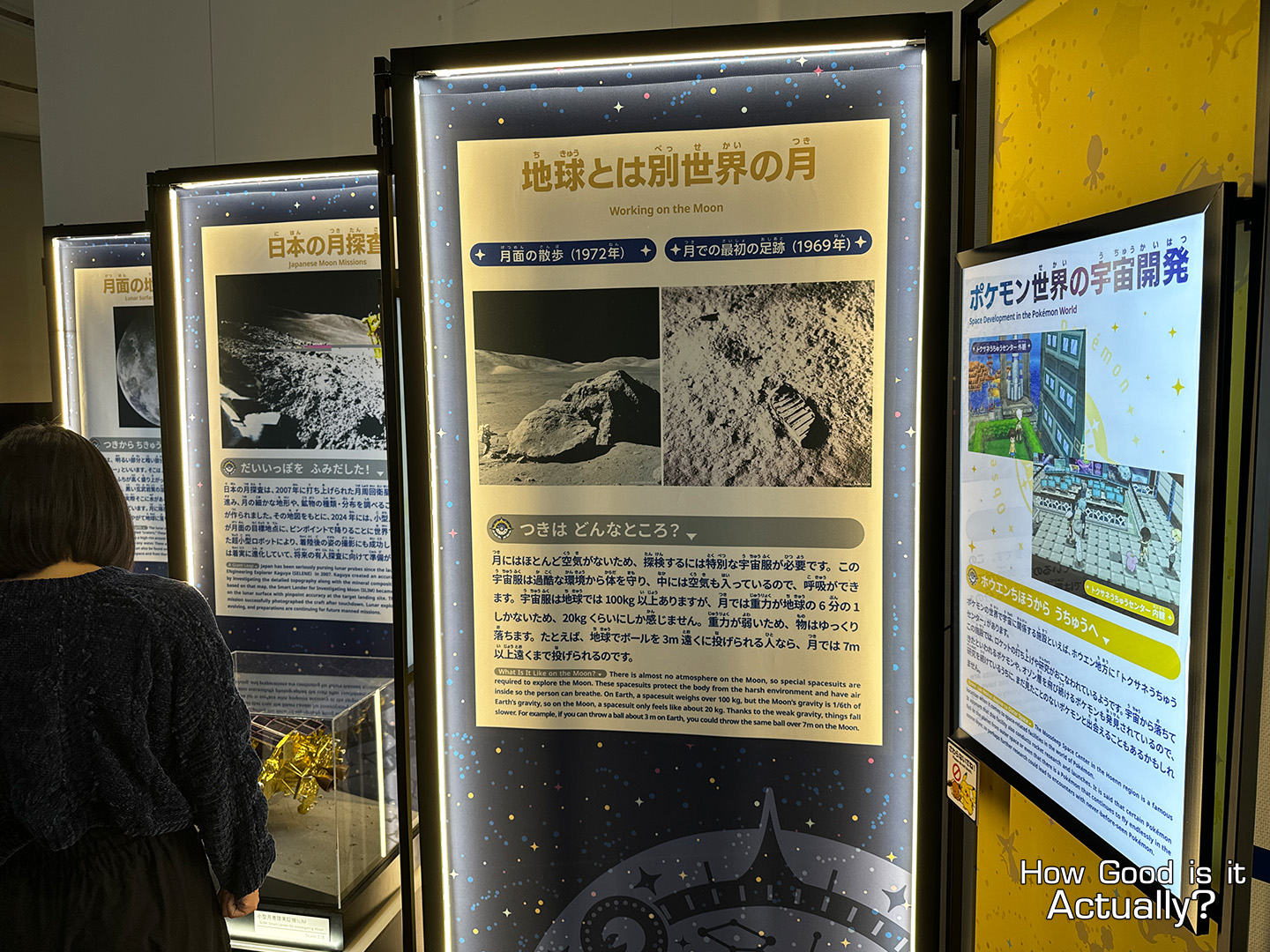
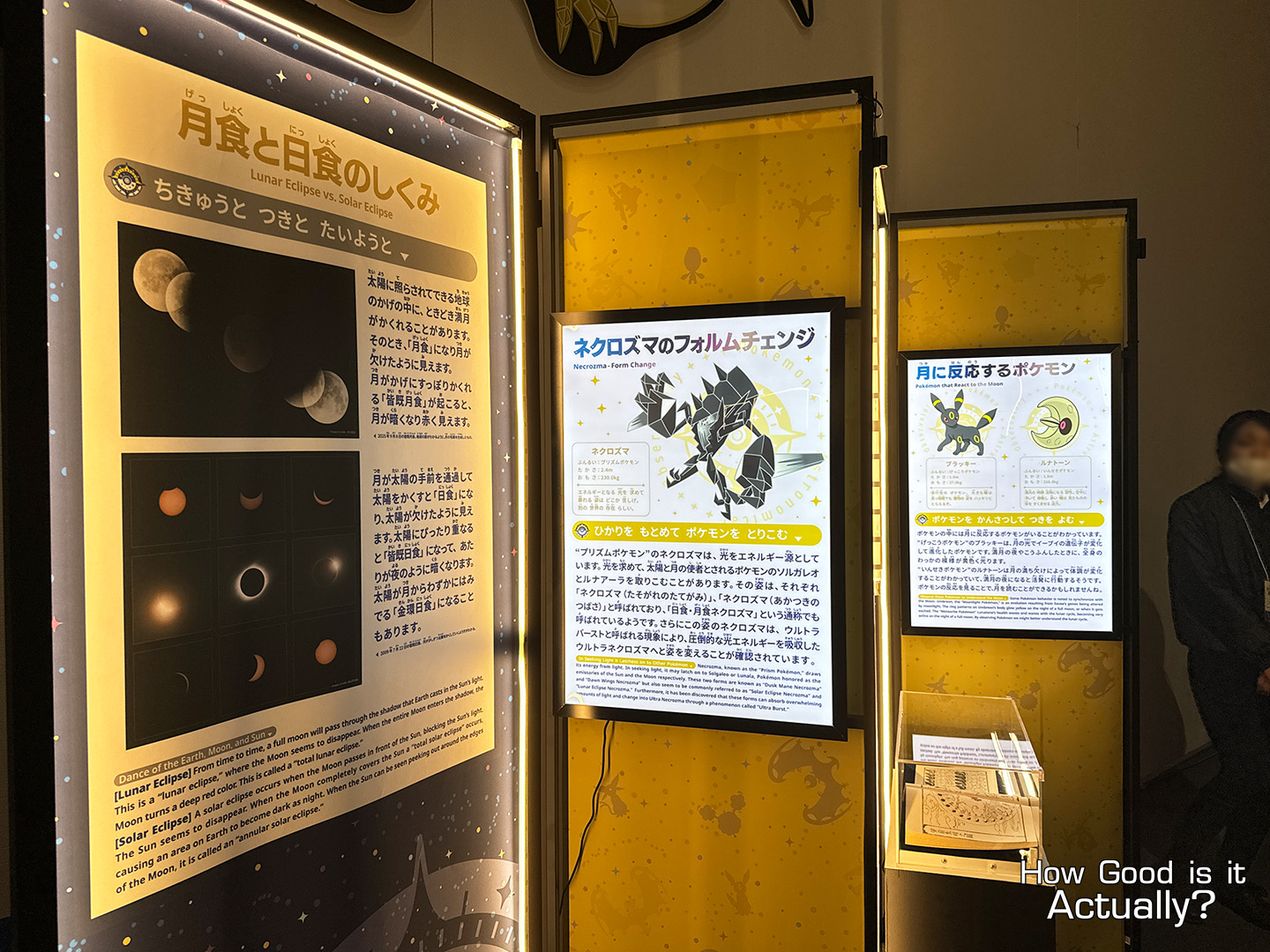
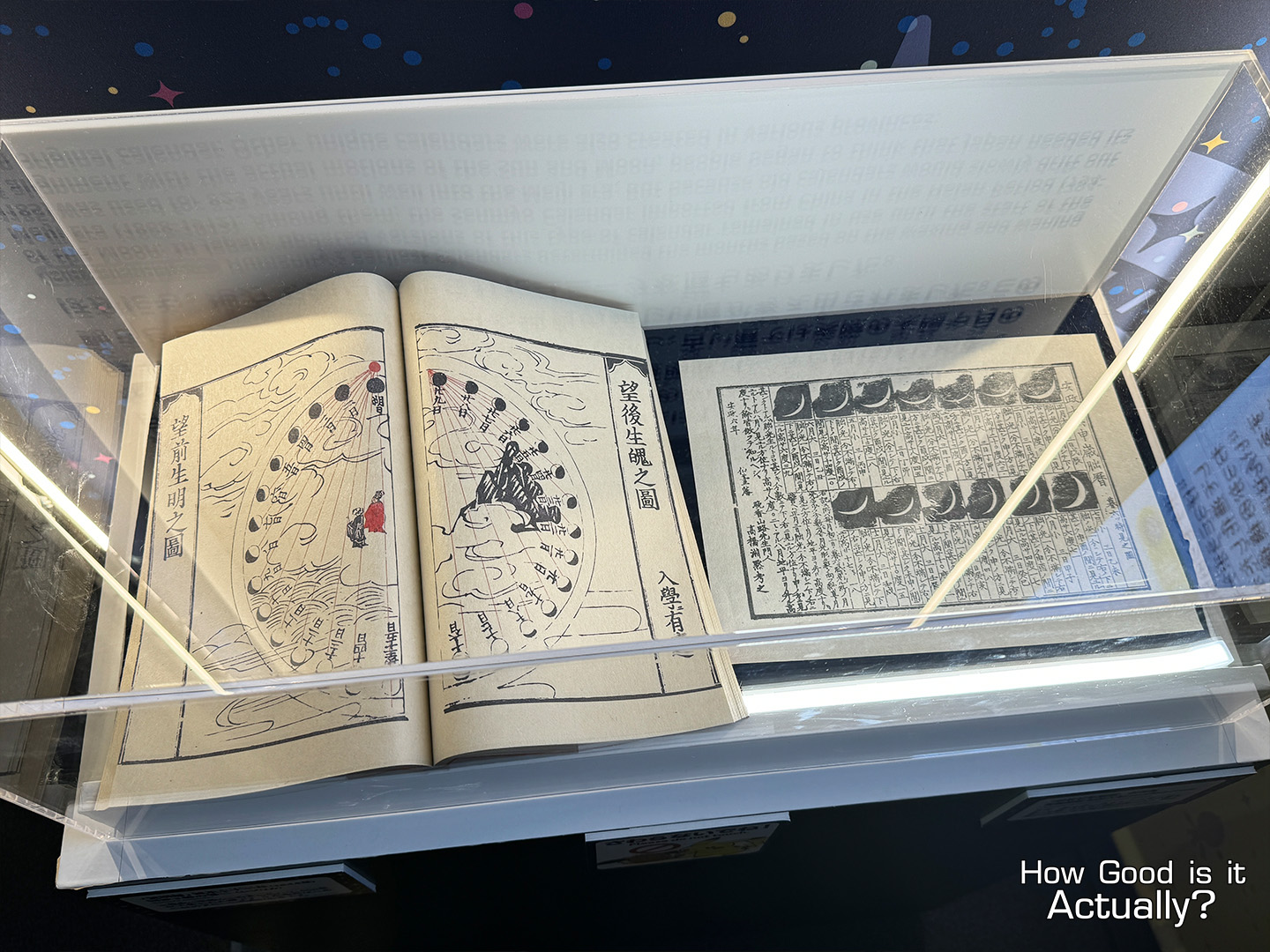
With panels on the lunar surface, moon phase & eclipse, Japan’s moon missions, and some history on Japan’s original moon-based calendar.
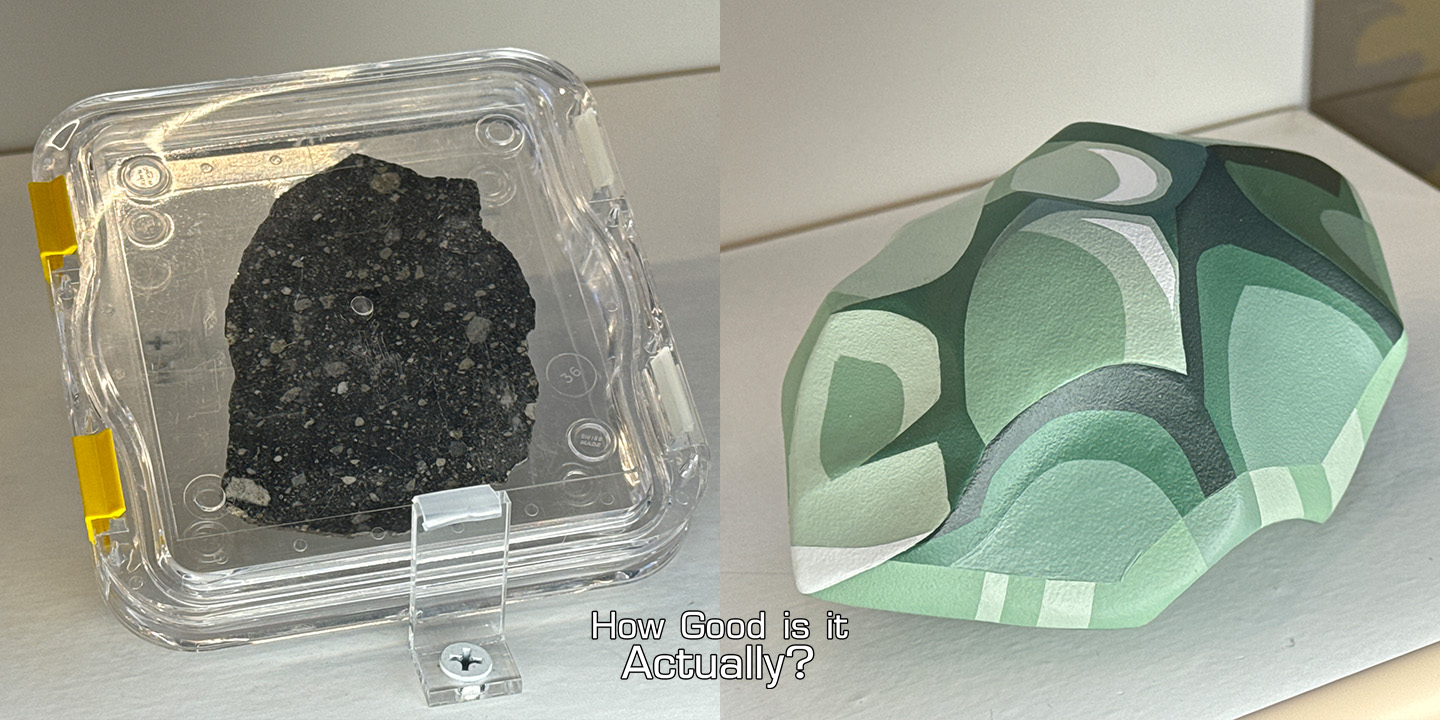
And let’s not forget the two moon samples: a Lunar Meteorite from our universe, and a Moon Stone found in the Pokémon world.
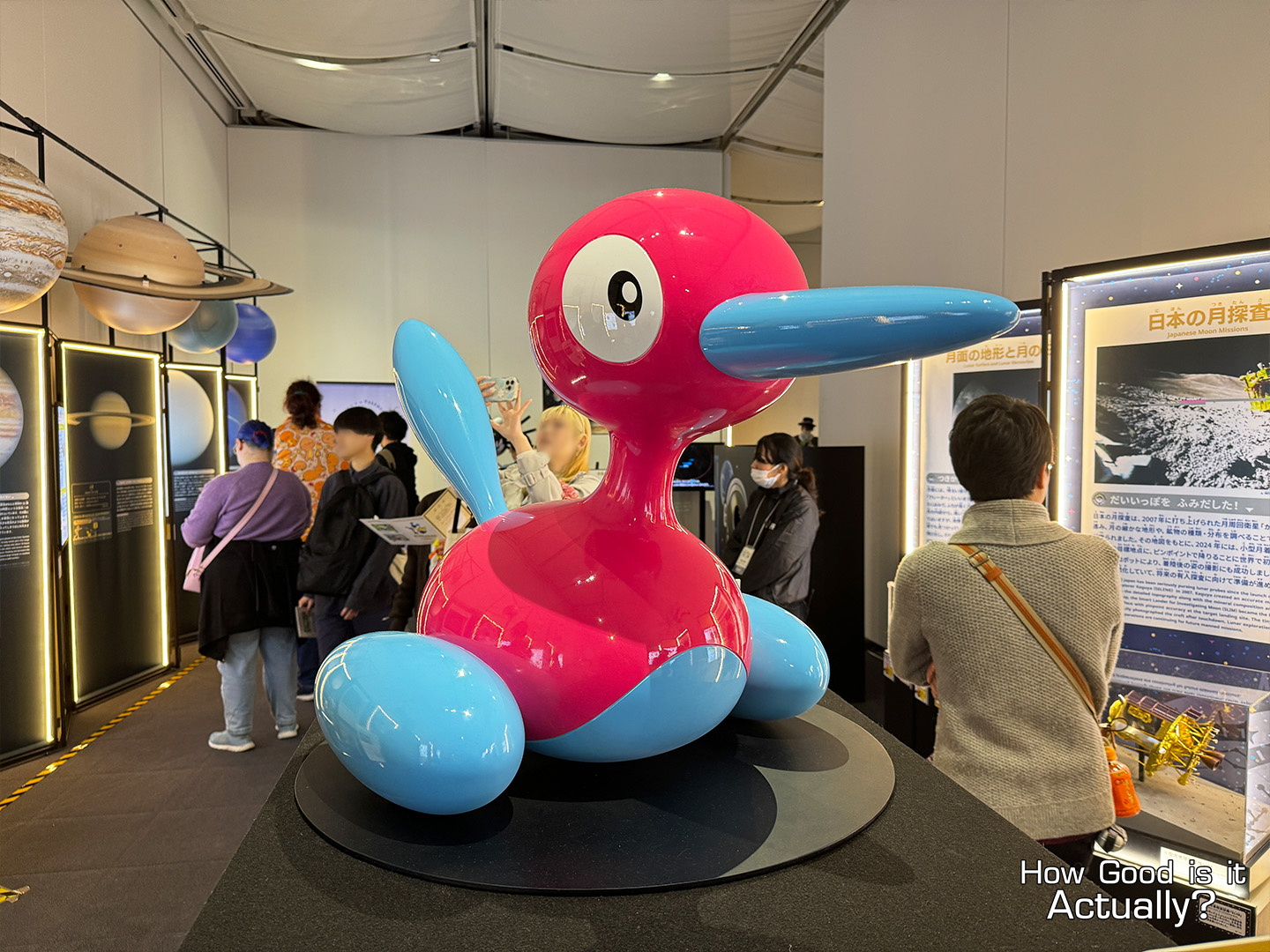
And although it’s placed in the center of the room, Porygon2 makes its appearance here in statue form!
🔴 Mars 🔴
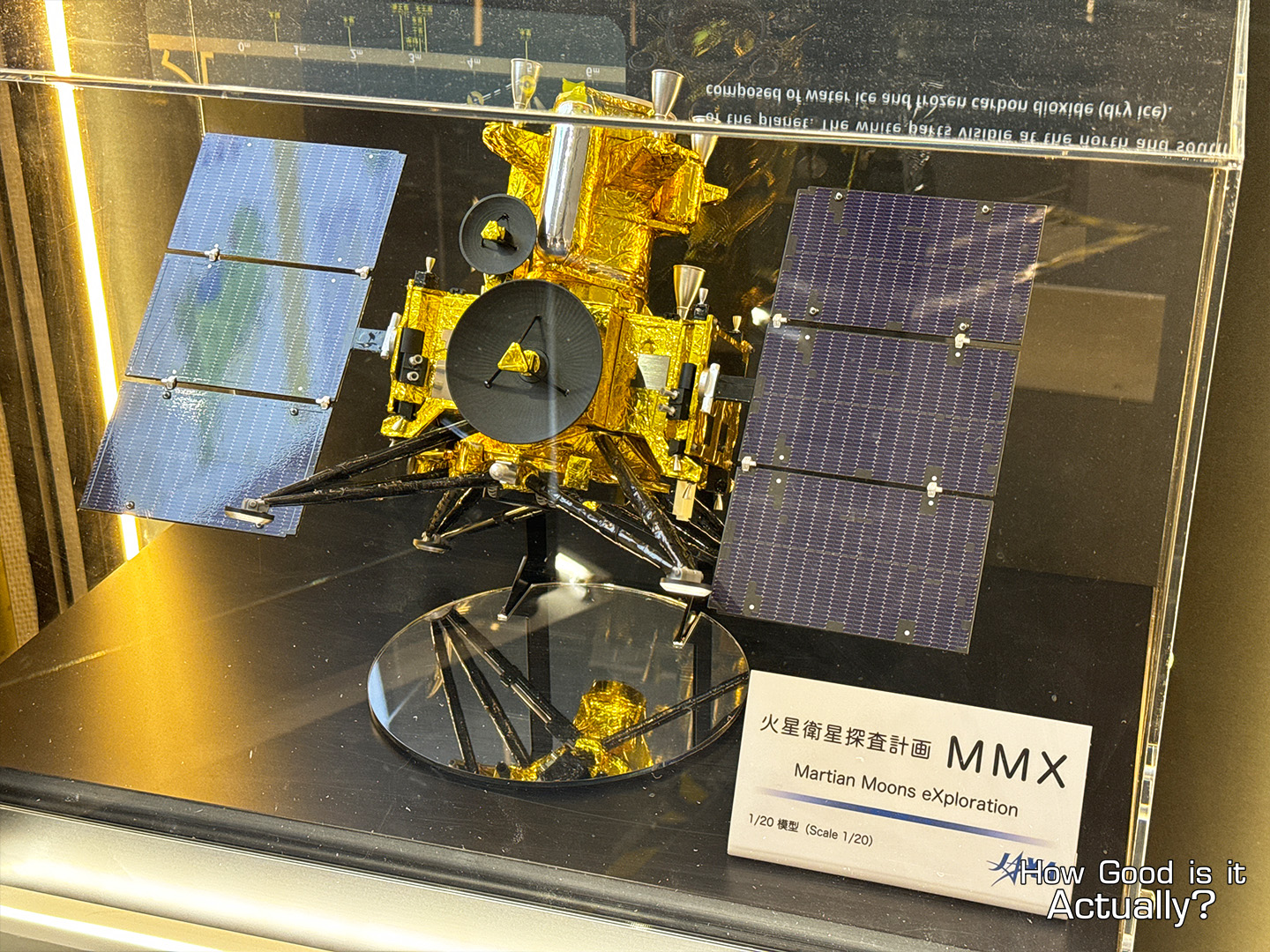
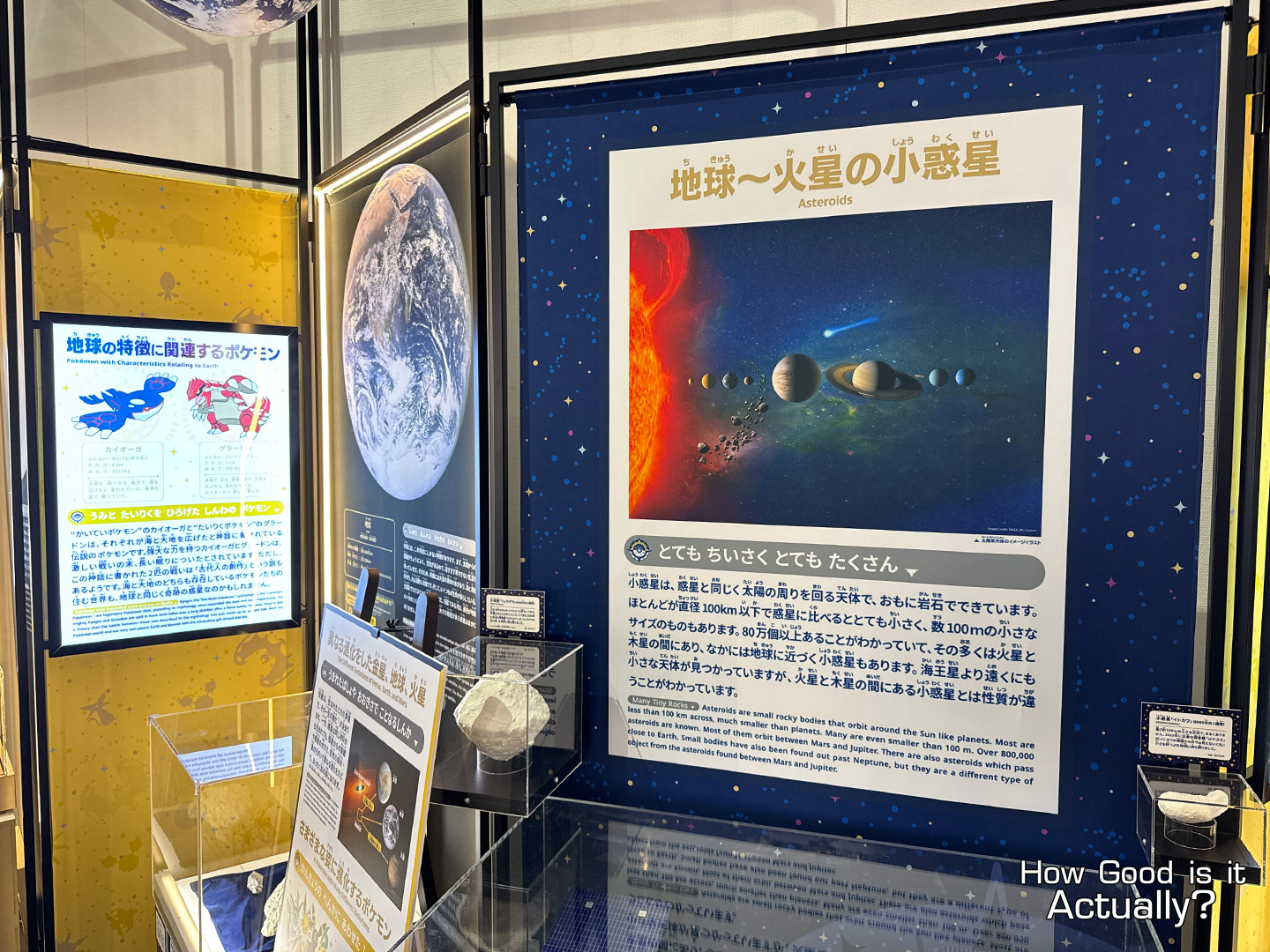
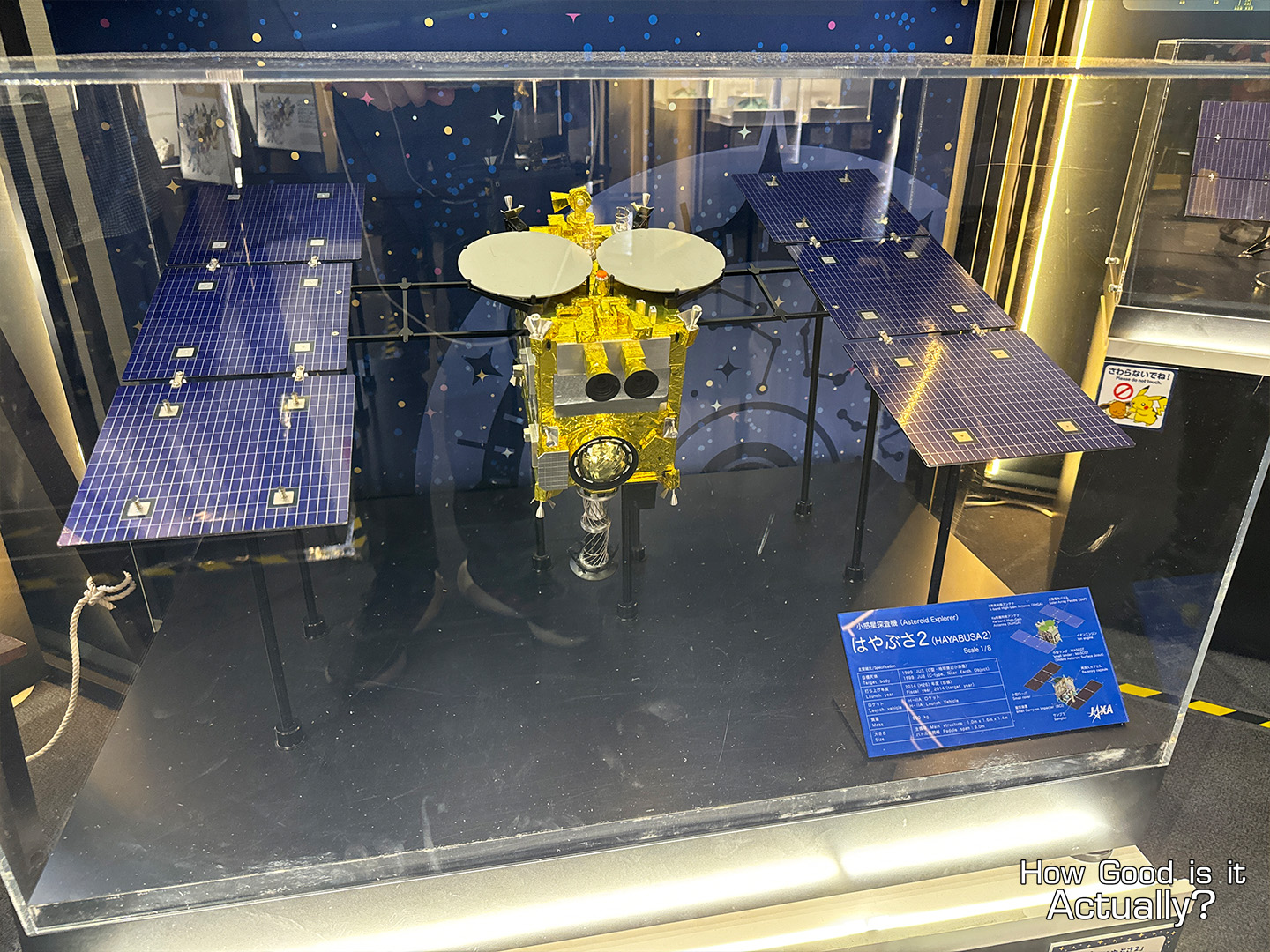
☄️ Asteroid Belt ☄️
🟠 Jupiter 🟠
🪐 Saturn 🪐
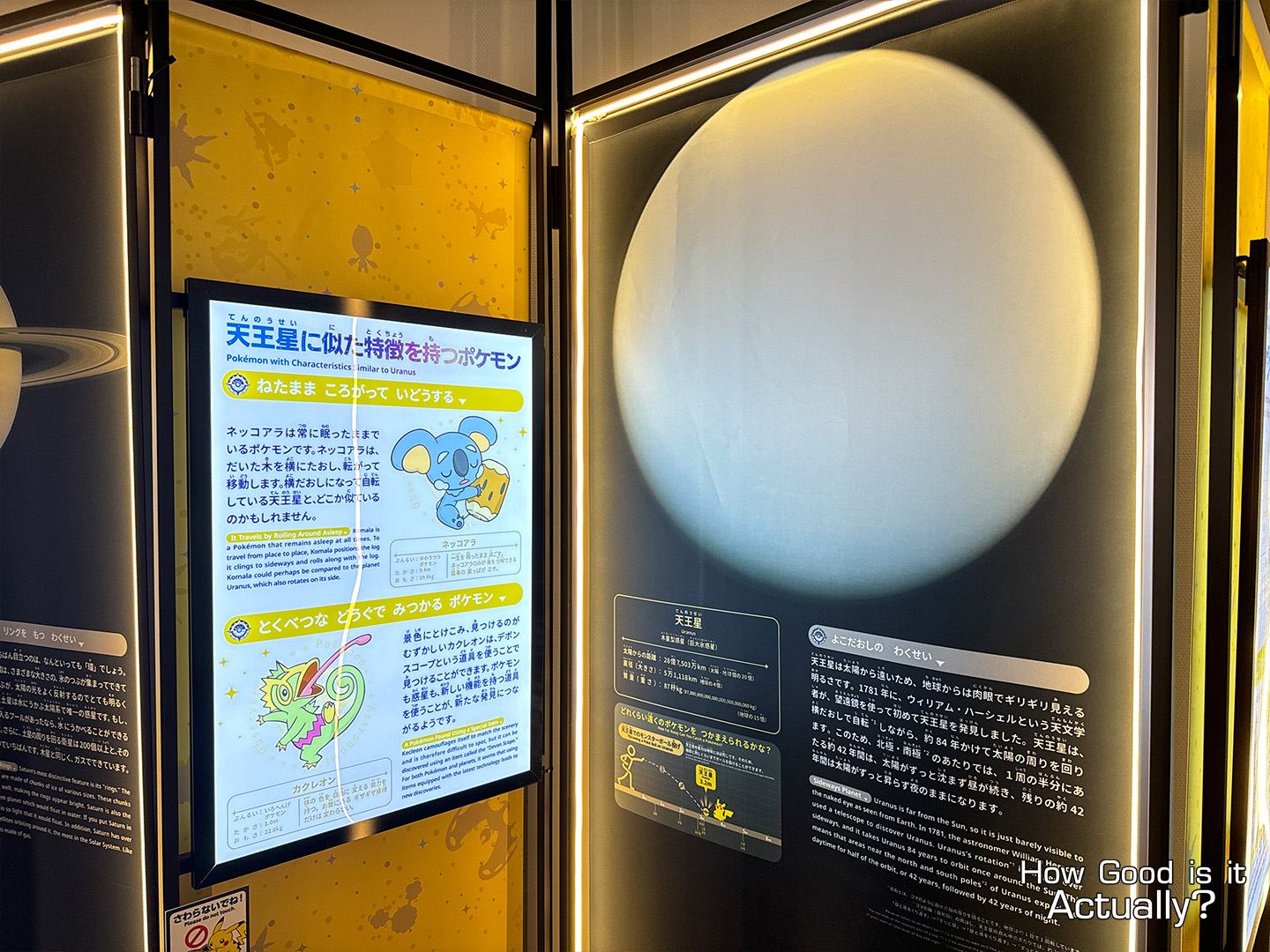
🔵 Uranus 🔵
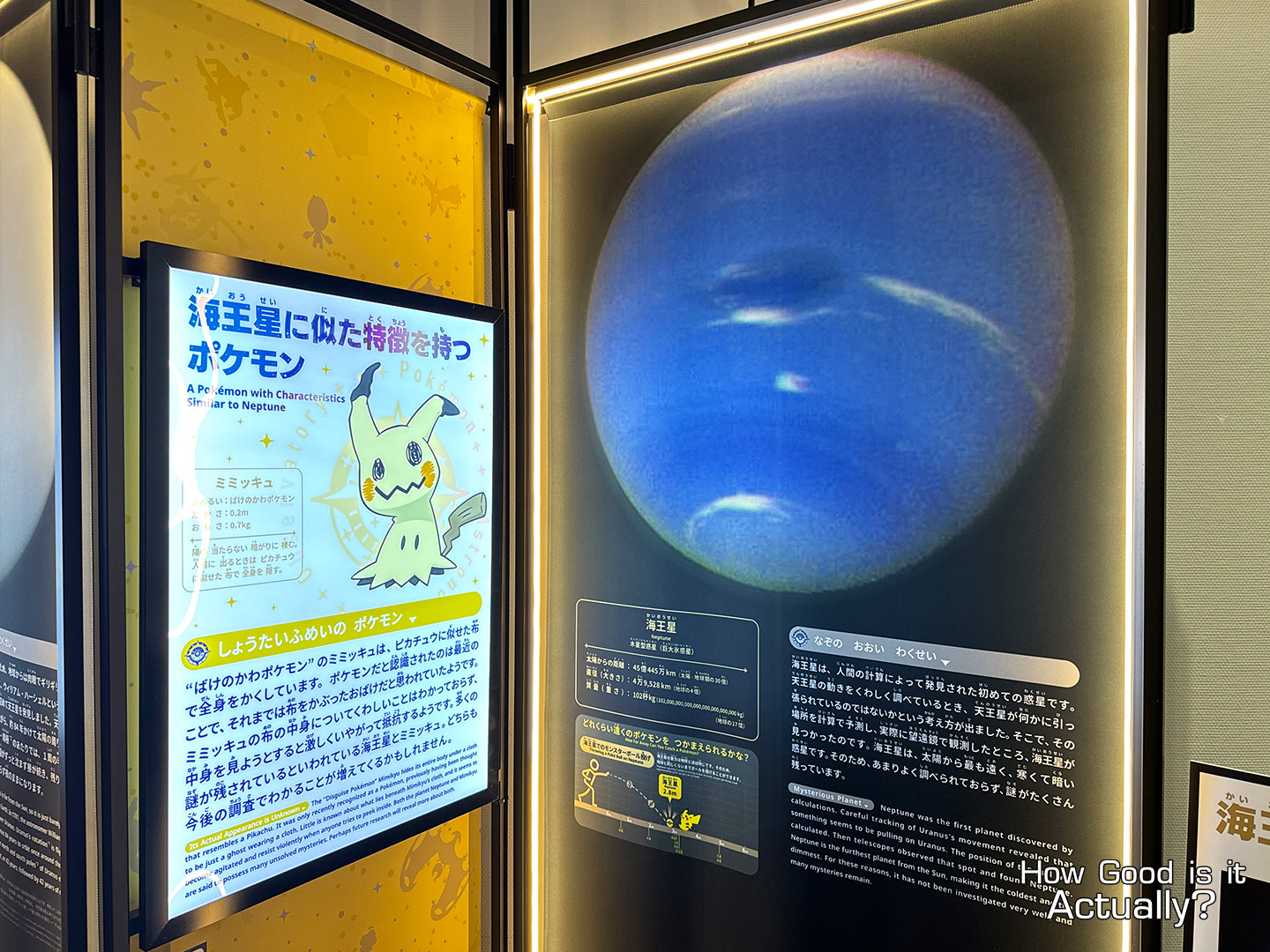
🔵 Neptune 🔵
__________
__________
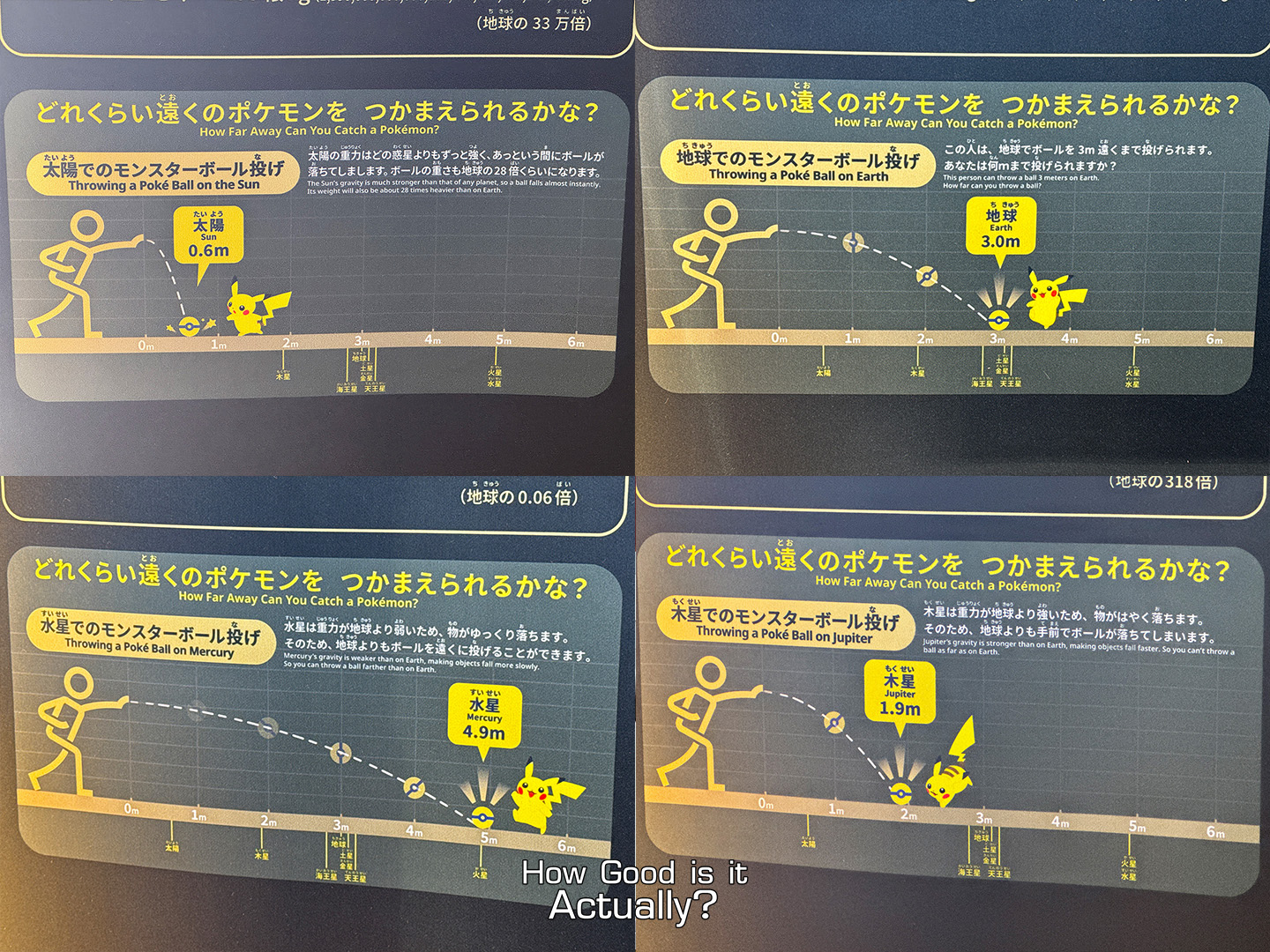
There’s also a small segment highlighting how far you can throw a Pokéball on each planet. Pretty creative, and a nice change of pace from the “this is how much you weigh” comparison.
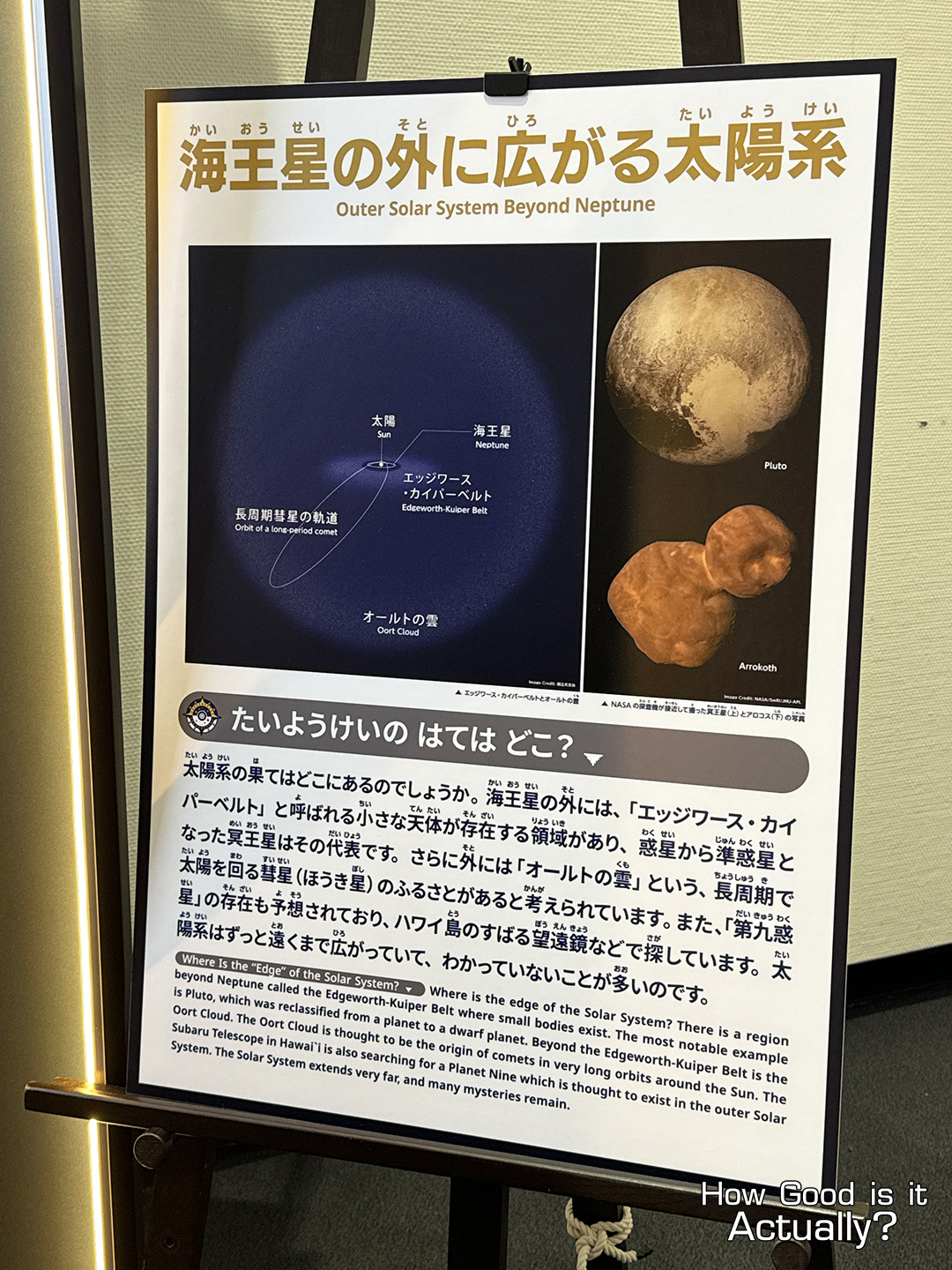
And while Pluto isn’t recognized as a planet anymore, the exhibit does at least have a small segment on the dwarf planet!
__________
🌠 Scale of the Universe 🌠
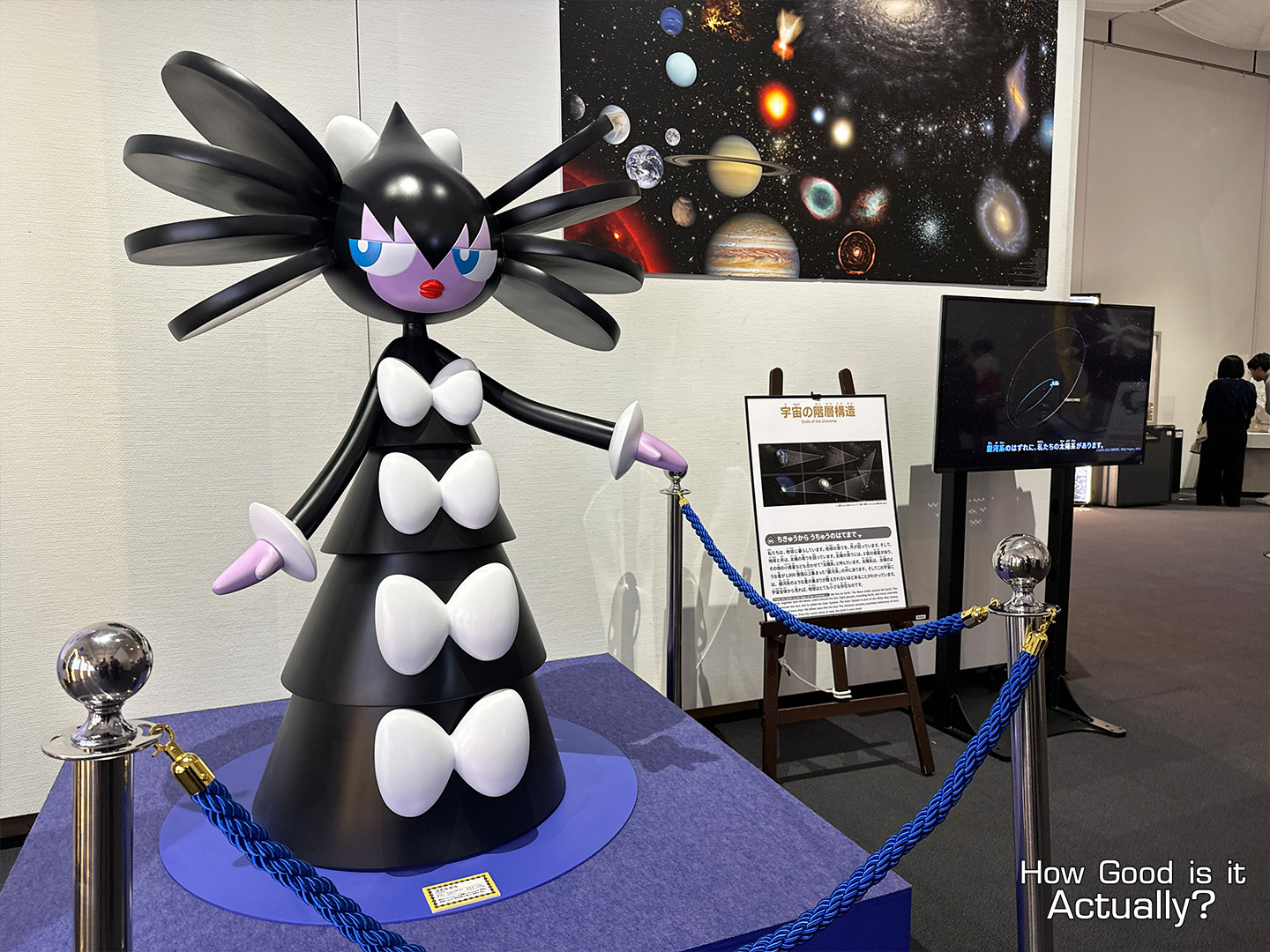
The exhibit’s soon to move far beyond the solar system, and Gothitelle’s here to briefly talk about the scale of the universe.
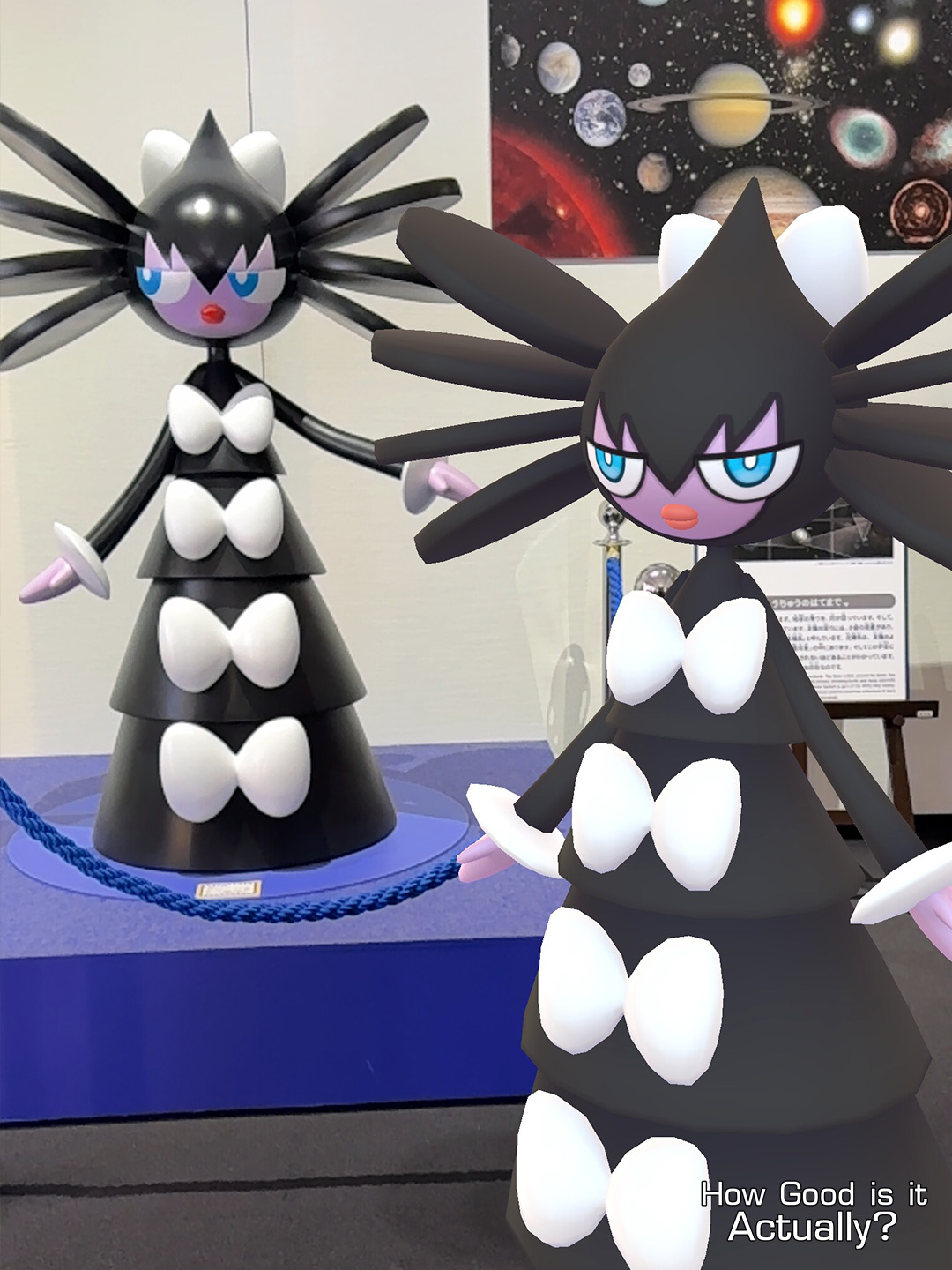
Side Note: Speaking of scale, all of the Pokémon statues at this exhibit are 1:1 to their Pokédex size, ranging from the 0.6m Porygon2 and 1.5m Gothitelle, to the 4m and 7m legendaries we’ll encounter soon.
__________
__________
☀️ Life of a Star ☀️
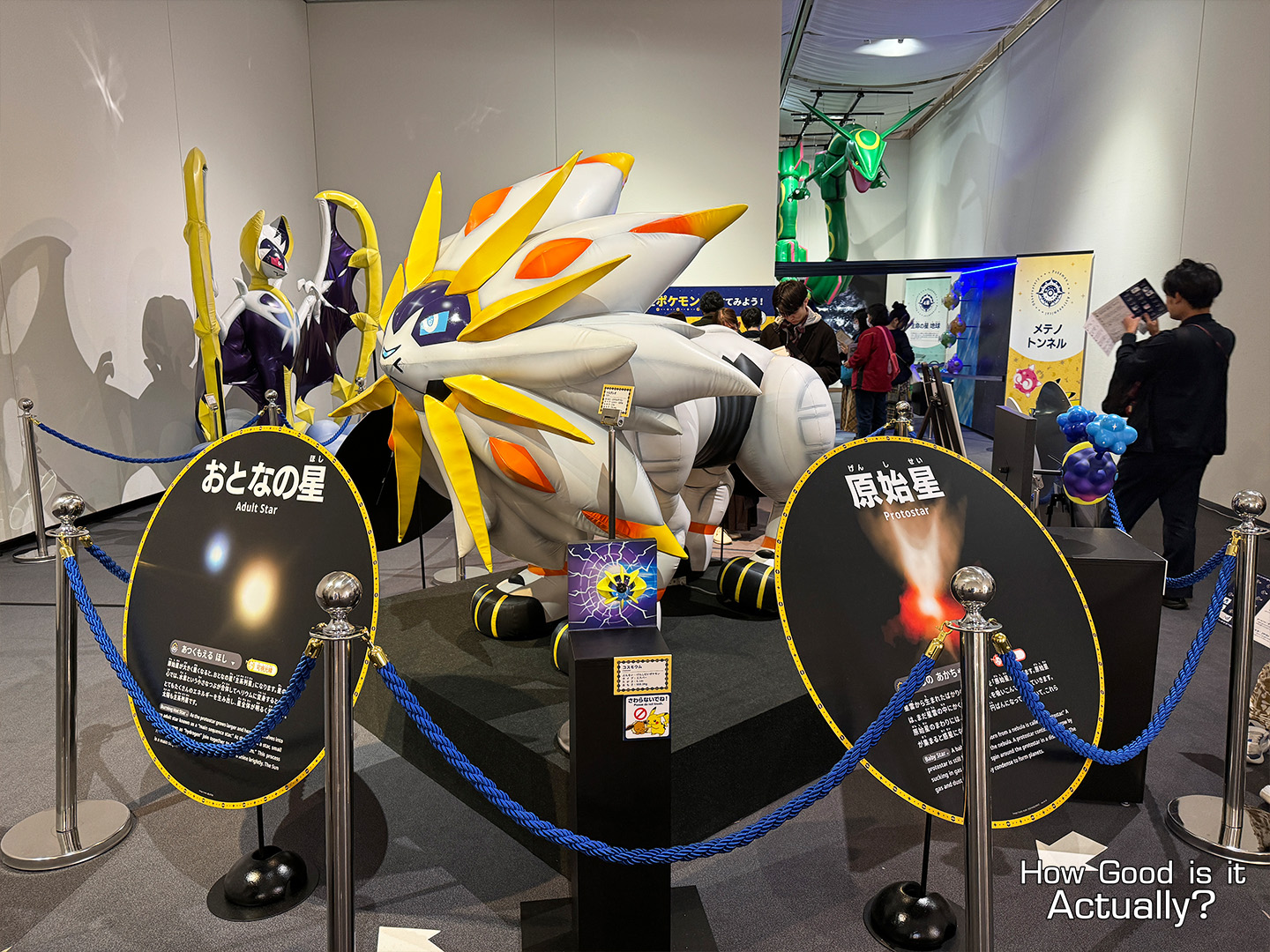
Next up in the exhibit, the Star Life Cycle: from a Nebula, to its Protostar, Adult Star, Old Star, and Supernova stages, then back to its Nebulous phase.
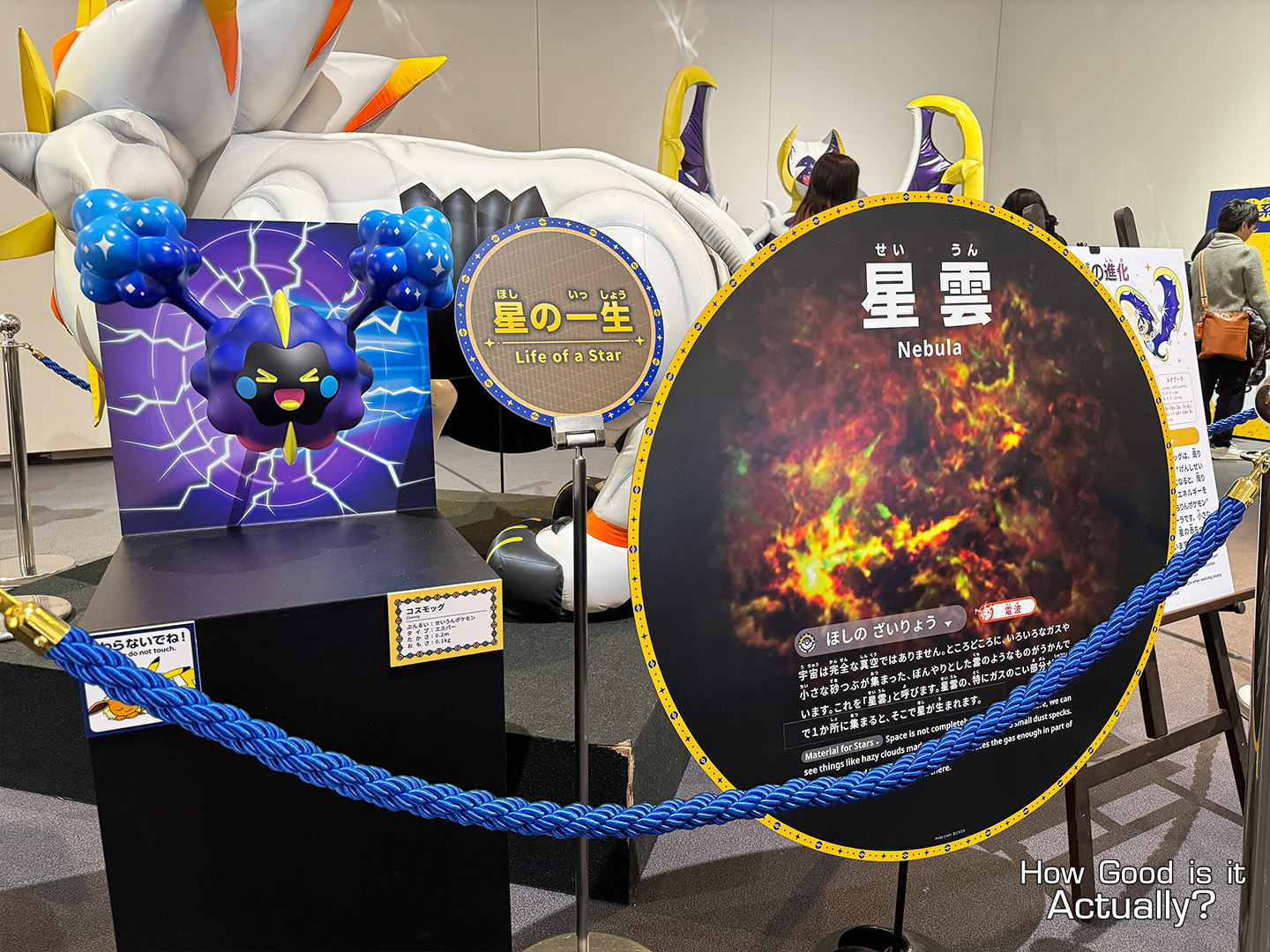
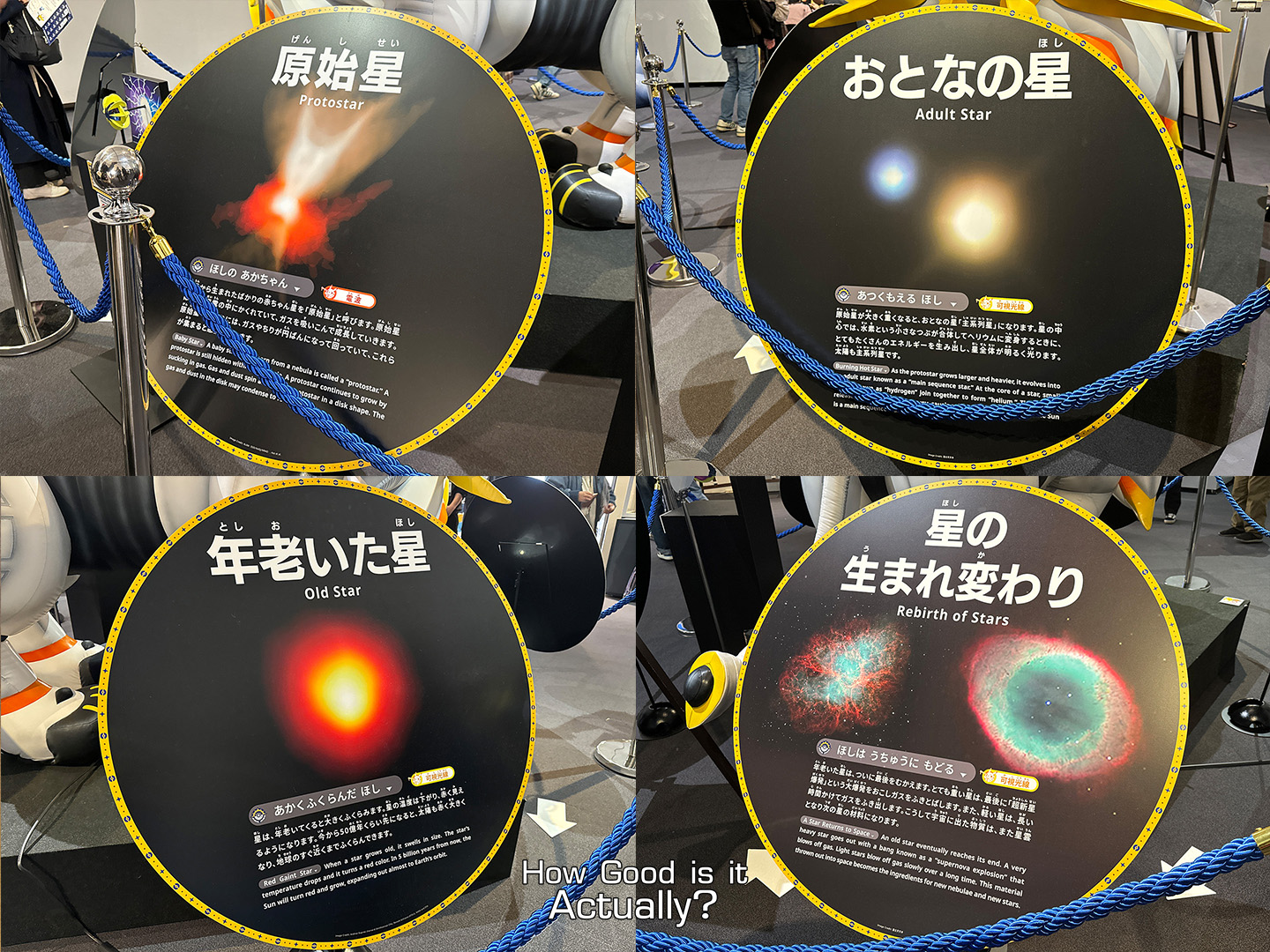
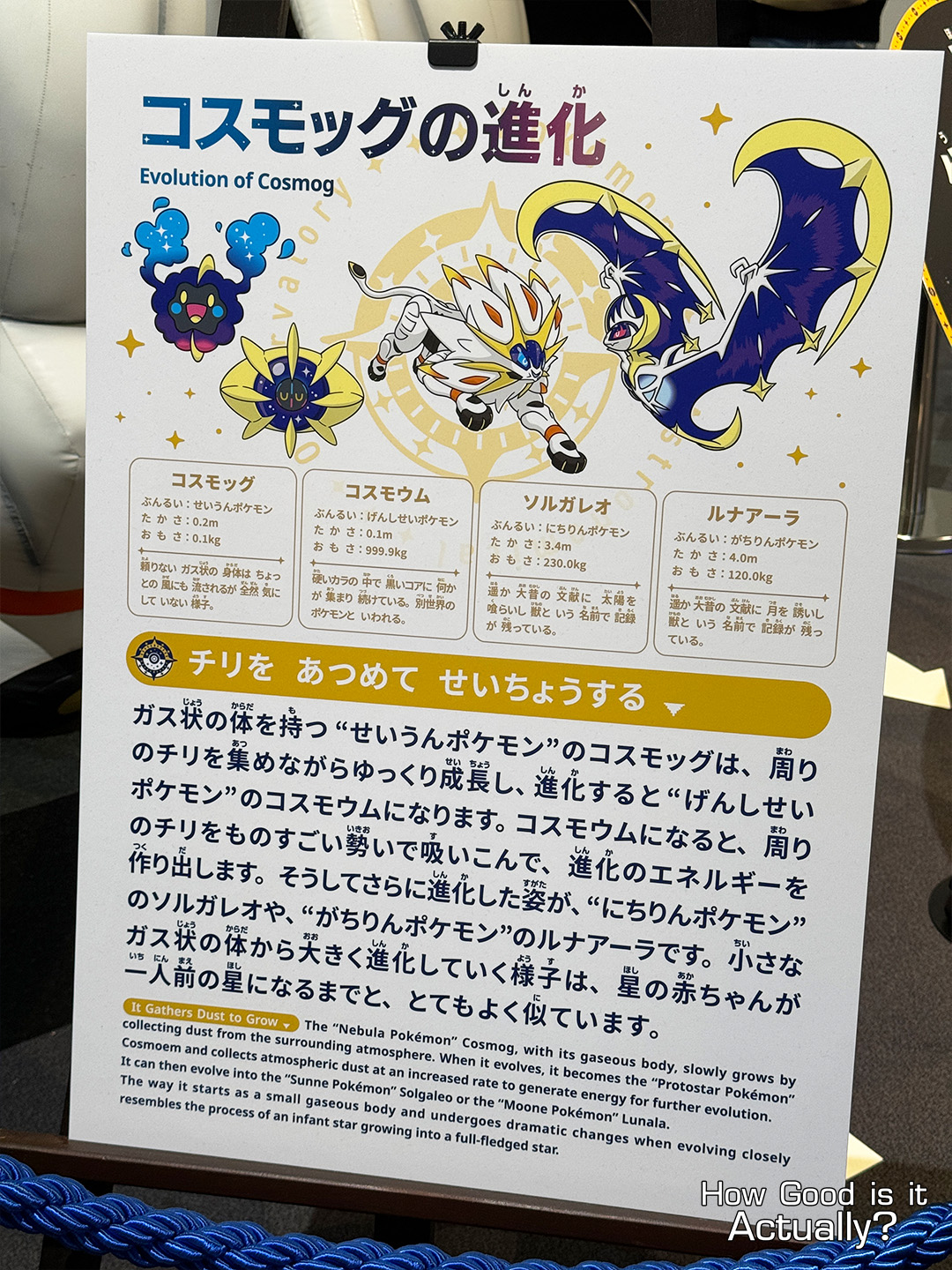
And accompanying this section of the exhibit, we have the entire Cosmog evolutionary line
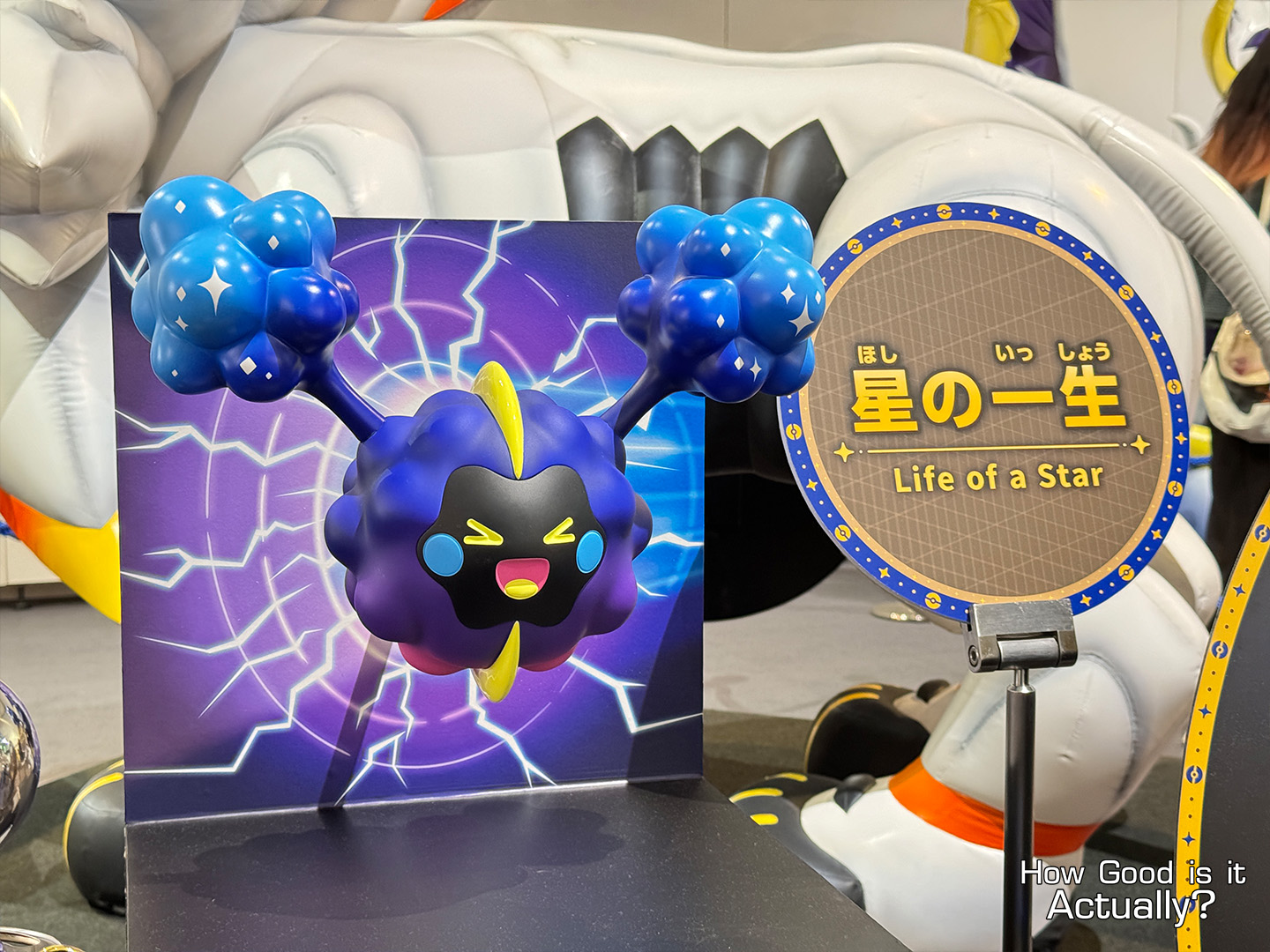
Featuring Cosmog, the Nebula Pokémon
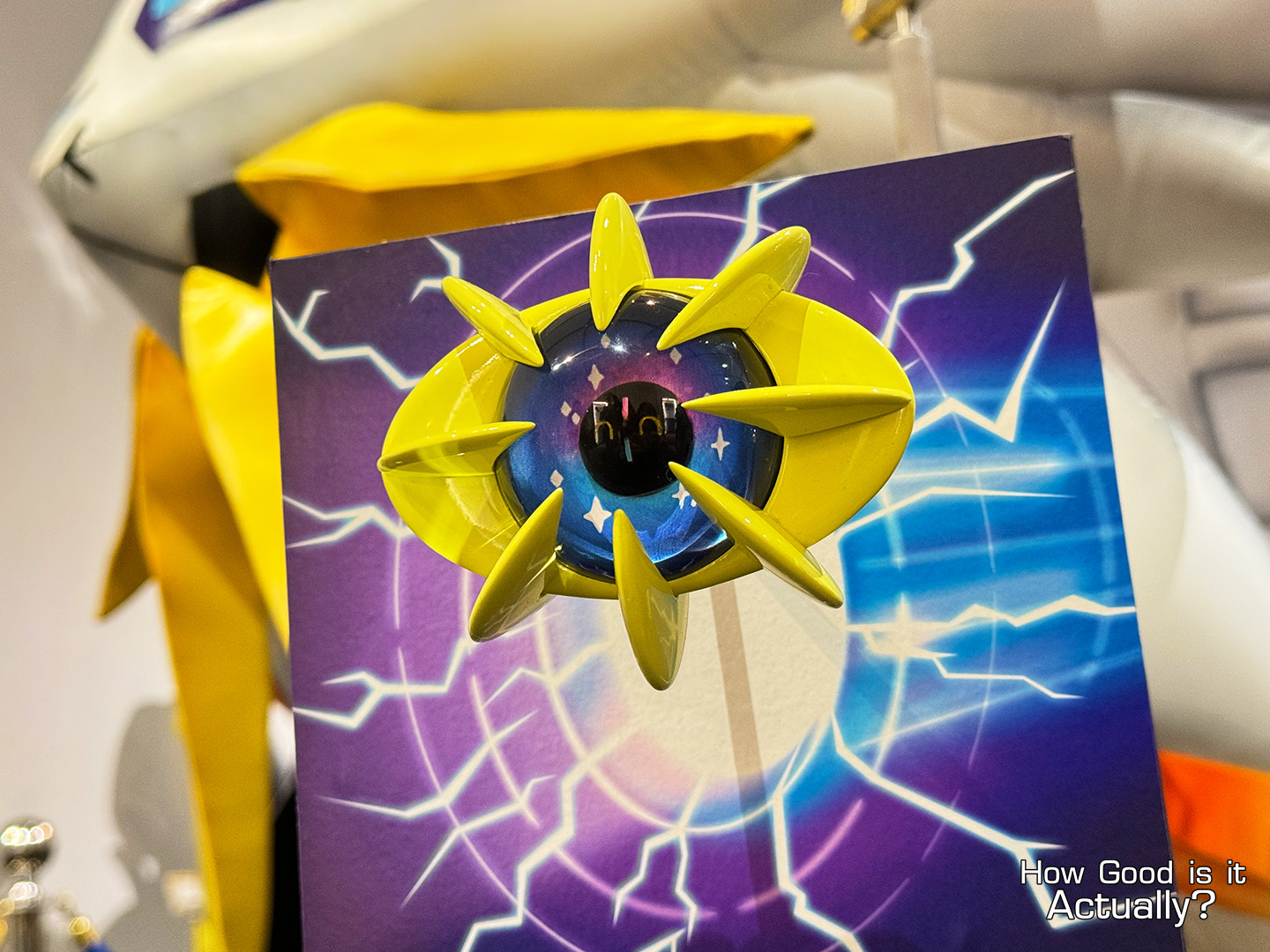
Cosmoem with its dense star-like core.
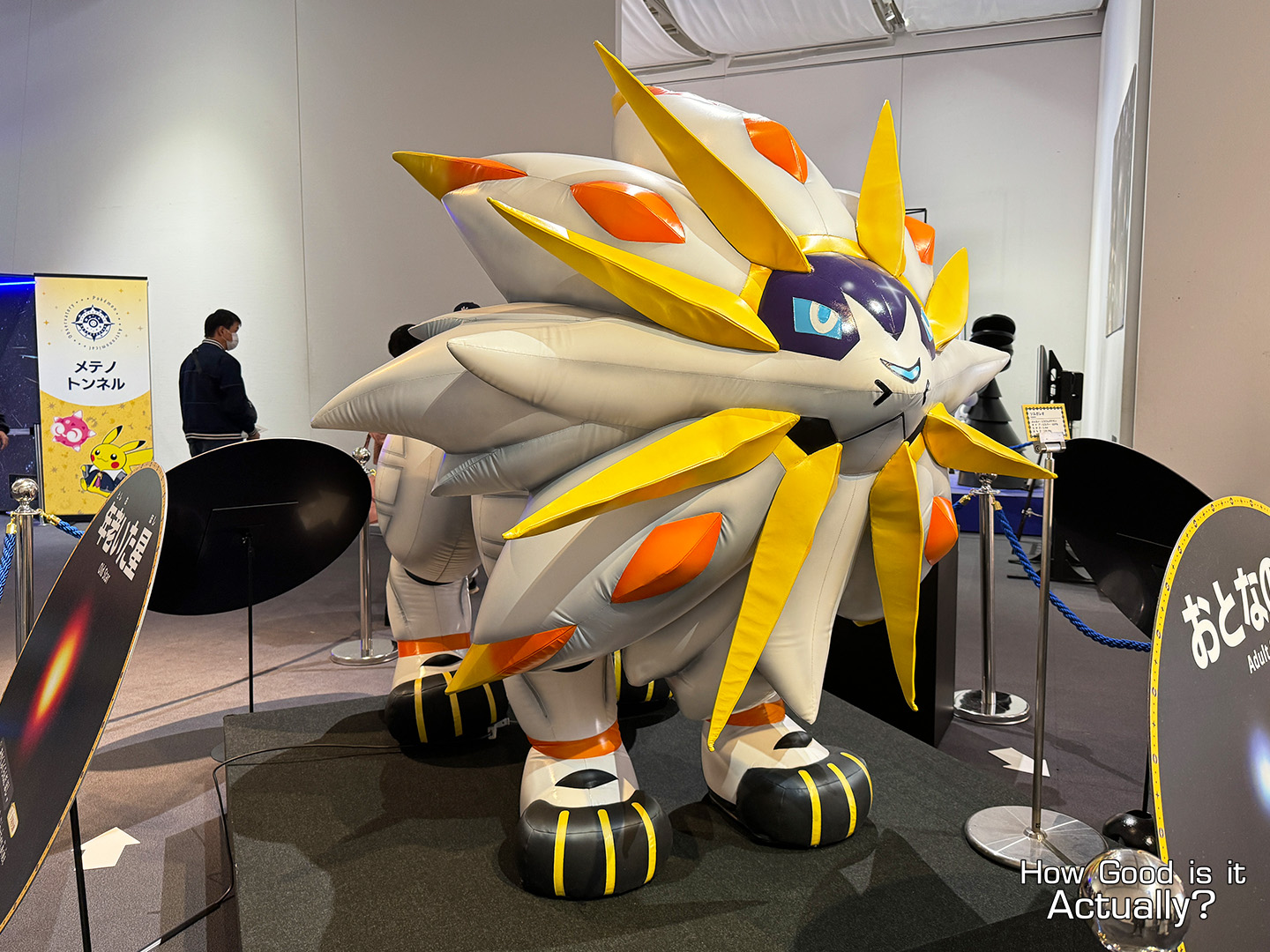

And the massive Supernova-like legendaries that is the Sunne & Moone Pokémon – Solgaleo and Lunala.
Do note that (likely due to weight limits) these larger statues are made of an inflatable material, so their surface might not be as shiny as the other statues.
Cosmog & Cosmoem are still regular statues though (with Cosmoem having a beautiful glass center that made photo taking very difficult…)
__________
🌕 Exoplanets 🌕
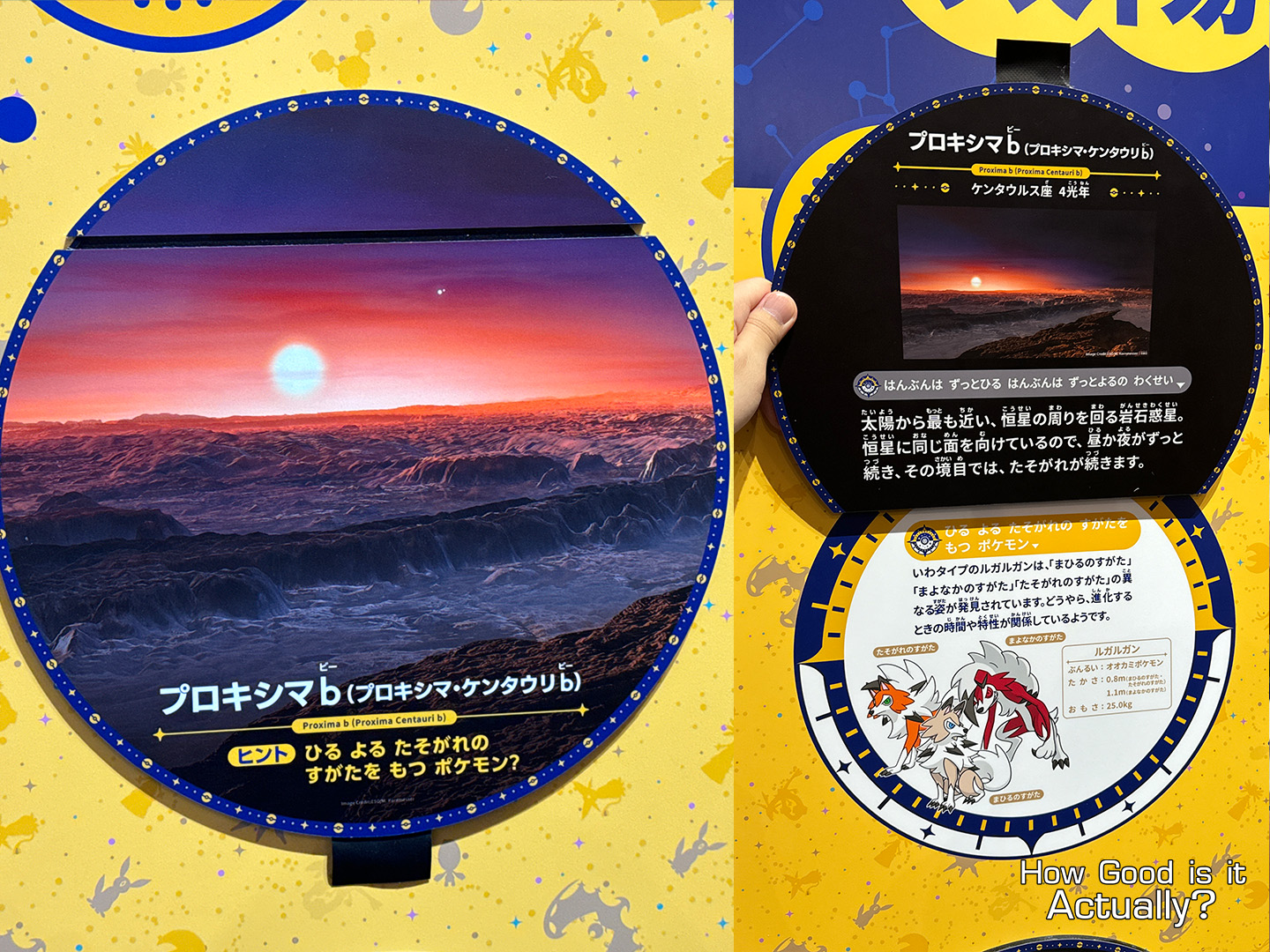
Continuing off the theme of distant bodies in the universe, you’ll find a section dedicated to planets outside our solar system: Exoplanets.
You can learn more about each Exoplanet by flipping over their cover, providing you with an interesting fact + a Pokémon that best represents them.
__________
__________
🌠 Meteors 🌠
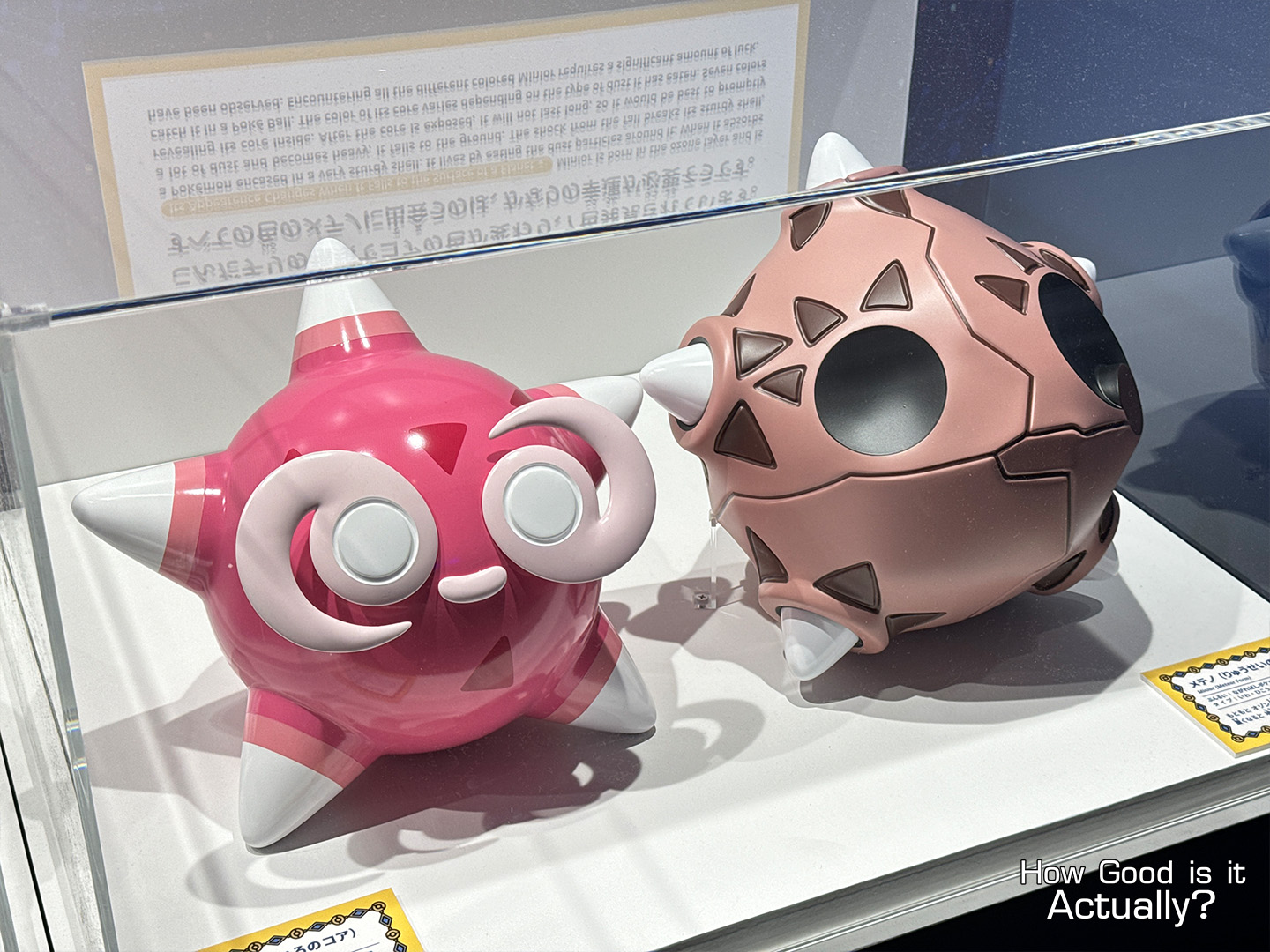
Moving closer to Earth, we have a section on Meteors and Meteorites.
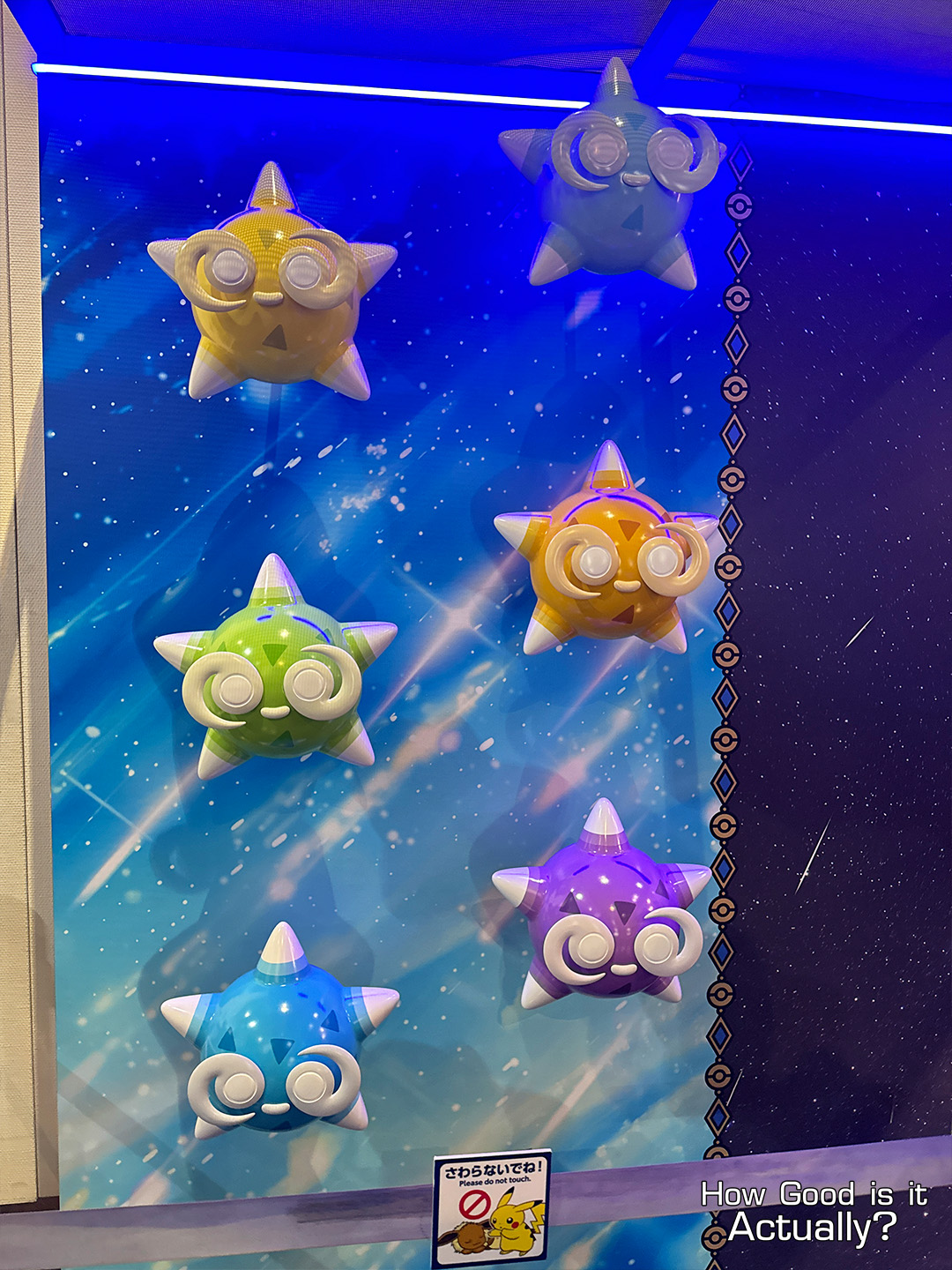
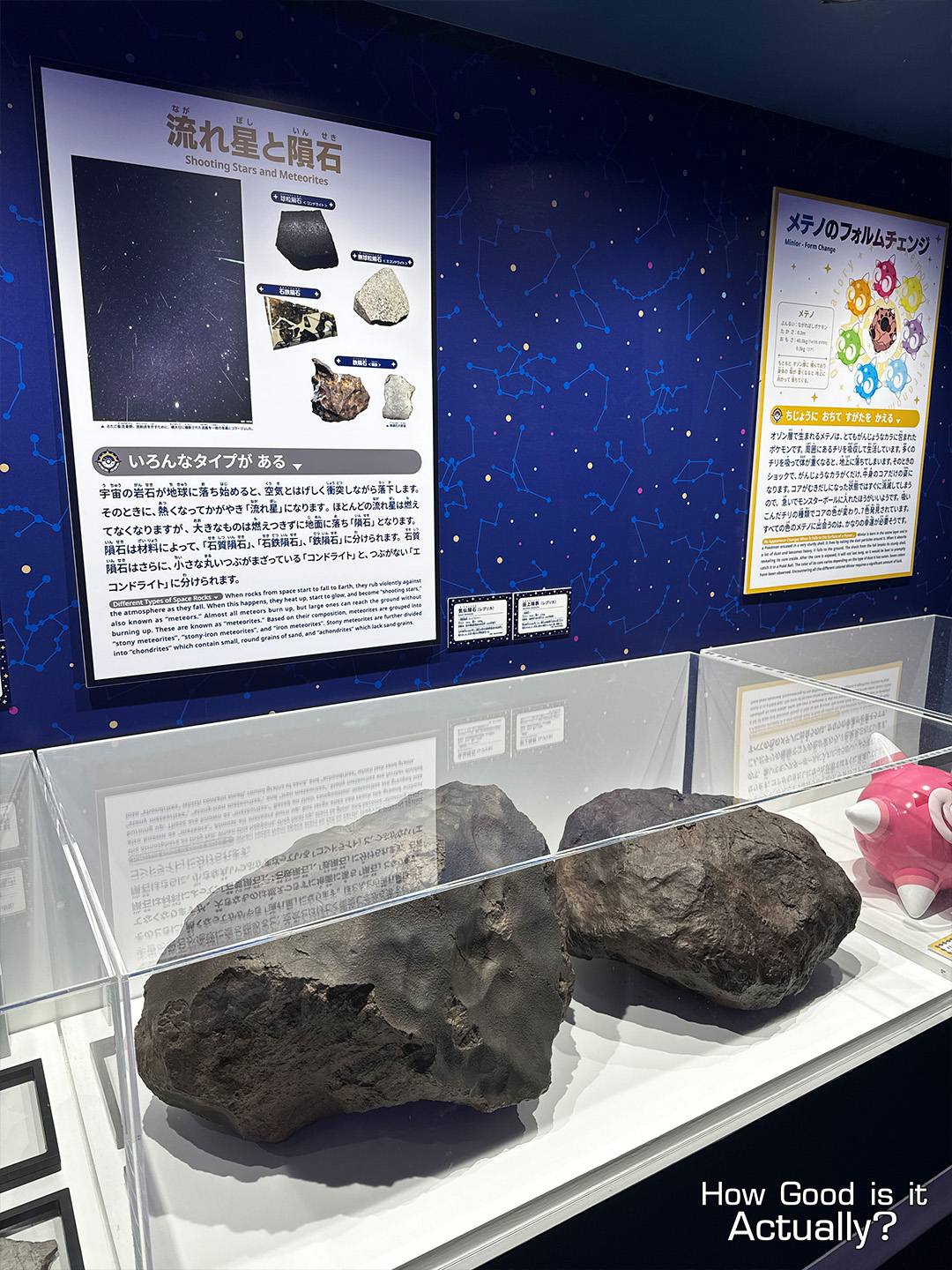
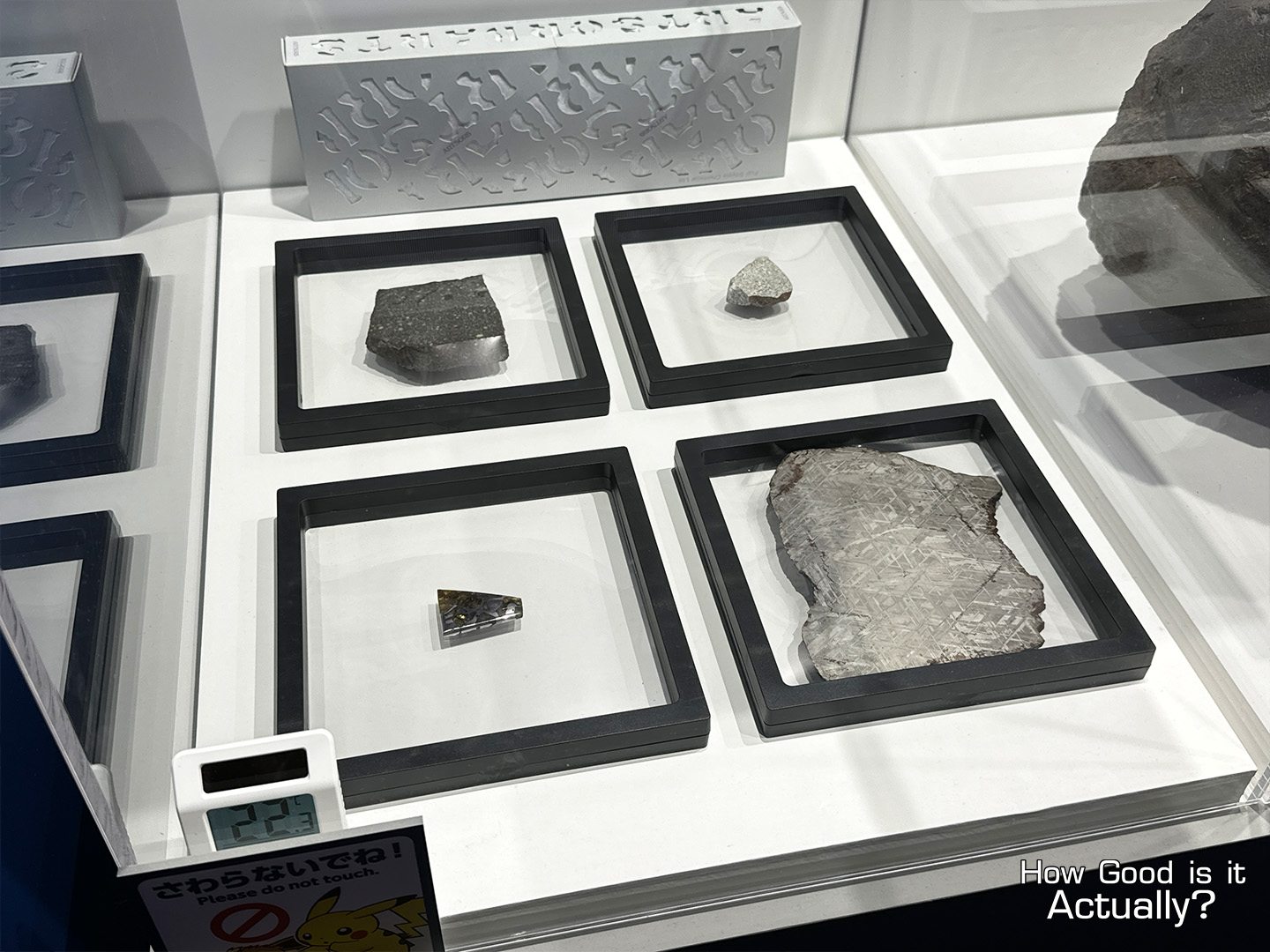
In addition to statues of Minior, the Meteor Pokémon, in all of its different forms, you can find samples of real meteorites inside climate-controlled glass displays.
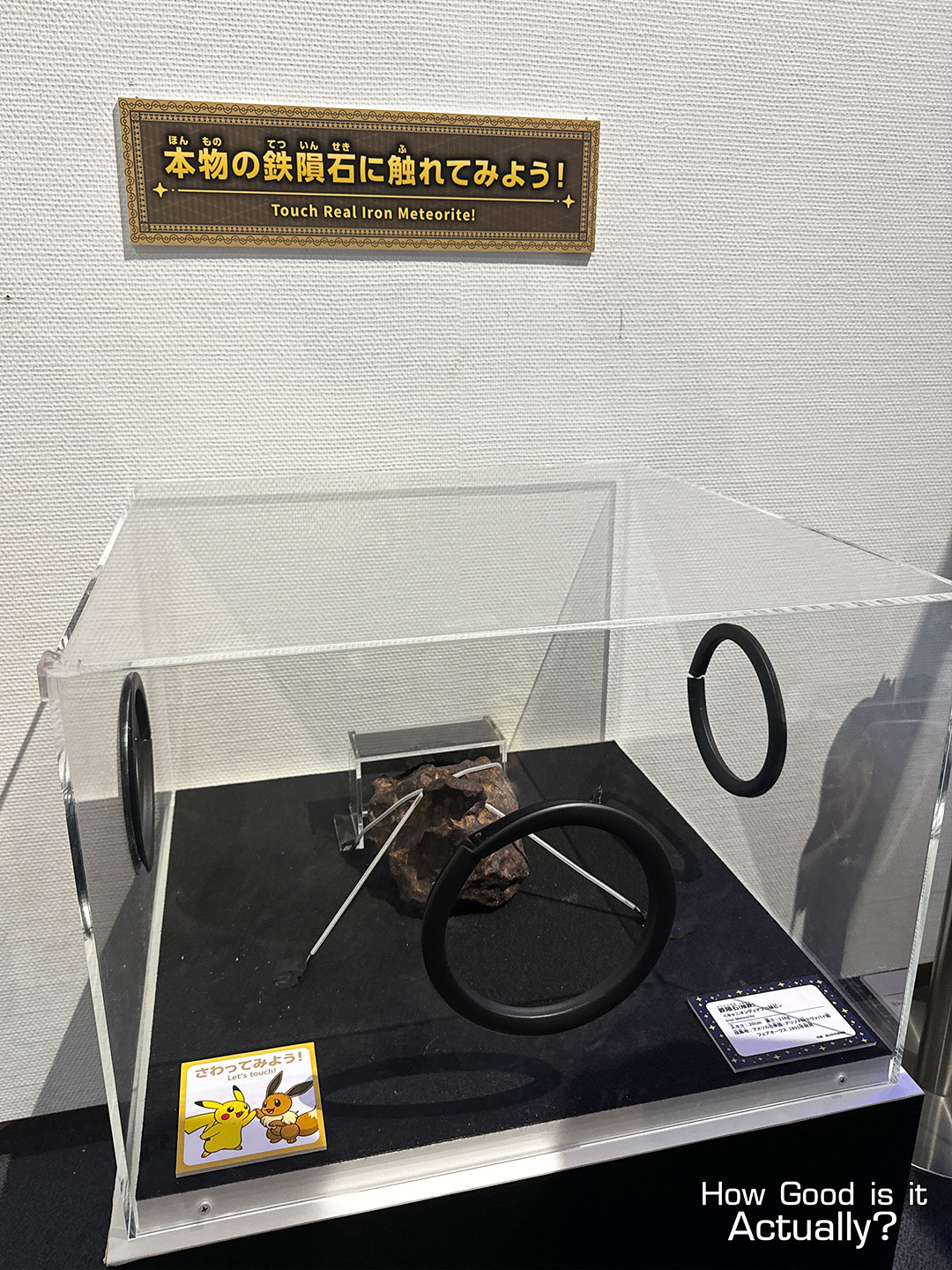
There’s also an interactive display here, as you’re able to experience the surface of an Iron Meteorite with your own hands.
__________
🌏 The Natural Beauty of Earth 🌏
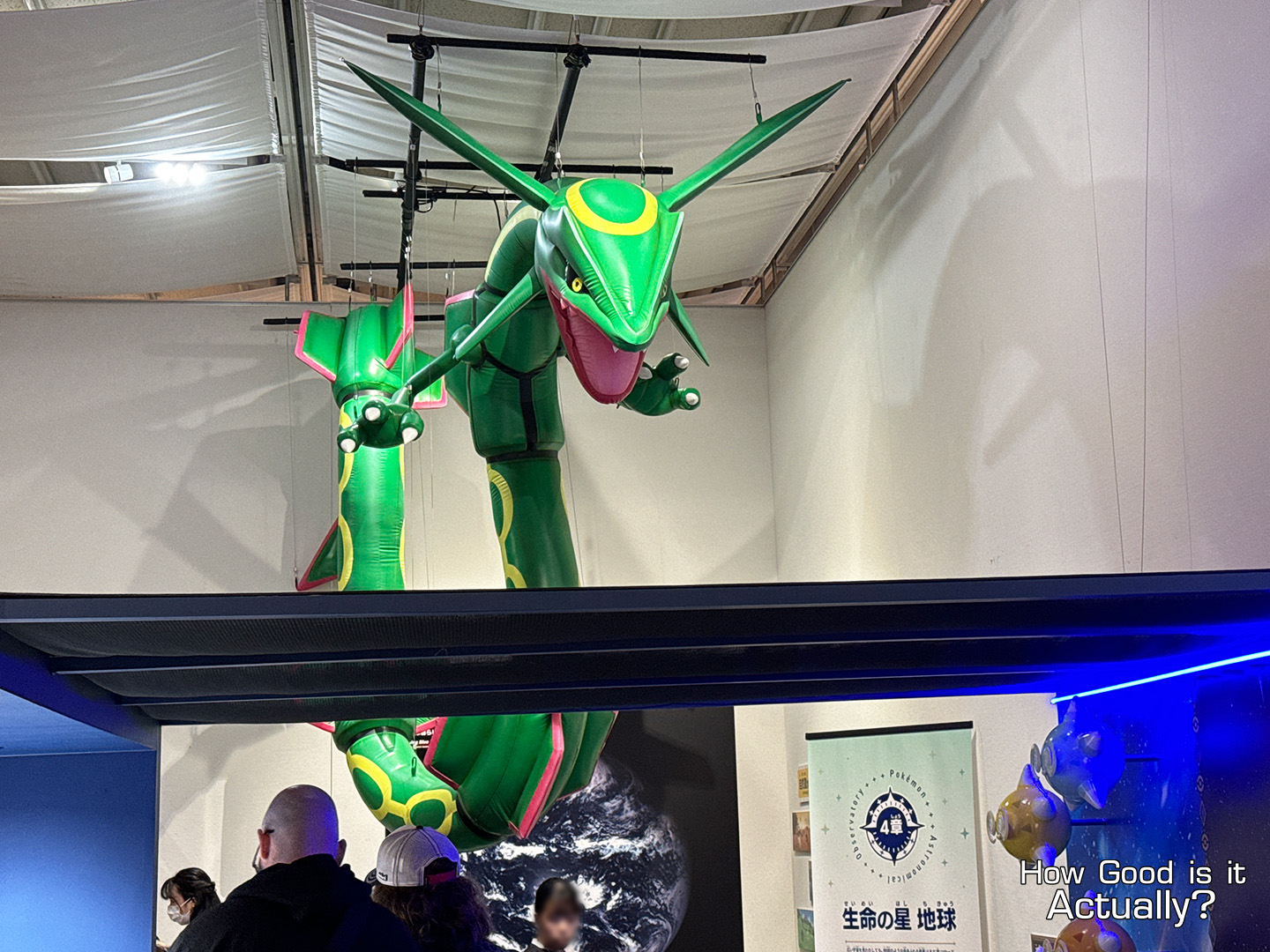
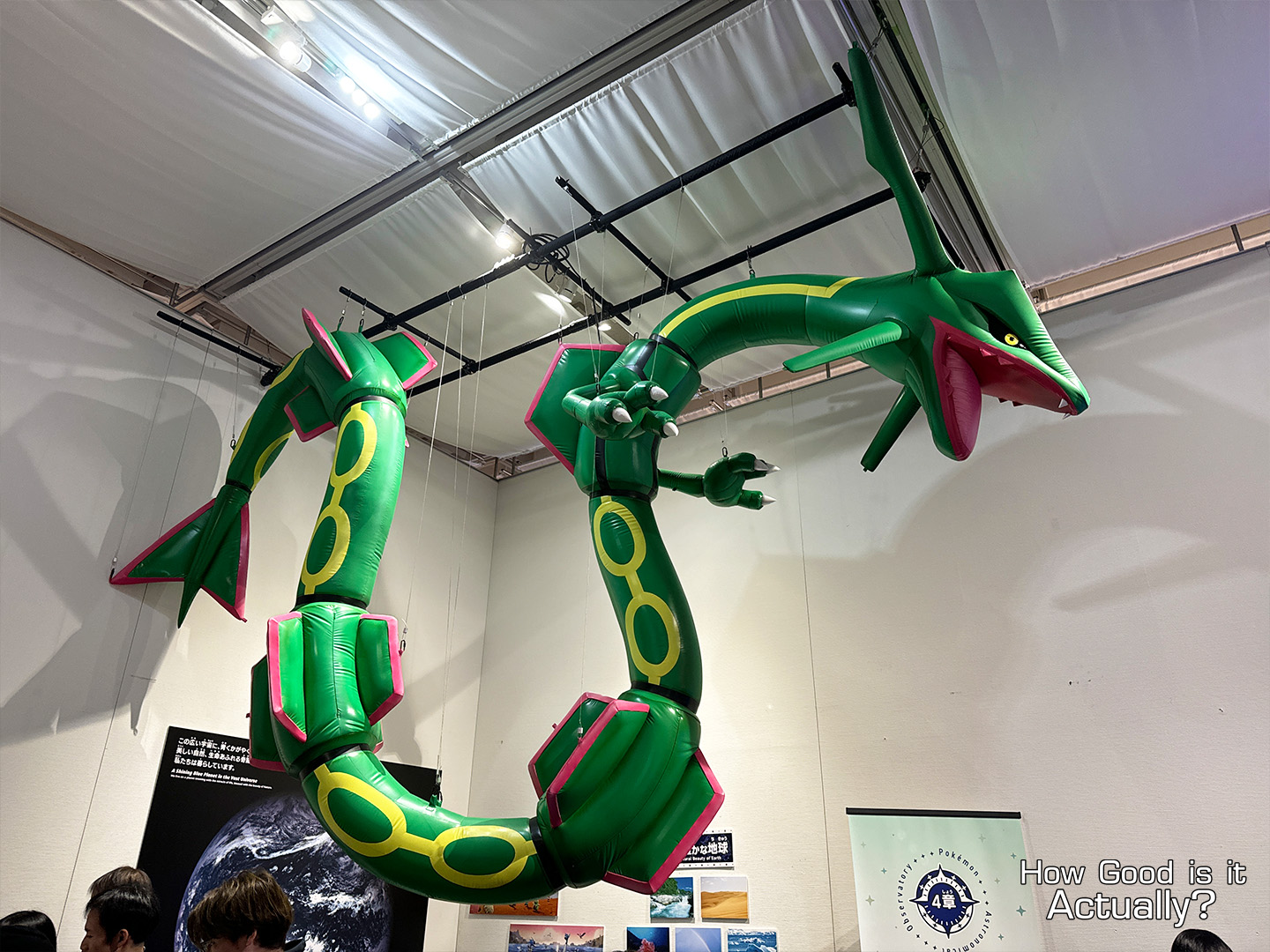
We’re now heading back to Earth, and as we descend through the atmosphere, we’re greeted with the largest Pokémon at the exhibit: Rayquaza, the Sky High Pokémon.
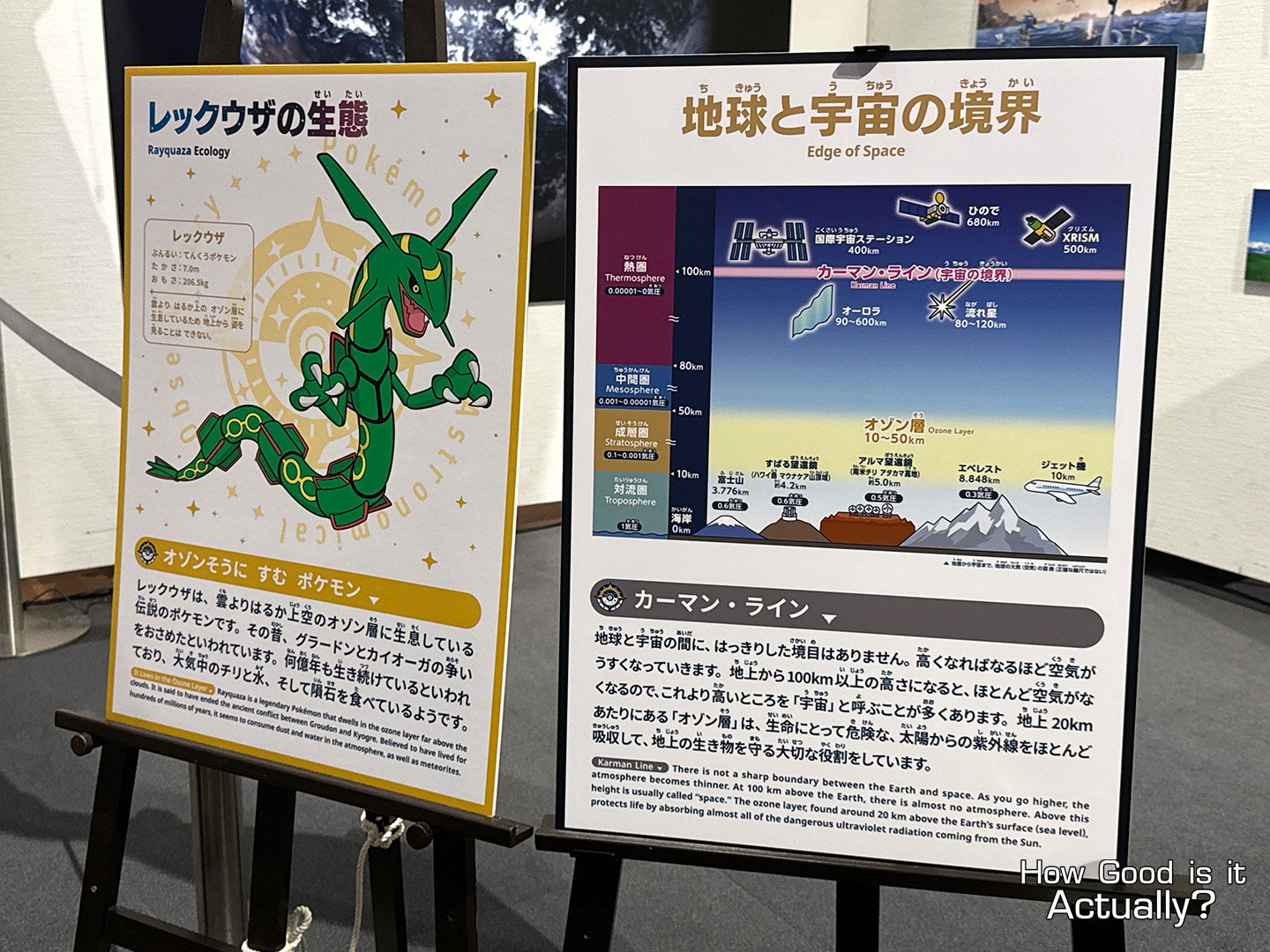
You’ll find a brief explanation on Earth’s atmospheric layers here, as well as some lore into Rayquaza and its role in the atmosphere.
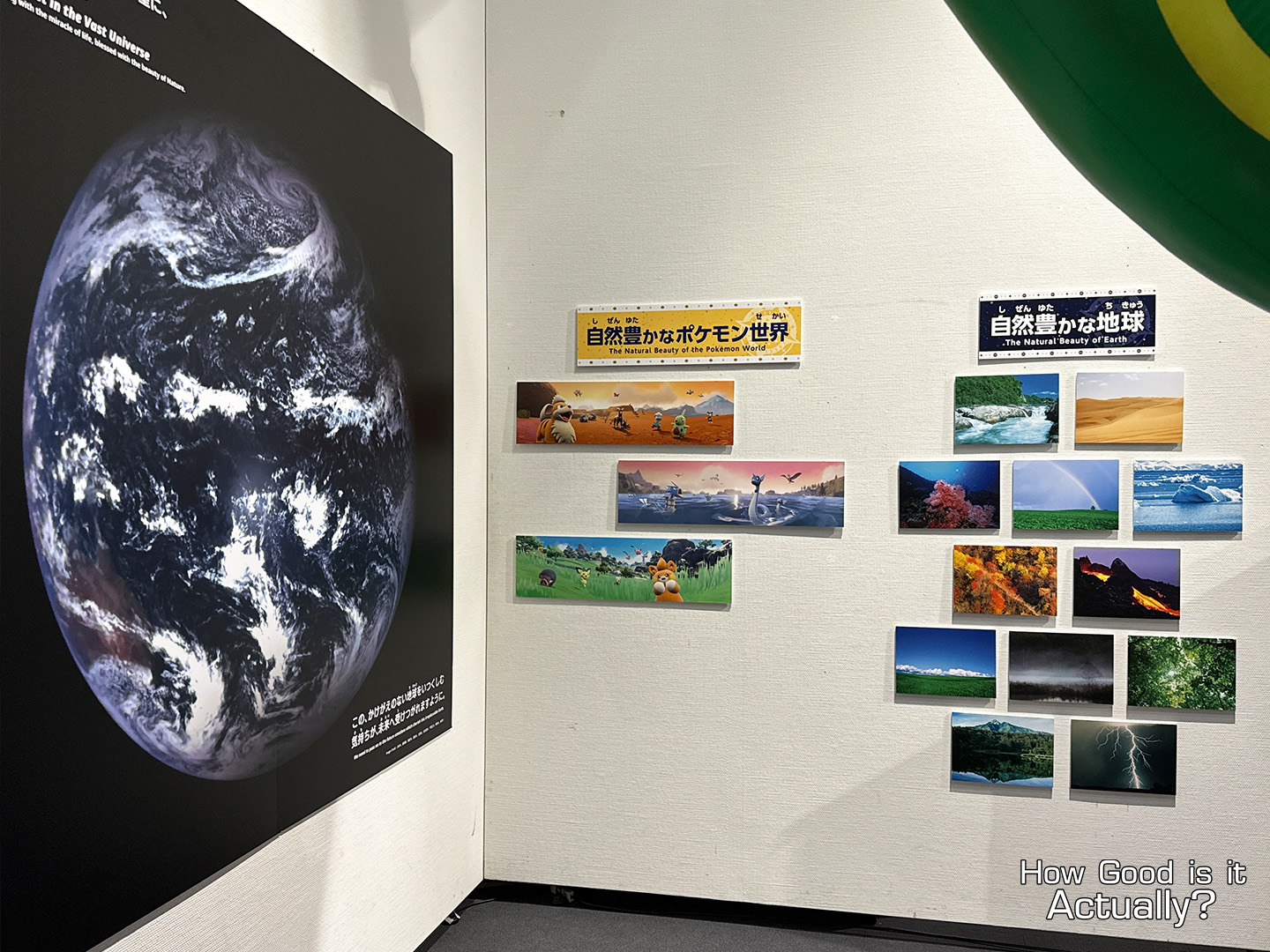
And to wrap up this section, you’ll find some snapshots into the natural beauties found only on Earth and the Pokémon World, and the need to preserve our planet for generations to come.
__________
__________
👽 Alien Life? 👽
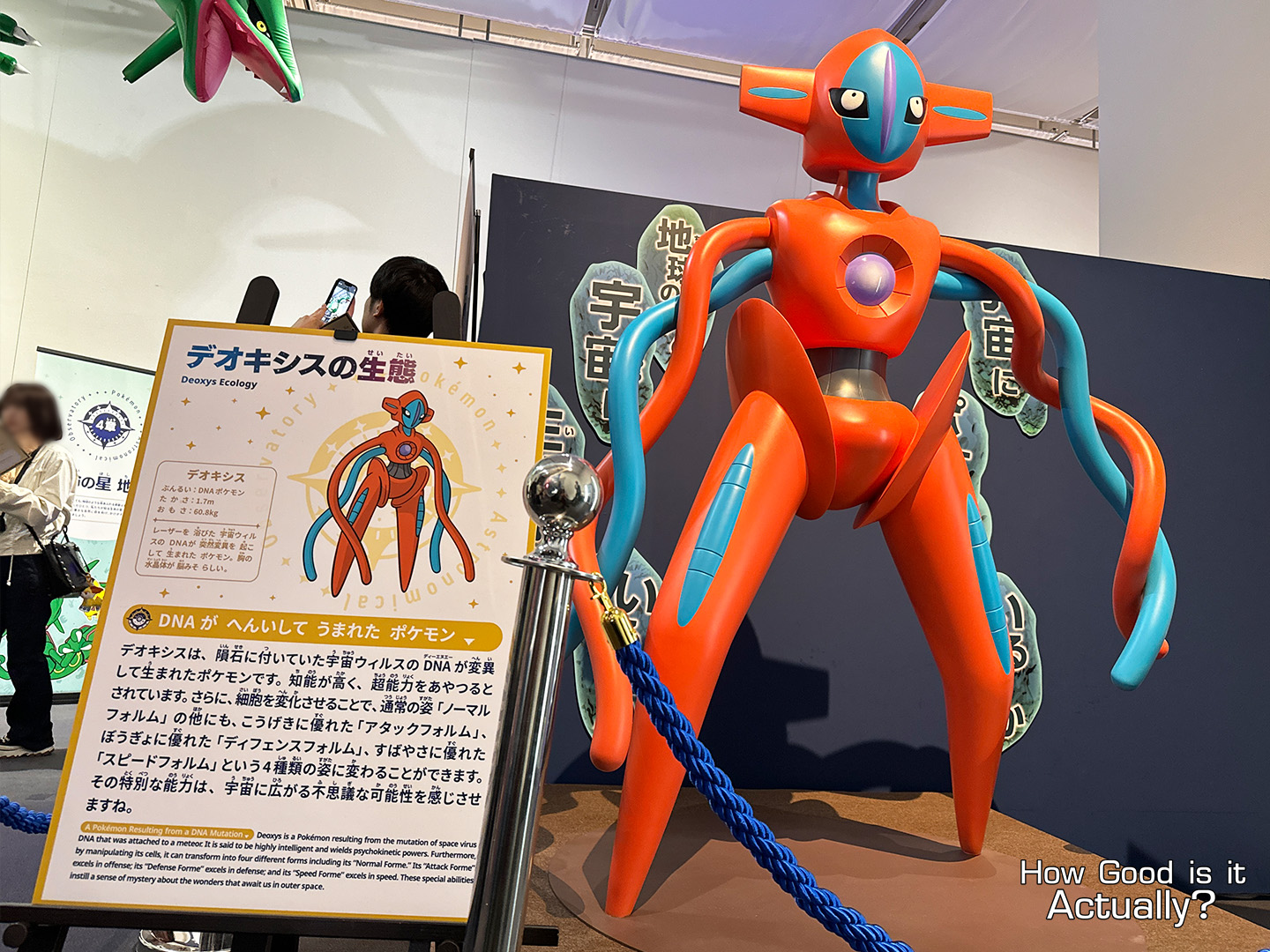
You can’t mention space exploration without also talking about the mysteries of alien life.
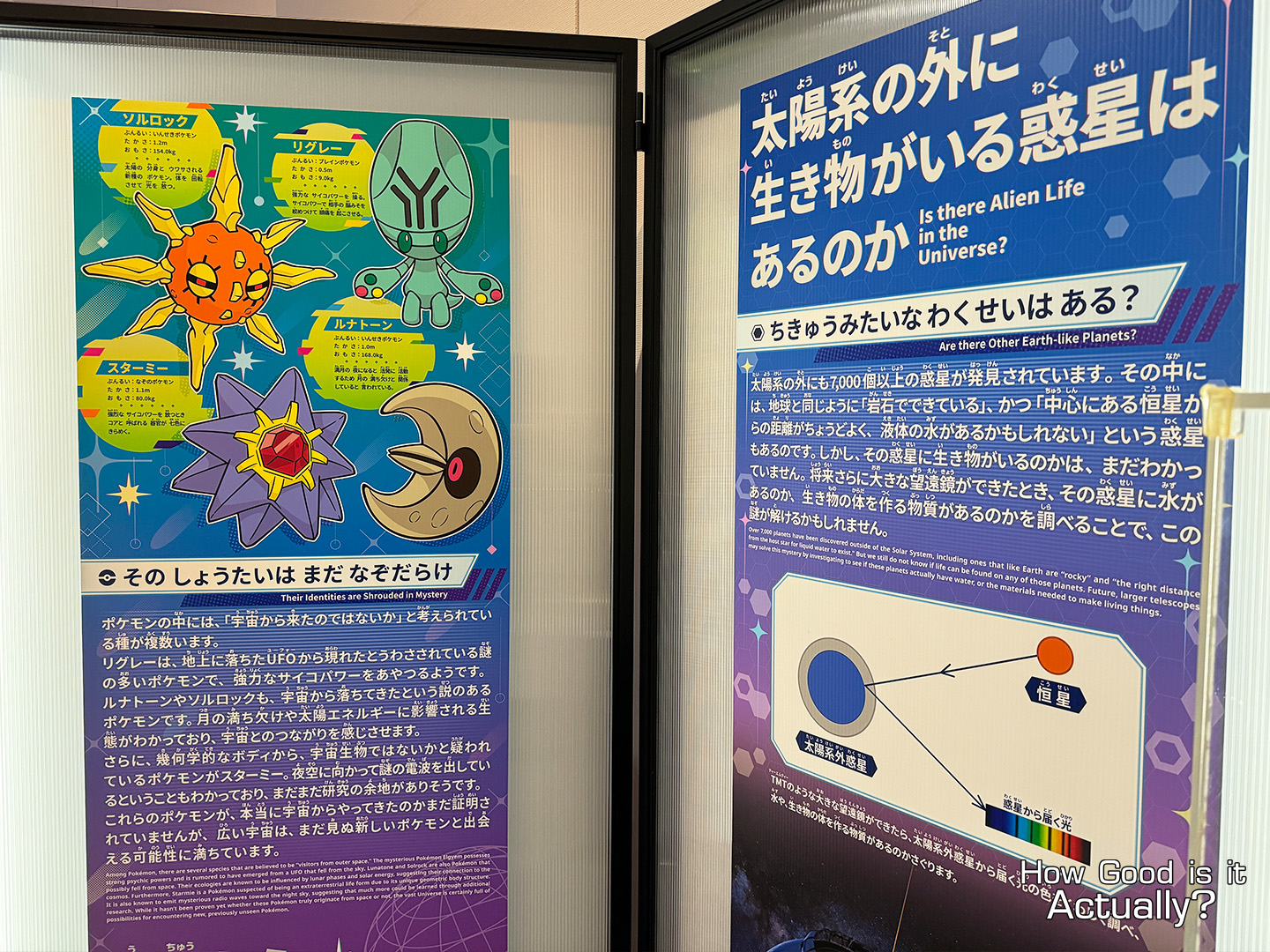
And while we don’t have conclusive proof of aliens in our own universe, the Pokémon world is home to all sorts of beings from outer space: Elgyem, Starmie, and the highlight of this section – Deoxys, the DNA Pokémon.
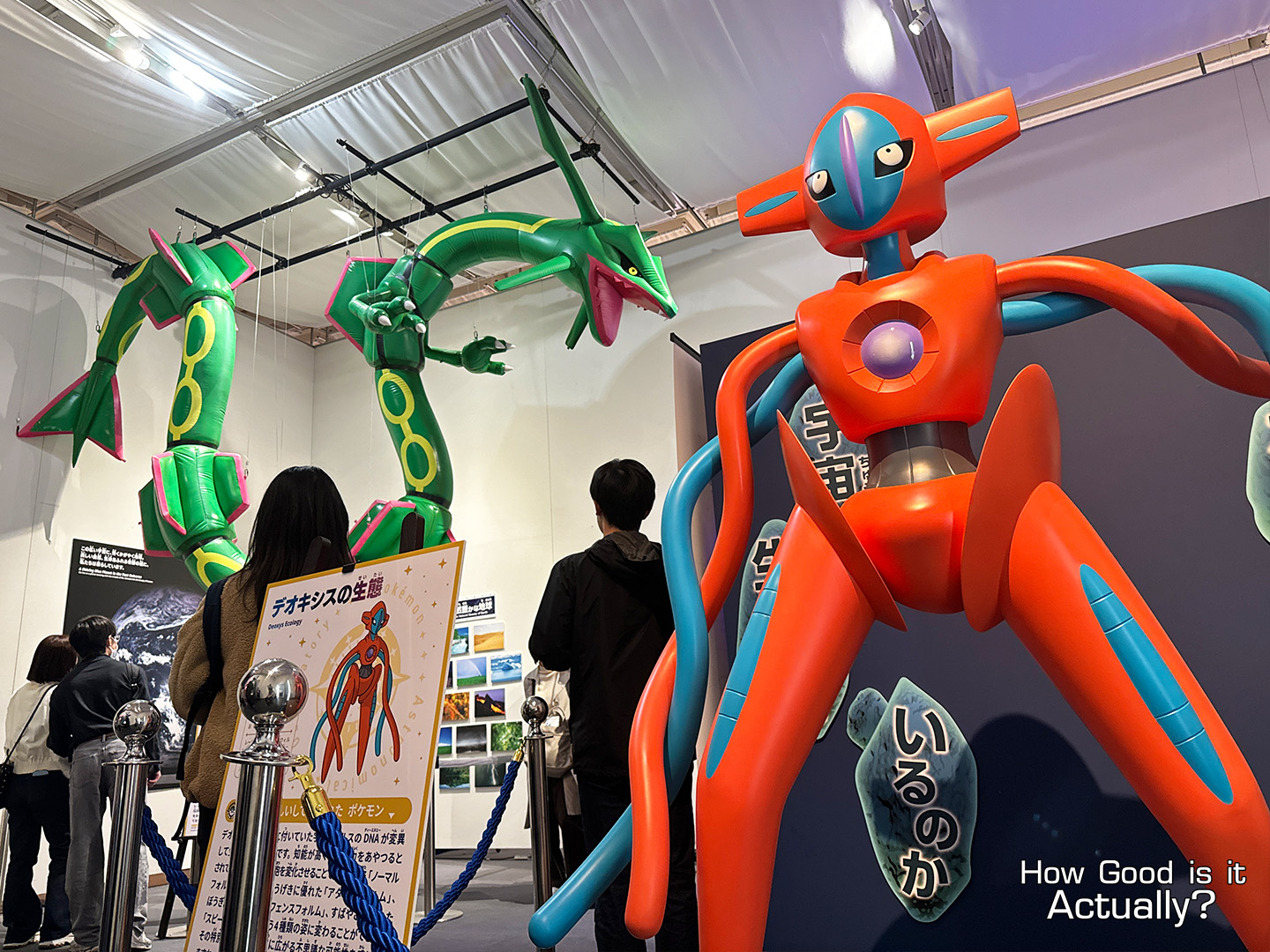
Interestingly enough, the Deoxys statue is positioned in a way that allows for a pretty dynamic shot between it and its rival, Rayquaza. I say spend some time here to take the perfect photo! (Pro Tip: aim for a low-angle shot for the most dynamic photos.)
__________
☀️ Beginnings of the Universe ☀️
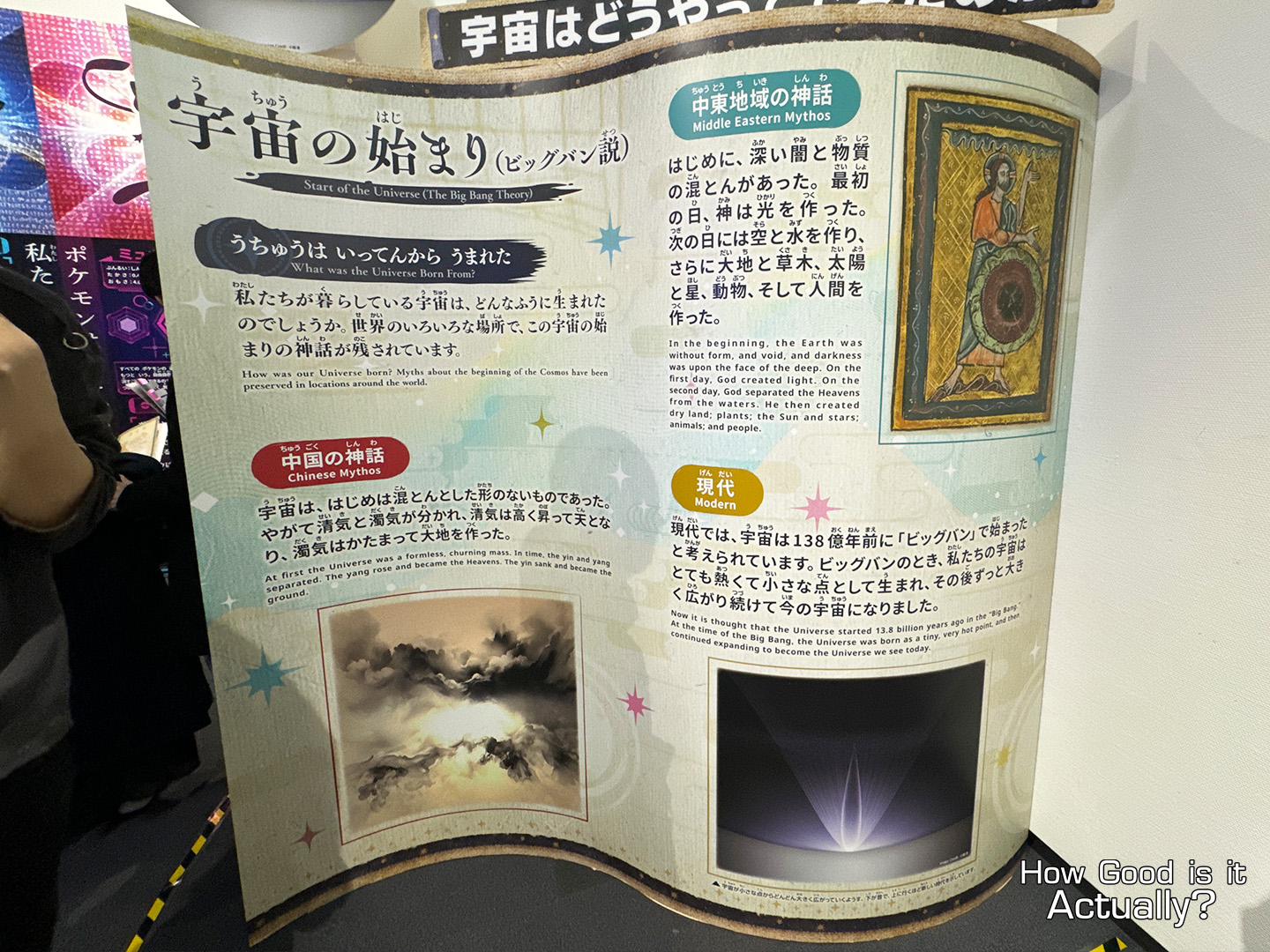
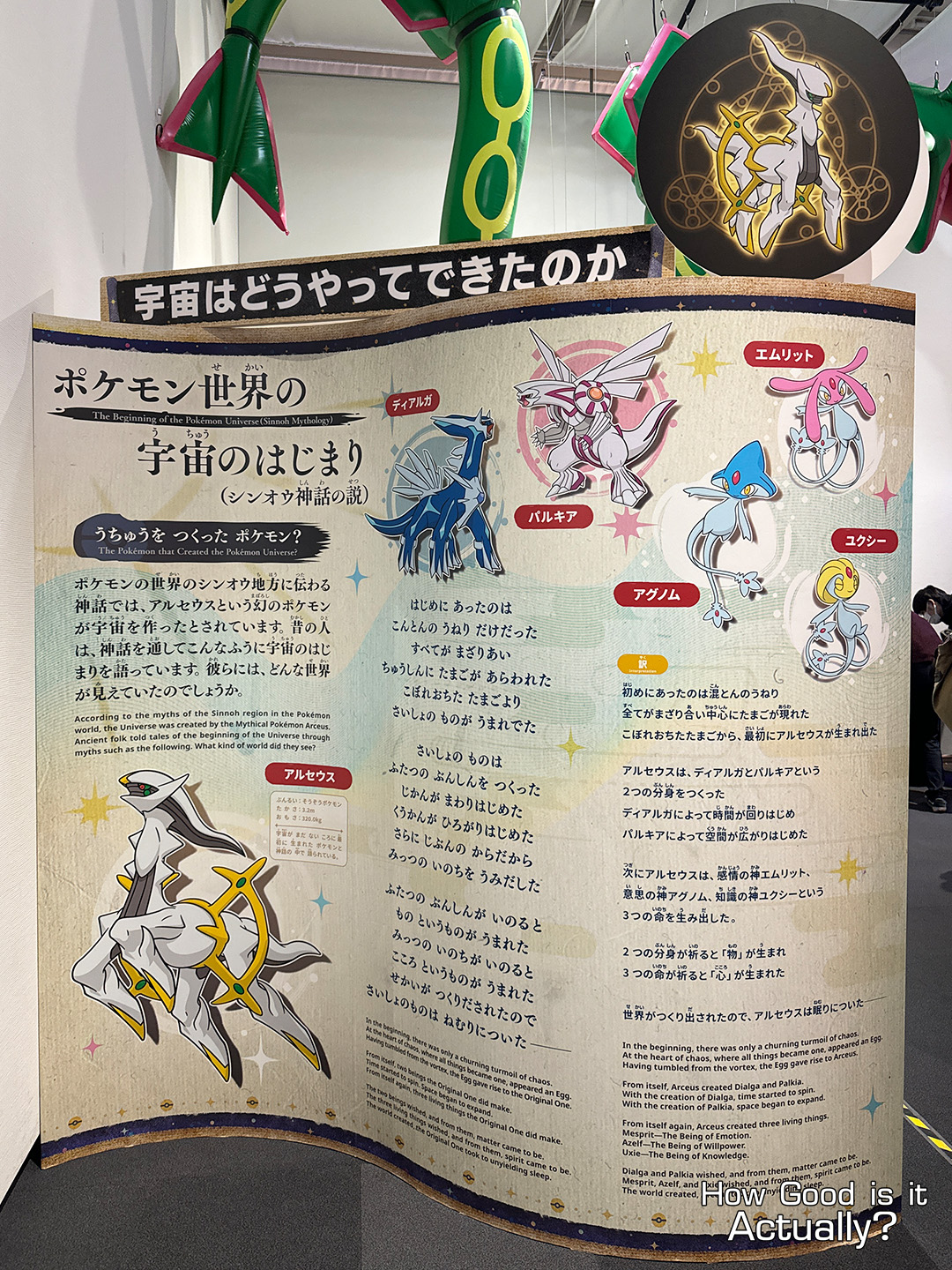
The final section of the exhibit is a more… abstract one, as it showcases the formation of the universe from the perspective of modern science, ancient civilizations, and Sinnoh mythology.
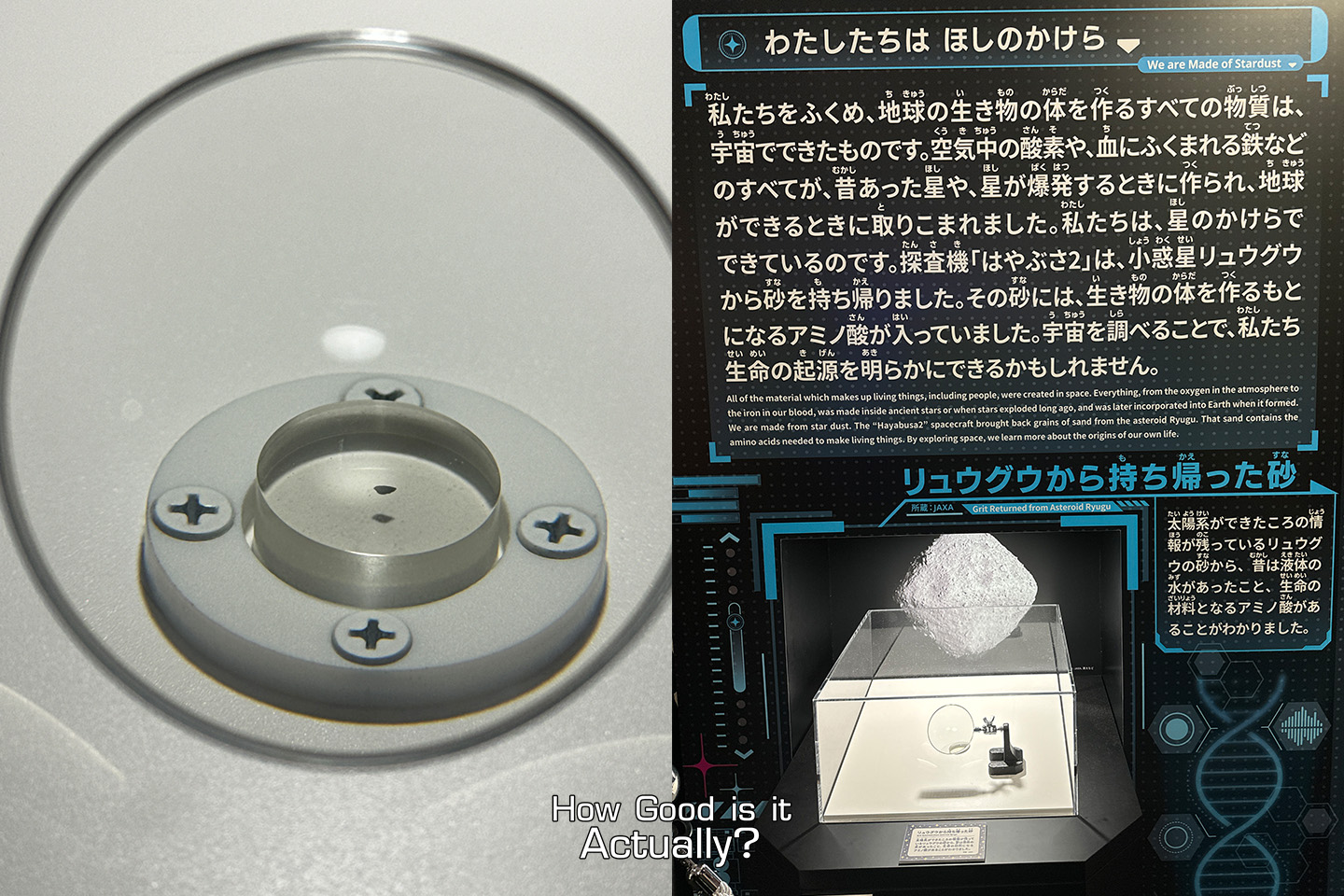
And for the origins of life on Earth, you’ll find a (very tiny) sample of Asteroid Ryugu, whose composition supports the theory that the building blocks of life originally came from outside of Earth.

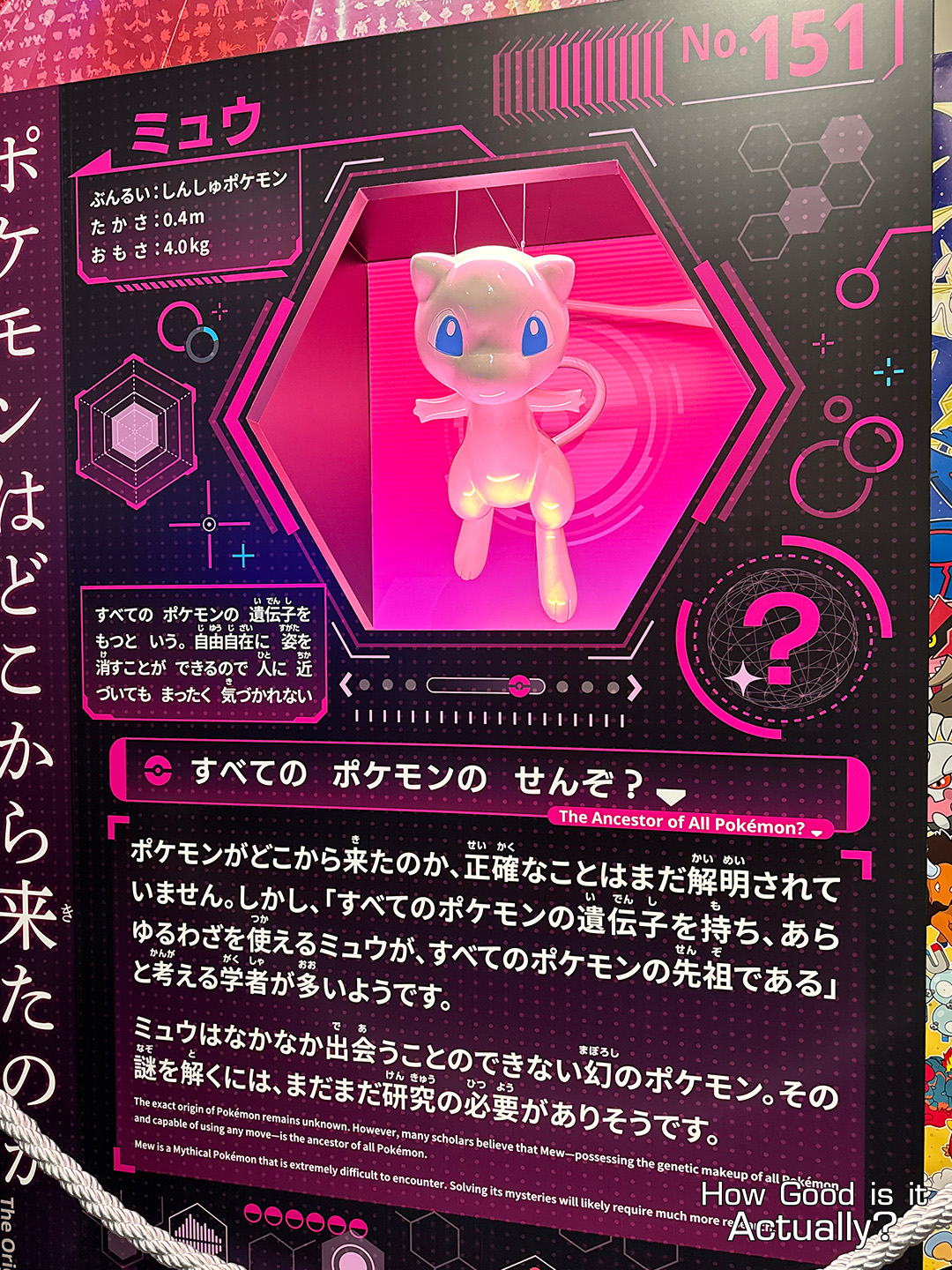
And on the Pokémon side, we have a statue of Mew, theorized to be the ancestor of all Pokémon.
__________
__________
📋 Quiz Sheet 📋
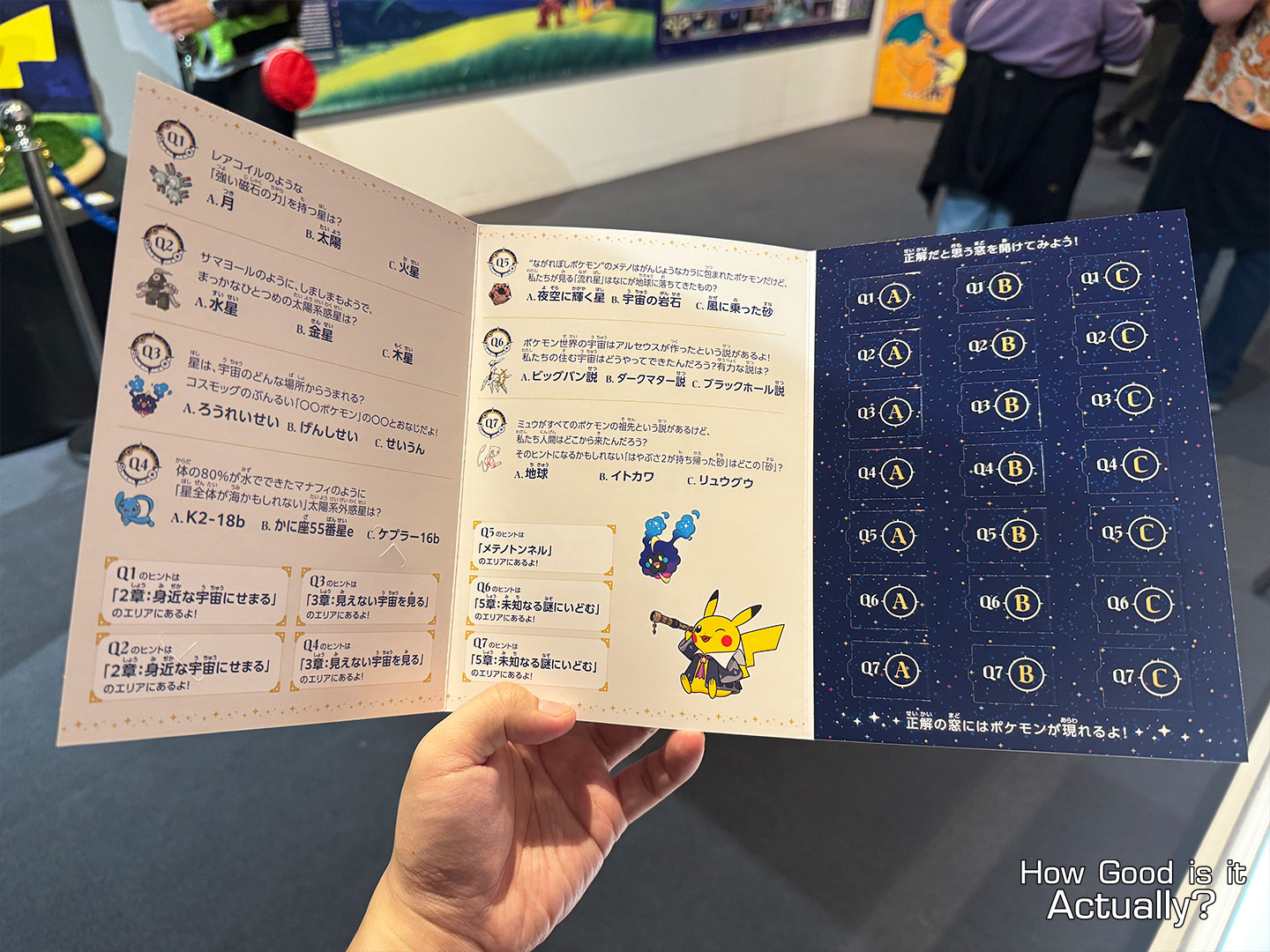
When you enter the exhibit, you’ll be given a ‘quiz sheet’ for you to answer throughout your stay. You can find all the answers within the exhibit itself, so make sure to have a look at all the areas.
“Ex. Just like a Magneton, which Star/Planet features a strong magnetic field?”
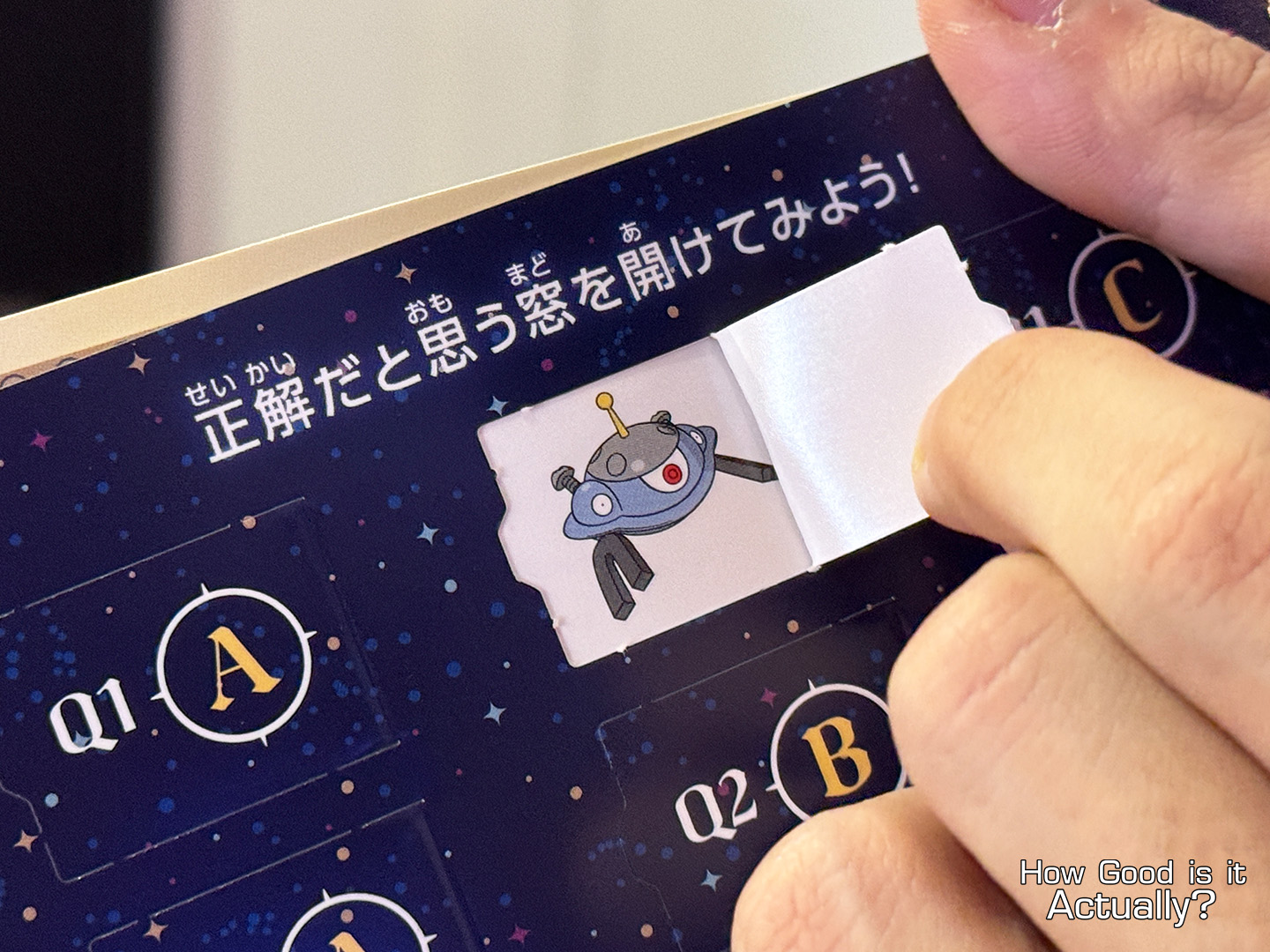
Do note that the quiz is in Japanese. But as long as you have a translation app, the questions shouldn’t be too hard since it’s designed for younger kids to answer by the end of the exhibit.
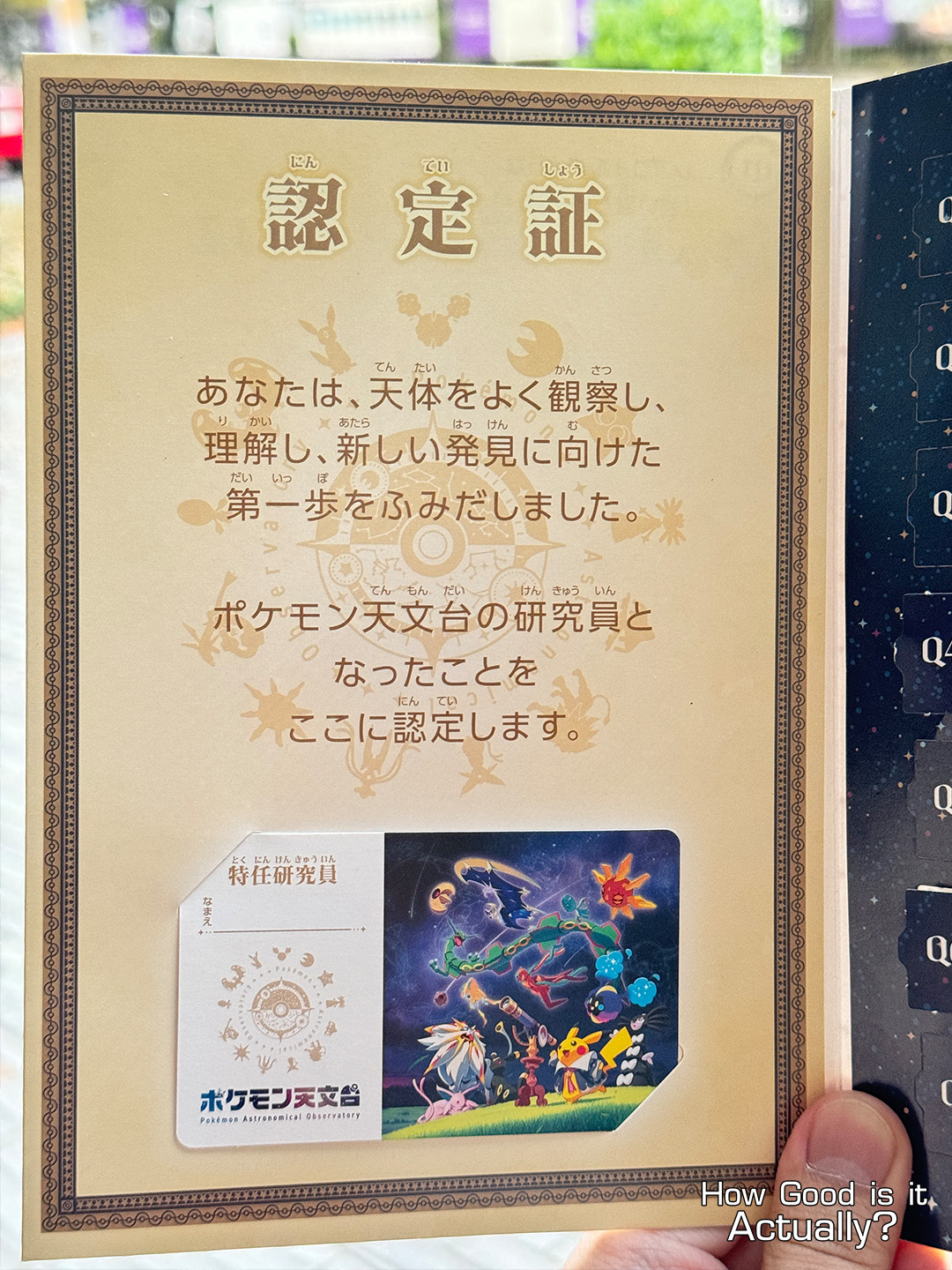
And if you get all the questions correct by the end of the exhibit, you’ll be presented with a special certificate, granting you the title of Researcher at the Pokémon Astronomical Observatory.
__________
🌏 Pokémon GO 🌏
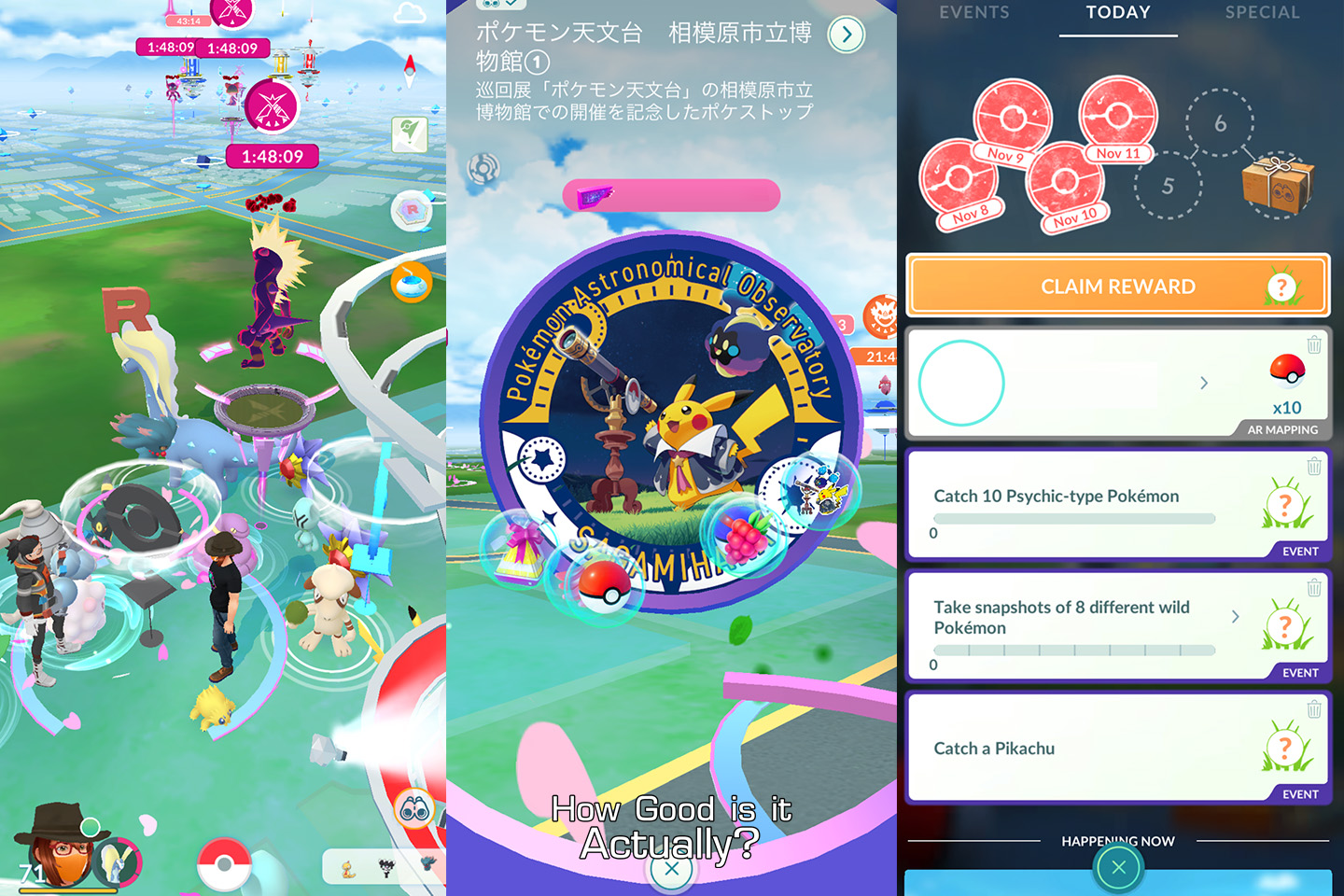
In collaboration with the exhibit, you can find event-themed spawns and field research tasks at Sagamihara City Museum and the nearby Fuchinobe Park.
The spawns include many Pokémon featured at the exhibit, such as: Clefairy, Gothorita, Solrock, Lunatone, Starmie, Elgyem, Magneton, Dusclops, and more.
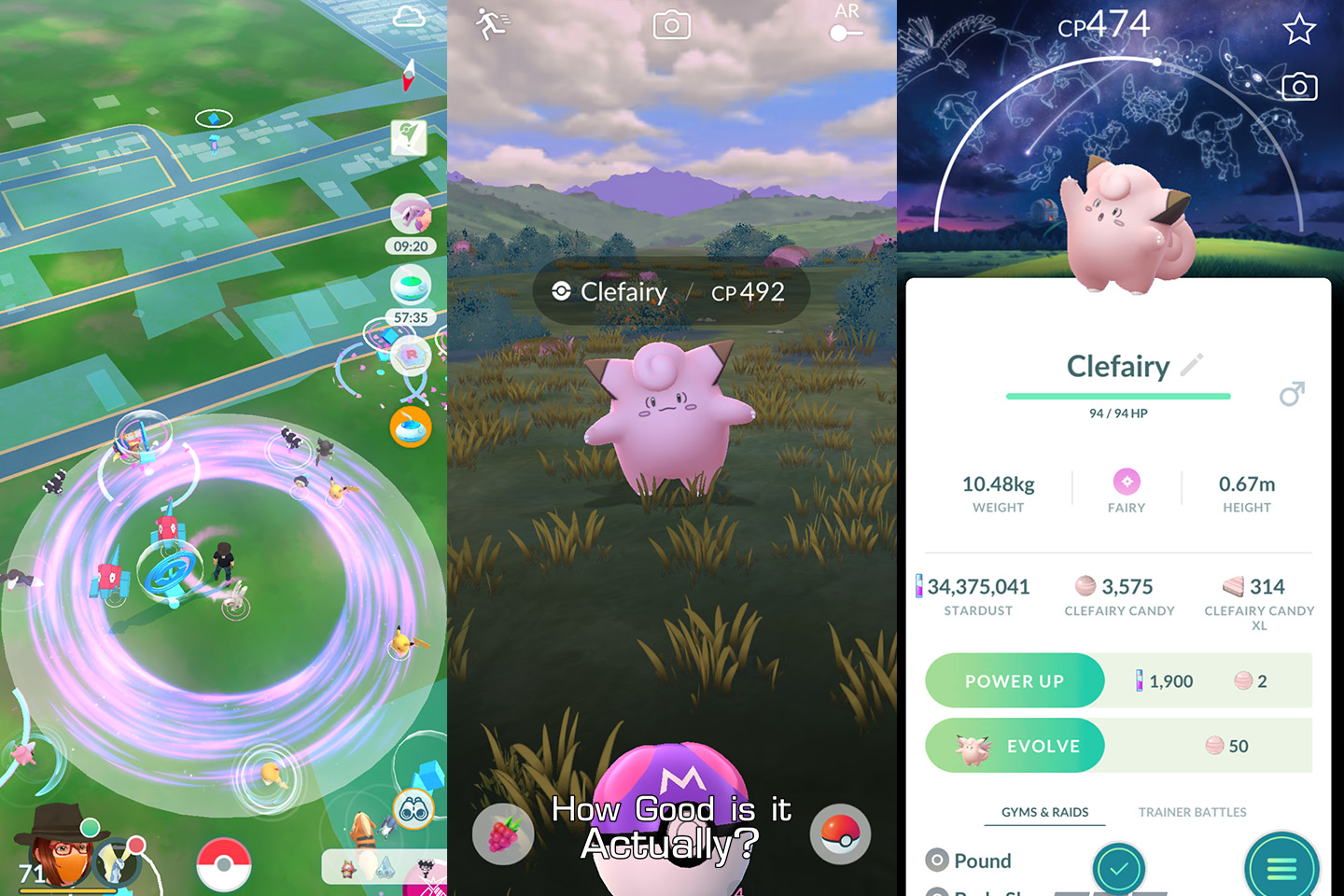
On the Field Research side, encounters include Solrock, Lunatone, and the highlight of them all – Clefairy with a (guaranteed) special Pokémon Astronomical Observatory background!
Research Tasks include:
Catch 10 Psychic-type Pokémon
Take Snapshots of 8 different wild Pokémon
Catch a Pikachu

Completing all the research tasks took me about an hour, though that’ll vary depending on how common Psychic-types are during your visit.
In total, I managed to encounter 10 special background Clefairy today, none of which were shiny… Pretty fun event, regardless!
__________
📱 Pokémon HOME 📱
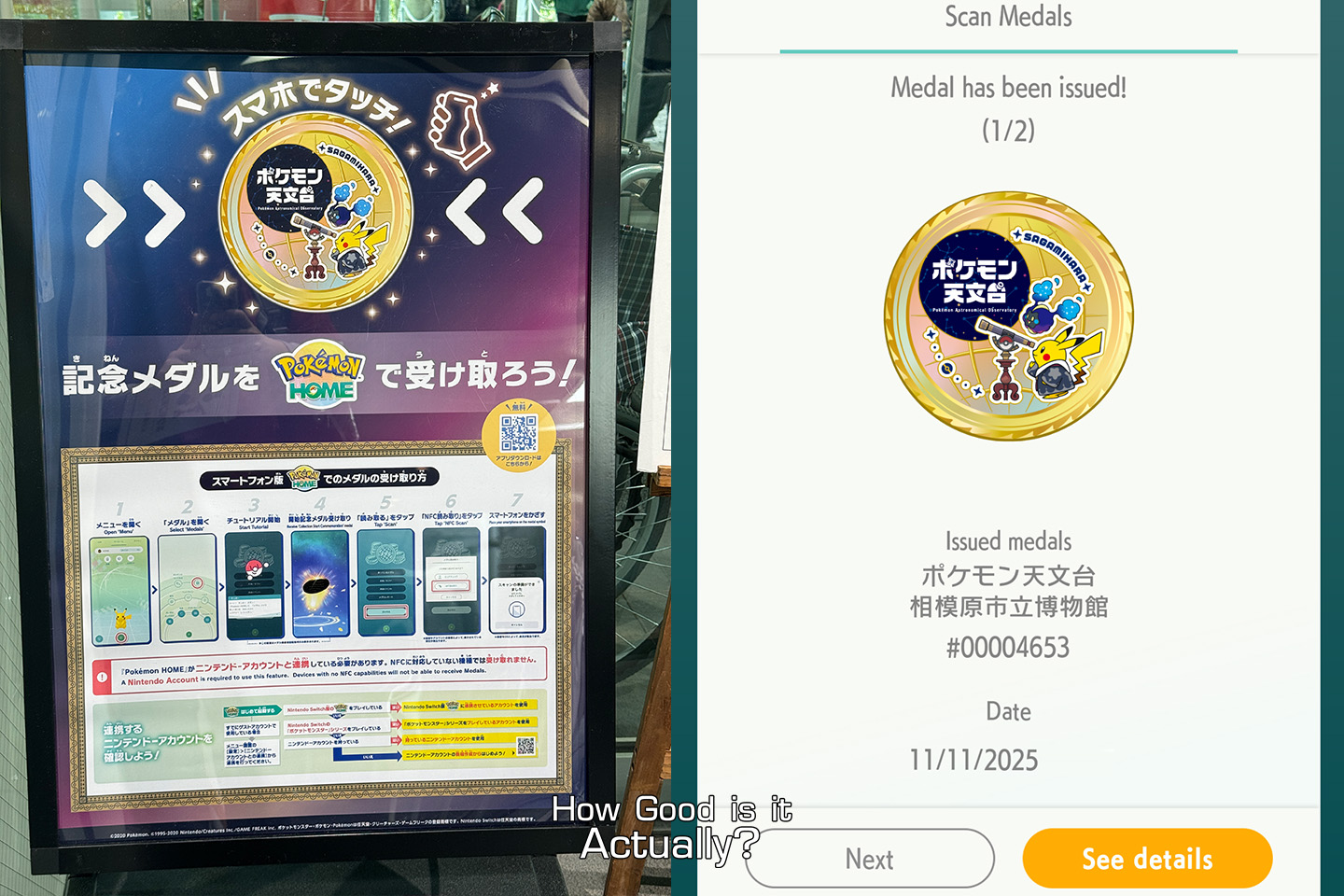
And for another collaboration, you can also grab a Pokémon HOME medal right by the entrance of the building.
Scan the NFC tag at the center of the medal, and you’ll receive two copies of the Pokémon Astronomical Observatory medal to add to your collection.
__________
🛒 Gift Shop 🛒
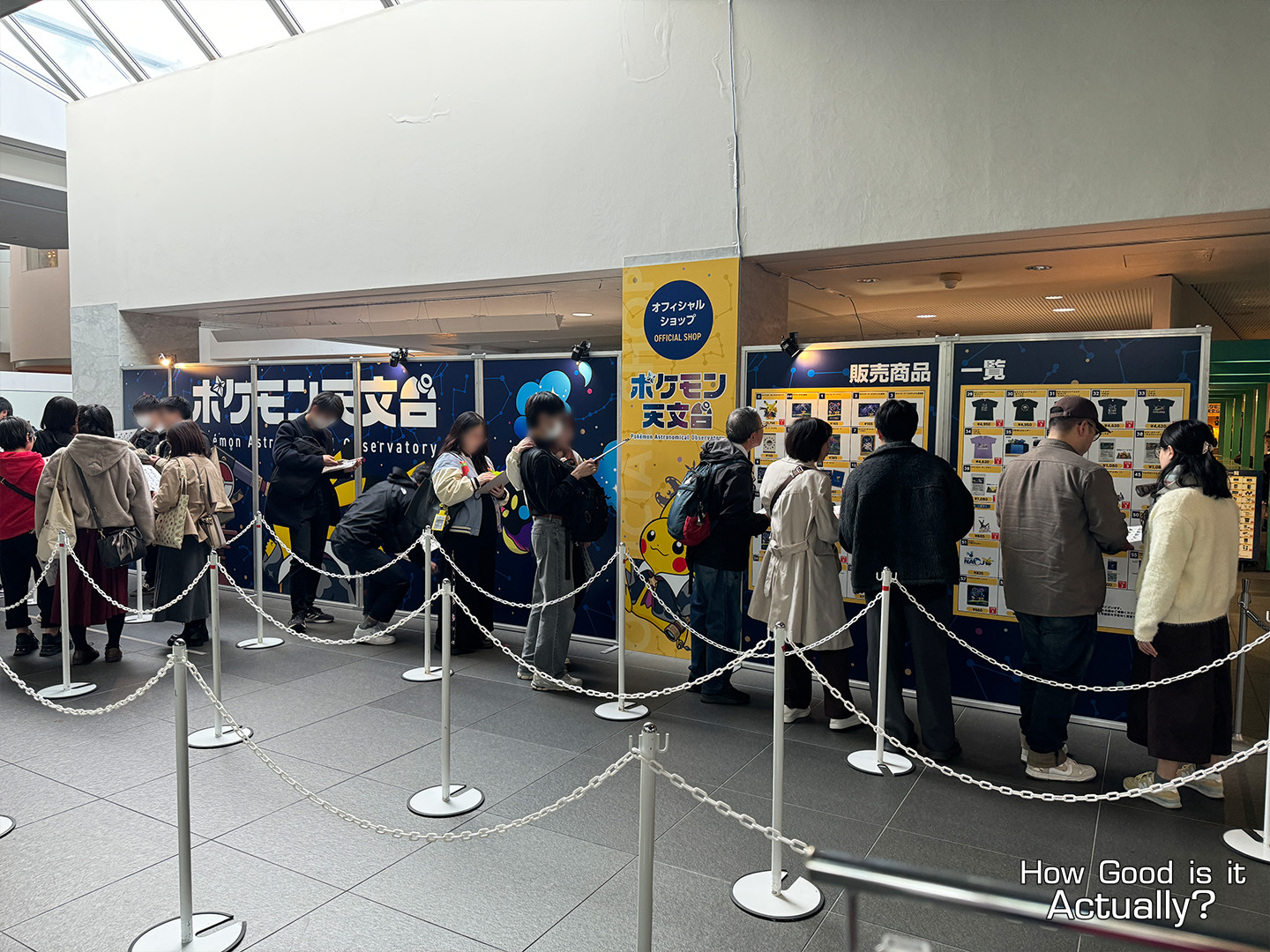
And finally, the gift shop. To enter, you’ll need to present the receipt they gave you alongside the quiz sheet – giving you a one-time-access to the shop on the day of your visit.
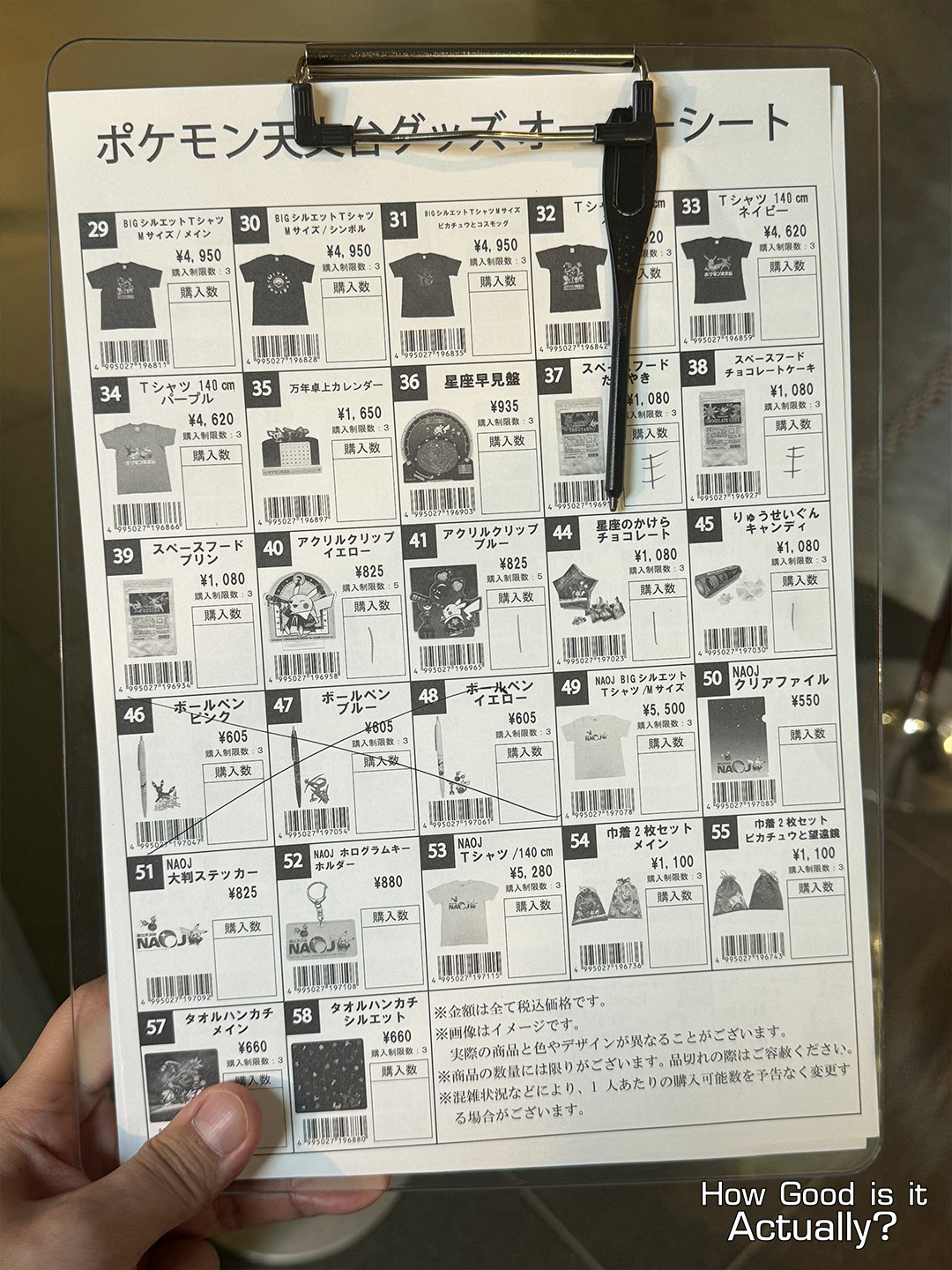
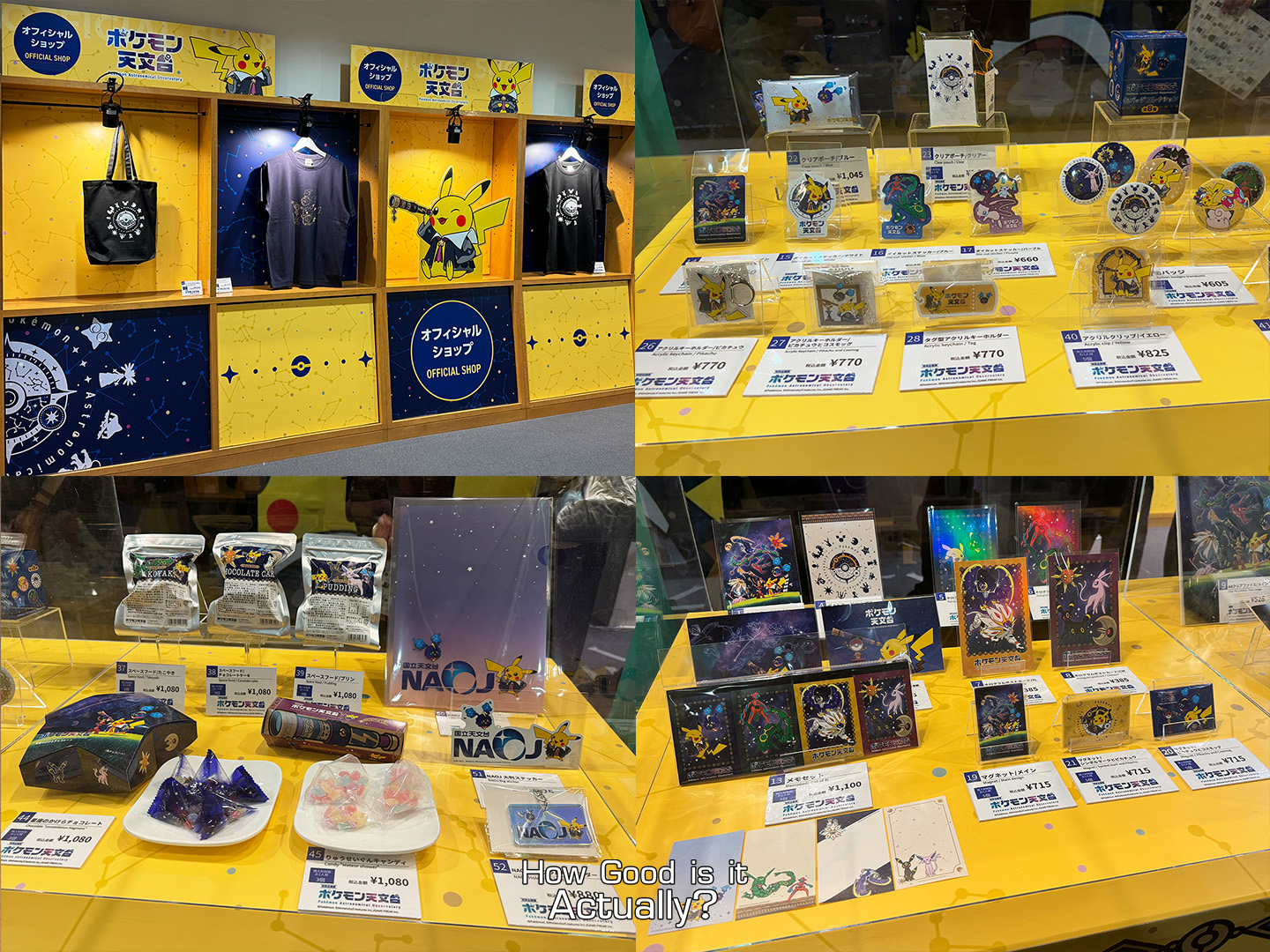
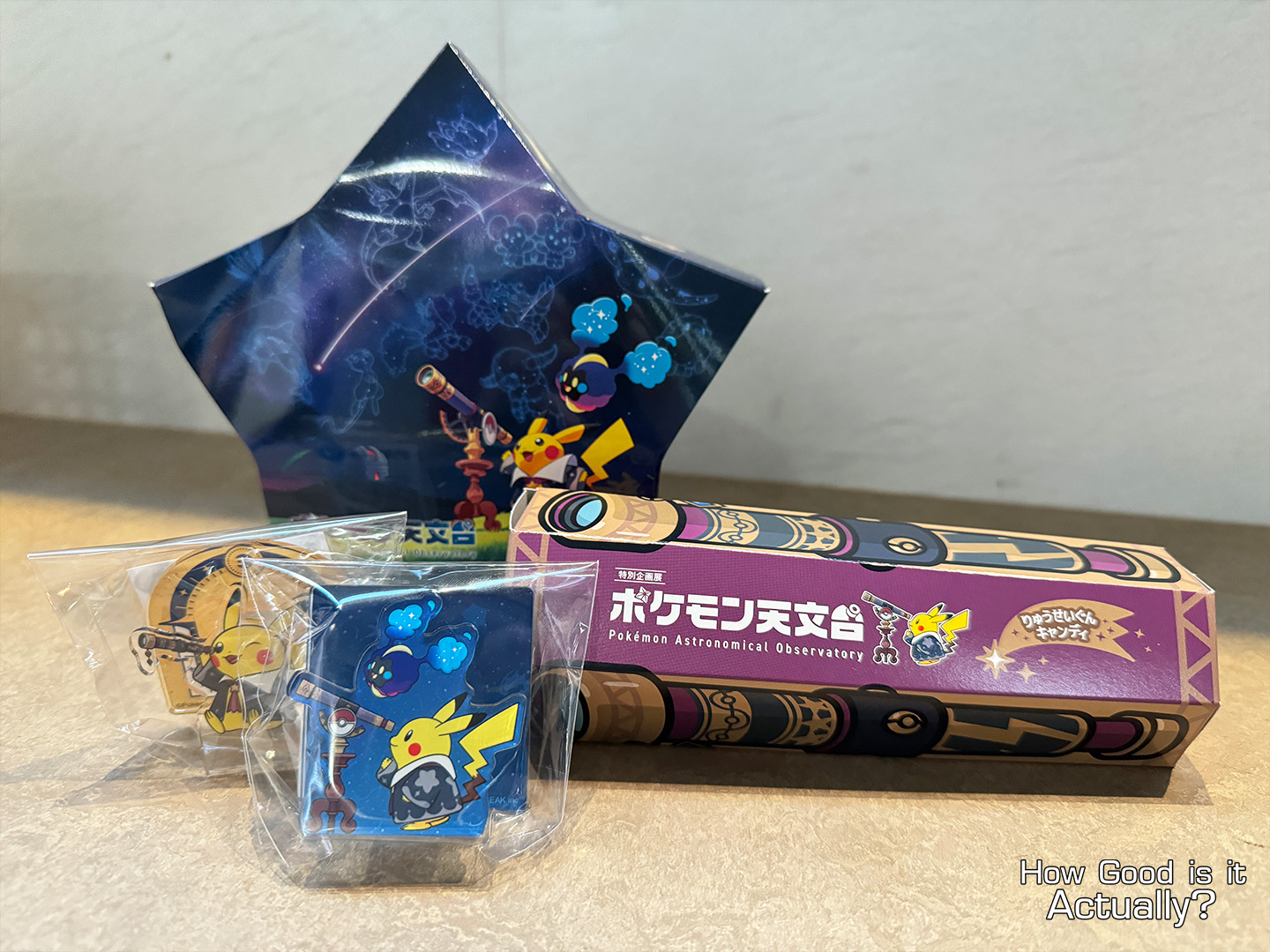
The highlight, of course, is the Starry Sky Pikachu Plushie. But other than that, you can also find all sorts of themed merchandise: from shirts, artbooks, and postcards, to candies, pins, clear files, and my personal favorite – “Astronaut” Chocolate Cake, Pudding, and Takoyaki.
__________
__________
⭐VERDICT⭐

So how good is Pokémon Astronomical Observatory actually? Yeah, it was quite enjoyable! Pokémon has always done a great job every time they do educational-style collaborations, and this one was no different.
The integration of Pokémon into the exhibit was a very impressive one. The ecology and comparison facts were fun to read, the Pokémon-themed quiz was a nice touch, and all the various statues really brought the whole experience to life – all while making for some great photo opportunities!
Yes, the museum is technically designed to introduce school-aged children to the wonders of the universe, so if you’re a space fan (like me,) most facts presented here won’t be too surprising – though I did learn a new thing or two today.
But overall, a very fun experience!
So if you’re around Tokyo (or any of their future locations) and want to spend a couple of hours admiring the wonders of the universe alongside all sorts of Pokémon, then I say book your tickets and head over to the Pokémon Astronomical Observatory!
__________
🚗 GETTING THERE 🚗
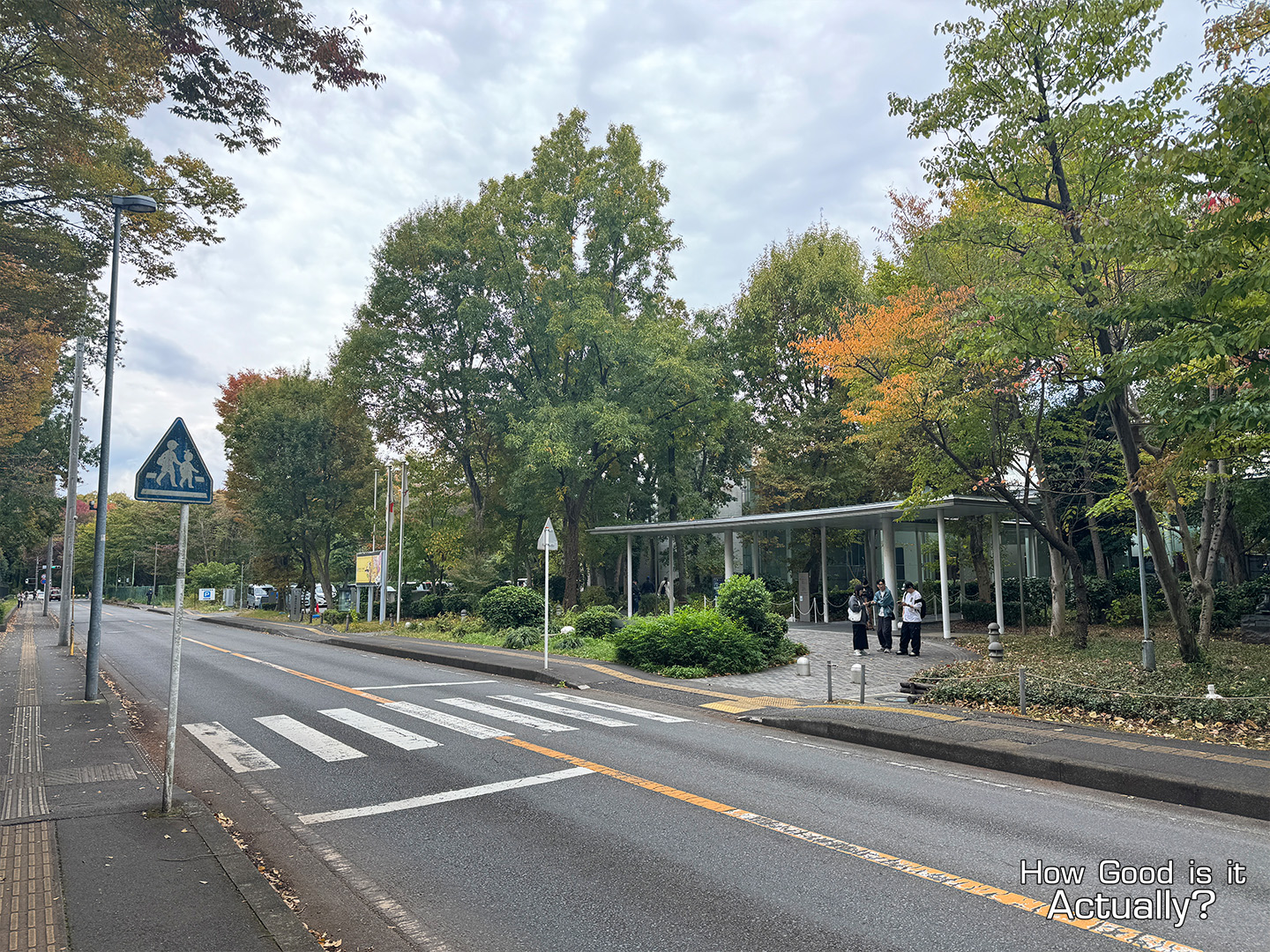
Pokémon Astronomical Observatory is a travelling exhibit, so they’ll be moving to different locations throughout the year.
Sagamihara City Museum (Kanagawa) – November 1, 2025 – January 12, 2026
Kenshin Koriyama City Cultural Center (Fukushima) – Spring 2026
Kakuda Denen Hall (Miyagi) – Summer 2026
Toyohashi City Museum of Natural History (Aichi) – Fall 2026
Nagasaki Museum of History and Culture (Nagasaki) – Winter 2026
To get to the one at Kanagawa, the closest train station will be Fuchinobe Station (Yokohama Line.) Once there, the museum will be a moderately long 20min walk away.
Getting to the Yokohama Line
From Tokyo Station: Keihin-Tohoku Line to Higashi-Kanagawa Station, or Tokaido Line to Yokohama Station (1hr 20mins + 20mins walk.)
From Shibuya: Den-en-toshi Line to Nagatsuta Station, or Tokyo Line to Kikuna Station (55mins + 20mins walk.)

Pokémon Astronomical Observatory (Sagamihara City Museum)
🌏 Location 🌏
3 Chome-1-15 Takane, Chuo Ward, Sagamihara, Kanagawa 252-0221, Japan
🗺 Map 🗺
https://maps.app.goo.gl/LxfYJfZB4DQPacQn7
⏰ Opening Hours ⏰
9:30 A.M. – 5 P.M.
💻 Website 💻
https://observatory.pokemon.jp/
__________
__________


3 comments
💬 Final Words 💬
So I was planning to be at the exhibit for like 2-3hrs max (Including for Pokémon GO), but I somehow ended up staying for 4hrs+ (Though the gift shop did take close to an hour to line up…) In any case, do check out the exhibit if you happen to be around where it’s currently held!
Wow, amazing detail in this review! Thanks you very much, for some of us that live almost in the other part of the world this post is amazing, thanks for all the pictures and information.
Thank you for checking out my review, and glad to hear you enjoyed it! Japan has some really cool limited-time Pokémon collaborations, and I’m happy to share the experience so that more people can see what the event is like!